Treasures full of treasures in Lower Silesia. War secrets of the Third Reich


On the night of April 9-10, 1941, British aviation bombed Berlin. The buildings at the representative Avenue of Unter Den Linden, including Opera, University and Prussian State Library, were seriously suffered. In fear of subsequent raids, the library authorities decided to evacuate the priceless collection of manuscripts. The caches in Lower Silesia came, among others Goethe, Hegel, Beethoven, Mozart and Bach's magazines.
It was decided on this unprecedented step when the Third Reich was at the peak of power. The action of the evacuation of the Berlin library was managed by Dr. Wilhelm Poewe – a great organizer, thanks to which in nearly 30 cities, mainly in the provinces, in old castles, palaces and monasteries, special deposits were created. From autumn 1941 until March 1944, chests with priceless harvest were systematically transferred there.
Treasures also hit Pomerania and Lower Silesia, including to Mierzyn, Nadarzyn, Jelenia Góra and the Książ Castle near Wałbrzych, where their most valuable part was laid – musical manuscripts and manuscripts of the most outstanding German artists, including Marcin Luther and the Grimm brothers.
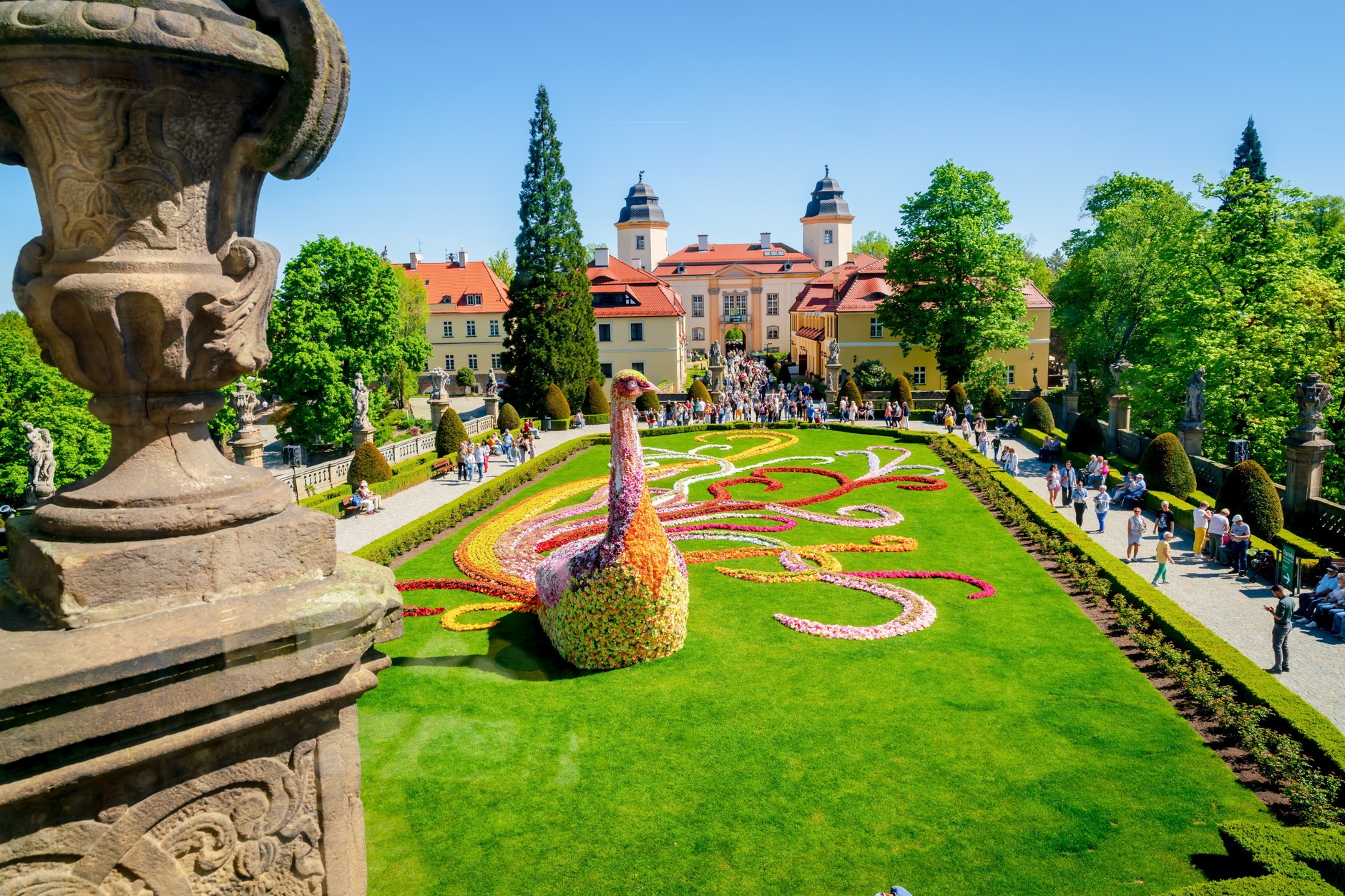
Książ CastleDariusz Gdesz / PAP
When in September 1943 a decision was made to build Hitler's new quarters in the Sudetes, as part of the “Riese” project, the former Hochberg residence was also to be rebuilt. This meant a serious threat to over 500 boxes moved here from Berlin. The state of the deposit was controlled by Poewe himself, which was disgusted with the destruction of historic interiors during construction works.
Soon a decision was made to evacuate the so -called Prussian treasury. At the beginning of July 1944, the deposit was transported to the Sanctuary in Krzeszów near Kamienna Góra, where a cache for the collections of the Library of the University of Wrocław was created earlier. The collections from Książ were placed in the gallery over the side naves of the baroque church. Saint. Jakub.
Continued article under video material
“I have not heard that the part of the Prussian State Library has been found so far”
In May 1945, the prior of the monastery closed the church. The war came to an end, and Krzeszów, located off the beaten track, did not arouse the interests of the Soviets. Two months later, a team delegated by the Ministry of Education reached the sanctuary in order to look for places to hide abandoned libraries. Initially, Poles did not realize the weight of the find, but they asked the religious not to inform the Red Army stationed nearby.
Father Mateusz Skibniewski recalled: “The state committee came to Krzeszów and presented the documents that they were sent to take care of the books submitted in the monastery. So I published them and they took them away.”
Several transports were transported – both Berlin and Wrocław – to Krakow. The deposit was secret and locked in the Library of the Jagiellonian University. Information about the discovery did not get into the press, and the whole thing was strictly secret. Even UJ employees did not have access to it.
A letter from January 1946 has survived, in which Edward Kuntze, the then director of the Jagiellonian Library, wrote to Aleksander Birkenmajer, head of the Library of the University of Poznań: “I have not heard that the Prussian state library was found so far, which was distributed in several dozen cities from the center, general management and catalog in Jelenia Góra.”
In fact, after the war, over 22,000 were secured in the Karkonosze Museum. official books and publications, files, files and bibliographic studies from “Berlinka”.
Not only the Germans sought the most valuable part of the collections, but also outstanding musicologists from London and New York. There were assumptions that priceless manuscripts could be taken to the USSR. Warsaw was silent for a long time, and Moscow denied these hypotheses.
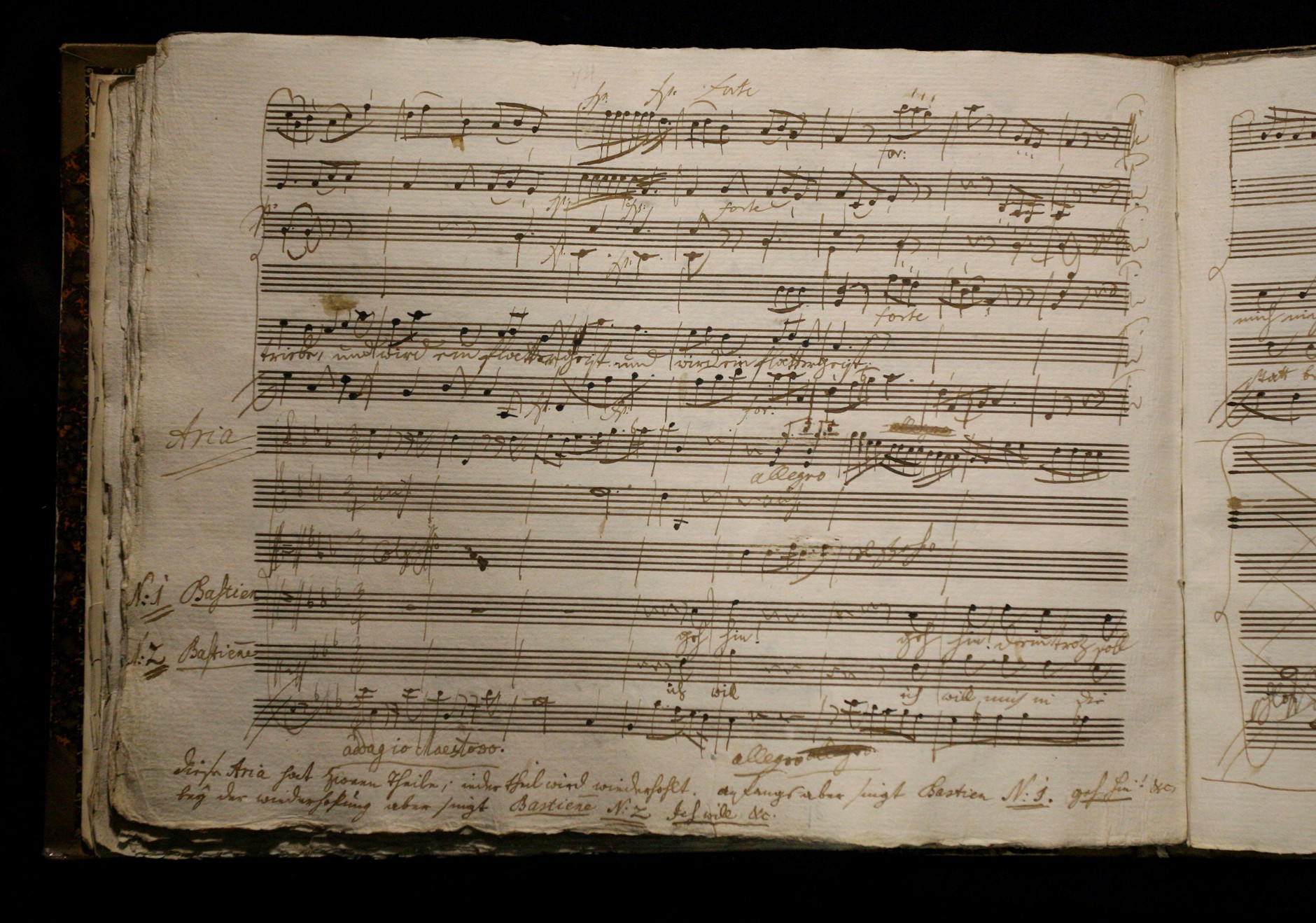
Exhibition of manuscripts from the collections of the former Prussian State Library. In the photo the manuscript Bastiene et Bastienne Wolfgang Amadeus MozartJacek Bednarczyk / PAP
“The collections of the former Prussian library have become the property of the Polish state”
It wasn't until 1965 that the Polish authorities decided to donate the collections of the Prussian State Library found in Pomerania and Lower Silesia as “a gift on the 20th anniversary of the Polish People's Republic and the 15th anniversary of the GDR”. This was not treated as a return of former German property, but as a gift, justifying that Poland received it along with the entire heritage of the Regained Territories.
At that time, a substantial transport came to Berlin, including A significant part of the documents from Jelenia Góra. However, the trains did not include treasures discovered in Krzeszów. Finally, in 1977, PAP published the following information: “The work on the ordering and systematization of archival collections led to a valuable discovery led for many years by the Ministry of Culture and Higher Education, science and technology.
“According to previously held information, there was a probability that the territory of Poland may include some of the valuable collections of the former Prussian State Library in Berlin, which were taken out by the Nazi authorities. Systematic and meticulous searches have recently been recently crowned with a successful result. Founds found are currently undergoing preliminary research, and evaluation, recording ” – we read in the message.
Should the “Prussian treasure” be returned? In the conclusion of an expertise prepared in 1987 for the authorities of the Polish People's Republic, professors Krzysztof Skubiszewski and Marian Wojciechowski stated: “The collections of the former Prussian library became the property of the Polish state by the power of the board held by them in the Regained Territories.” Despite the demands of the collection of the collection, the Germans did not achieve the effect. In Poland, the case is considered as the right compensation as losses caused by Polish culture during the war.
“It was about paintings from various Polish museums, works from Krakow's Wawel, well -known rugs …”
In the spring of 1944, Governor Hans Frank ordered the evacuation of books and works of art from Lviv threatened by the Soviets. Transports were directed to Krakow or to the Reich, mainly to Lower Silesia – primarily to Świdnica. A few months later, after the outbreak of the uprising, Warsaw collections were also evacuated. Eventually, the idea of hiding treasures in Wawel was abandoned. Frank rented the palace of Count von Richthofen in today's Sichów near Legnica, where it was transported The most valuable works, including Rafael's “portrait of a young man” and paintings by Rembrandt, Dürer and Rubens.
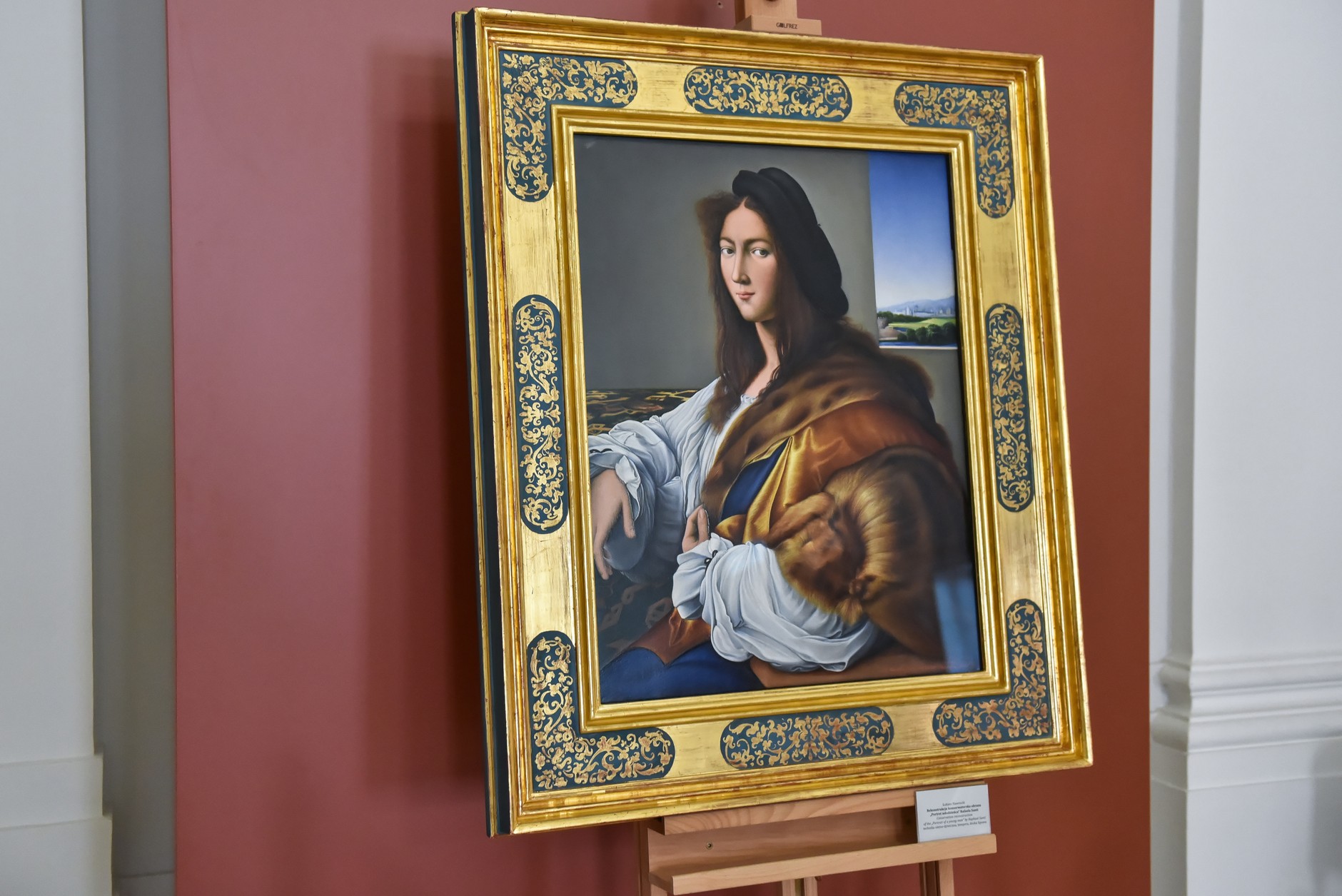
Conservation reconstruction of the painted painting during World War II “Portrait of the Youth” of Rafael Santi presented at the Czartoryski Museum in Puławy (2021)Wojtek Jargiło / PAP
In January 1945, while escaping from Krakow, Frank stopped in Sichów. For several days, the village served as the informal capital of the falling general governance. On January 23, 1945, the governor left towards Bavaria, accompanied by two trucks. It is not known whether the noted Masterpiece of Rafael was still in the convoy – some researchers, including Robert Kudelski, suggests that the picture may have been arbitrarily hidden by one of the German conservators.
He was also not found in Moravia near Strzegom (today the Świdnicki Poviat), where another large transport from Krakow came. As the Conservator Günther Grundmann recalled after the war: “It was enough for a glance to find out that it was about paintings from various Polish museums, works from Krakow Wawel, known rugs from the time of Sigismund August, gobelins from Polish castles, famous paintings of Canalet from the Warsaw Royal Castle and a flat from the Marian Church in Krakow.”
Further significant collections were transferred to Cieplice-Zdrój (today the Jelenia Góra district), to the Schaffgotsch Palace. Dr. Ernst Boepple, responsible for the evacuation of goods from the General Government and decisive for their distribution, settled there. In this way, the most treasures were hidden in Cieplice, and three paintings by Jan Matejko were in a mountain village, known today under the name Przesieka.
“I ordered to light the lights and the result passed my wildest assumptions”
After the war, the new authorities began extensive search for cultural goods in Lower Silesia. To this day, it is not known what happened to the work of Rafael and with the collections left in Sichów – they could be hidden on the property or deported abroad. However, we managed to reach Moravia, where, among others Part of the Cyciean office of Stanisław August Poniatowski.
In July 1945, the team led by Stanisław Lorentz was a great success – the works of Matejko: “Rejtana”, “Lublin Unia” and “Batory near Pskov” were found in the Karkonosze inn's basement.
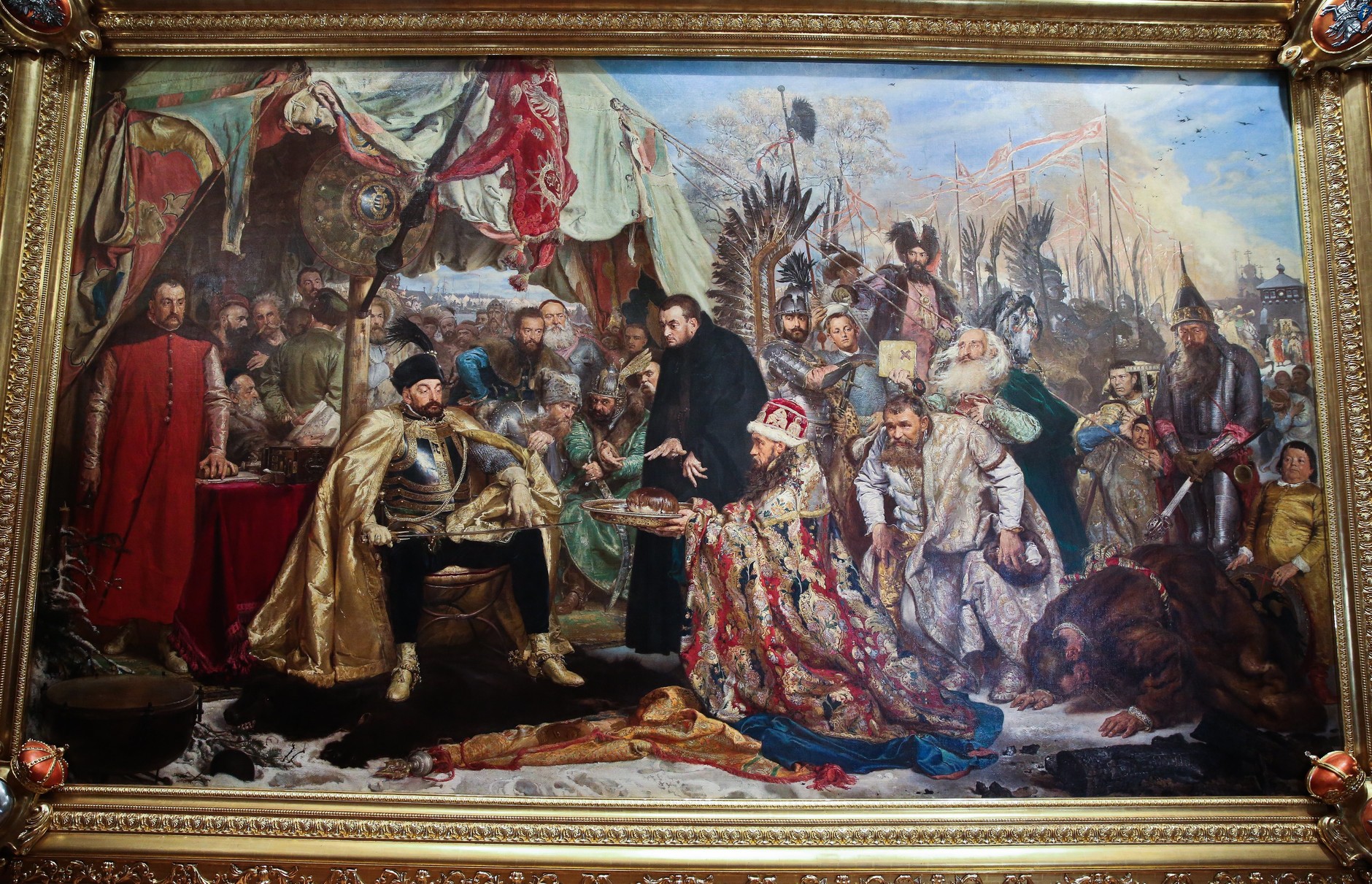
Image of Jan Matejko “Stefan Batory near Pskov”Rafał Guz / PAP
A month later, Polish seekers reached Cieplice-Zdrój. Witold Kieszkowski, who was the first to hit the trail of priceless collections, so remembered his discovery: “I entered through the side, I seem to enter, and here in a dark corner in the staircase I noticed one on the other chest. The result has passed my wildest assumptions. “
It was the most valuable find of that summer. The boxes included, among others The collections of the Czartoryski Museum, the Wawel Cathedral, the Royal Castle and the National Museum in Warsaw. On August 25, 1945, the treasures were taken to the capital.
At the same time, evacuated library collections were also sought. Nearly 250 boxes from the Public Library of the Capital City of Warsaw were secured in Legnica. In August 1945, Polish researchers arrived in Zagrodno near Złotoryja, where hundreds of boxes containing collections taken from Warsaw, Kraków and Lviv were found in the stables of the court farm.
The Soviets “discreetly left the freedom to” Poles. Before inevitable destruction, among others The manuscript of “Pan Tadeusz”, as well as the manuscripts of Słowacki, Fredro, Sienkiewicz, Reymont and Żeromski. The proud member of the search crew Bogdan Horodyski wrote: “The day came when the stable of Count Pfeil was completely disgusted from books, when all the papers scattered in it were scrupulously scattered in it and the garbage and nothing to prohibit was suitable.”