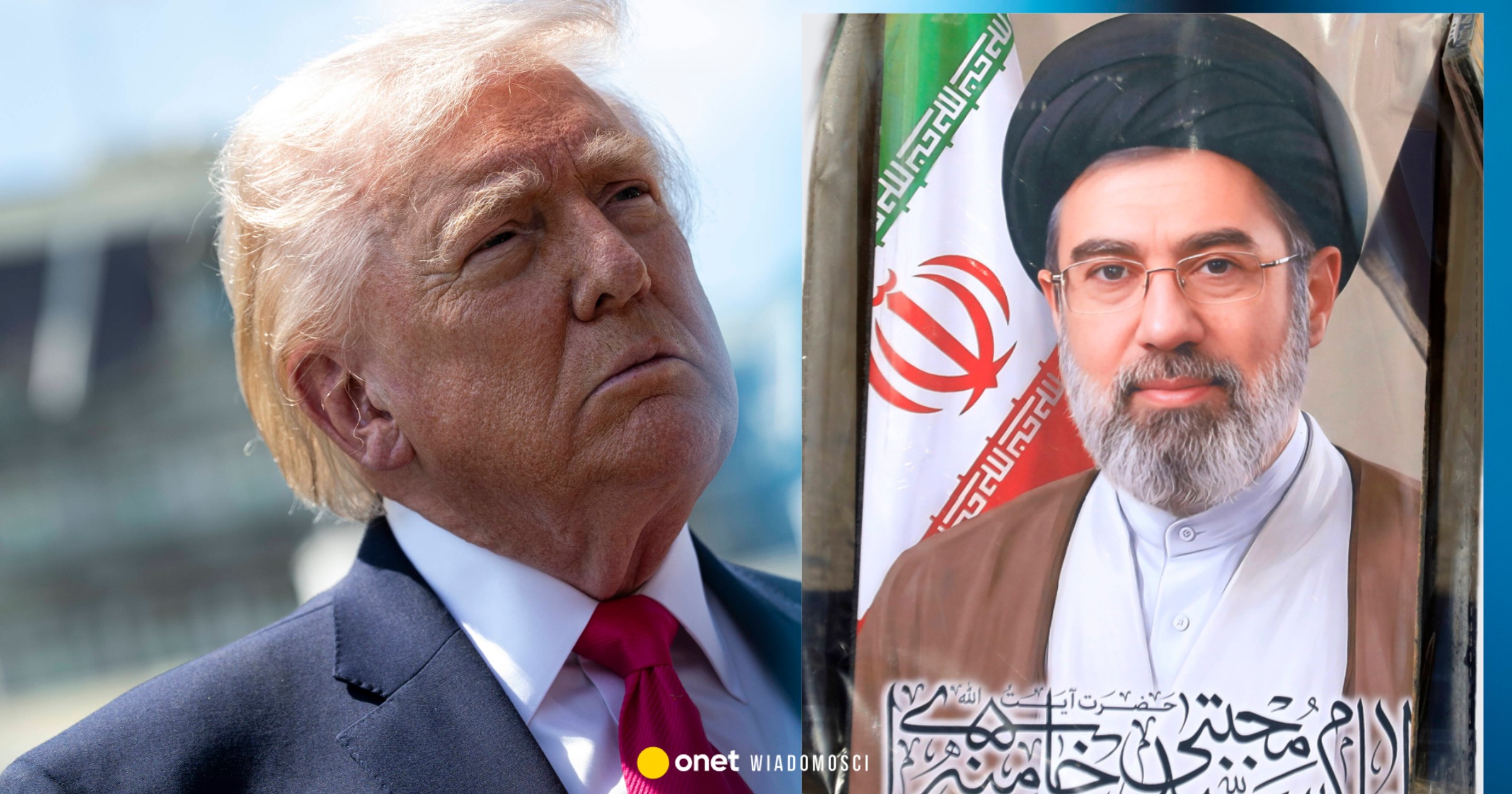
Trump's sudden turn after meeting with the head of NATO. “Rutte deserves a Nobel Prize for this”


Whether the agreement the US president has talked about actually exists remains an open question in Washington, accustomed to Trump's “announce first, negotiate later” style.
But for diplomats and advisers in the U.S. (and in Europe, especially Denmark), the news allowed a collective — if cautious — sigh of relief.
The first was when he ruled out the use of military force to take over the vast, semi-autonomous Danish territory, which he presented as crucial to U.S. national security, from the stage of the World Economic Forum.
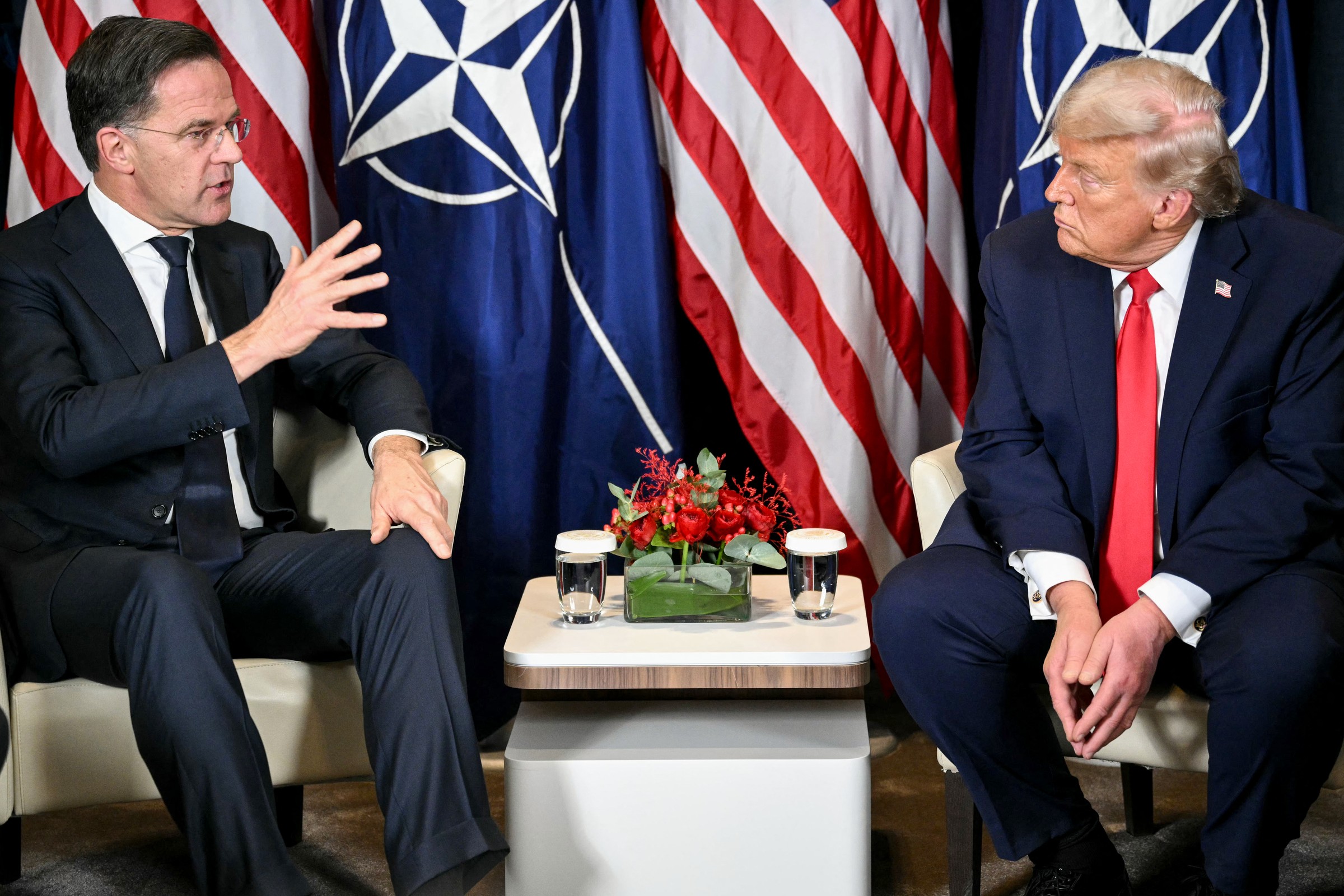
Hours later, after meeting with Mark Rutte — the head of NATO who reportedly calls Trump “daddy” — the US president completely reversed course.
No strength. No customs duties. Instead, “framework”.
Trump dropped tariffs he had threatened against eight European countries — including Denmark and Germany — immediately after meeting with Rutte.
“We have created a framework for a future agreement,” announced the American president on Truth Social.
“Truce” in Trump's war
Markets have rebounded and European leaders have rushed to welcome the pause, but insiders remain skeptical.
Despite the relief, diplomats and analysts in national capitals are privately asking the same question: what framework? What deal?
An anonymous senior Western official spoke more bluntly in an interview with the Kyiv Post: It's classic Trump – first declare victory, then negotiate.
— It only took him a few hours to change course — said another European diplomat, adding, however, that the alliance “has made it clear that there will be no concessions on sovereignty. Security – yes. Capitulation – no.”
European perspective
In Denmark, relief was visible but fragile. “The day ends better than it started,” said Danish Foreign Minister Lars Lokke Rasmussen on Danish Radio. “Trump says he won't attack Greenland… and the tariff war has been suspended. That's positive news.”
But Rasmussen added a warning: leaders still need to “sit down and think about how we can address American security concerns in the Arctic while respecting the borders of the Kingdom of Denmark.”
This skepticism has reverberated across the continent: the ceasefire has been welcomed, but there is little confidence in the agreement's durability.
Italian Prime Minister Giorgia Meloni praised the suspension of tariffs, but stressed that “it is necessary to continue to support dialogue.”
In Berlin, Vice-Chancellor Lars Klingbeil twice called for restraint. – It's good that [Dania i USA] they are in dialogue, he said, but we have to wait a while and not get our hopes up too early. There is the integrity and sovereignty of the state, and that will not change.
The winning round and reality
Trump, for his part, declares complete victory. “It's an agreement that everyone is happy with,” he said. — We got everything we wanted, especially real national security.
However, there are no details. NATO spokeswoman Allison Hart said negotiations would now focus on ensuring that Russia and China “never gain a foothold – economic or military – in Greenland.”
According to Trump, the agreement may cover mineral extraction rights and even Greenland's role in his proposed Golden Dome missile defense system.
“It's a little complicated,” he admitted.
Privately, officials and policy experts say “complicated” is a euphemism for vagueness.
Paul Poast of the Chicago Council on Global Affairs suggested Trump's familiar formula: — A 'lease' deal in which Denmark has ultimate sovereignty, the United States has control, and NATO provides military capabilities… This allows for claims of a deal and agreement, but the details are unclear, he told the Kyiv Post.
Another senior Western official described it more bluntly: — This looks less like an agreement and more like a ceasefire in Trump's war.
As for Trump's social media diplomacy, Poast noted: “It's something he's done quite often.” Many of his “sales letters” were sent via social media. This is a new form of an old method of diplomacy – the written statement.
The Rutte effect
An important question echoes in the corridors of Davos: has Mark Rutte broken the code (to Trump)?
After weeks of threats, Trump suddenly emerged from that one meeting (with the NATO chief) in a conciliatory mood. “If he convinced him somewhere on the sidelines of the snack visit,” one diplomat joked, “Rutte deserves the Nobel Prize.”
Alternative explanation: Trump needed a backdoor escape route. He faced hostile alliances, rebellious bond markets, and a united Europe that refused to give up its sovereignty.
NATO allies bent the knee on defense spending, but they refused to budge any further on Greenland.
“Trump realized he could cause chaos but he couldn't win,” said a senior EU official.
Economics was as important as geopolitics. As Atlantic Council economist Josh Lipsky noted, fears of a trade war between the US and the EU caused bond yields to rise.
“With mortgage rates soaring, Trump has again shown he is sensitive to bond markets,” Lipsky said.
Dutch Prime Minister Dick Schoof welcomed the “de-escalation”, but Brussels is not ready to let down its guard.
“Europe feels burnt out by this volatility,” Lipsky warned. “He wants commitments that won't go away until next weekend.
Scars left by the policy of risky moves
Even if a lasting agreement is reached, the diplomatic damage has already been done. Tressa Guenov of the Atlantic Council warned that the pressure campaign could undermine Trump's own efforts to get allies to commit to the five percent. GDP for defense.
The harshest criticism was expressed by experienced American diplomat Dan Fried. He argued that Trump was right to rule out the use of force, but still suggested that power justifies possession — a doctrine that would “legitimize any aggressor.”
Fried reminded Washington that Danish soldiers died fighting alongside the U.S. after 9/11.
“You cannot win on NATO defense spending,” Fried wrote (in the Atlantic Council), “and then demand approval for aggression against another NATO member.”
The silent side
One voice remains conspicuously absent: Nuuk.
Greenland was largely sidelined.
— Greenland has been sidelined in talks about its own future — one Danish parliamentarian complained privately. -It won't take long.
A senior Western official put it more bluntly: “You can make deals with allies.” However, contracts relating to people cannot be concluded without their participation.
Playing for time?
Trump calls it “eternity.” Europeans call it temporariness.
What happened in Davos may not be the end of the Greenland crisis – but merely a transition to a new, calmer phase.
Force is not an option and tariffs are on hold, but the framework remains sketchy and the voice of Greenlanders is still not taken into account.
In Trump's world, announcing a deal is often easier than making one.
As one exhausted European official put it on Wednesday evening: We have not solved the Greenland problem. We survived it.