Reaction from the OSCE in the case of the harassment of the journalist Emilia Șercan. “I trust that the Romanian authorities will promptly investigate these threats”


The OSCE representative for Mass Media Freedom, Jan Braath, expressed his concern about the harassment of journalist Emilia Șercan and asked Romanian officials to refrain from behavior that can cause hostility towards the mass media. The reaction comes after a letter that the “Fourth Power” Alliance, together with several Romanian NGOs, signaled the threats against the journalist to several European institutions.
“I am concerned about the harassment, discrediting and serious threats reported, including death threats, to the journalist Emilia Șercan, following her journalistic investigations regarding persons from the political environment in Romania.
Decision of the OSCE Ministerial Council no. 3/18 on the safety of journalists emphasizes the importance of public officials refraining from conduct that may undermine the safety of journalists or contribute to hostility against the media.
I trust that the Romanian authorities will promptly investigate these threats and ensure the journalist's safety, in accordance with Romanian legislation and international standards in the field”, wrote Jan Braath in a post on social networks.
The letter to European institutions from nine NGOs
On January 16, the “A Patra Putere” Alliance sent a letter warning of the threats to which Emilia Șercan is subjected. The recipients were several European bodies including the European Parliament, the LIBE Commission, the EP leadership, PES, the S&D Group, the OSCE Representative for Media Freedom, the OECD and the European Commission – DG JUST.
The letter, entitled “PSD and the Romanian Minister of Justice intimidates investigative journalists in an EU member state”, warns of a “serious and emblematic case of intimidation of investigative journalism”, referring to the article published by Emilia Șercan in PressOne, regarding suspicions of plagiarism in the doctoral thesis of the Minister of Justice, Radu Marinesu
“Emilia Șercan has become the target of coordinated public attacks from the largest party in the governing coalition (PSD) and the minister targeted by the disclosure. These reactions do not refute the facts presented by the journalist, but seek to delegitimize her and discredit the profession,” the letter states.
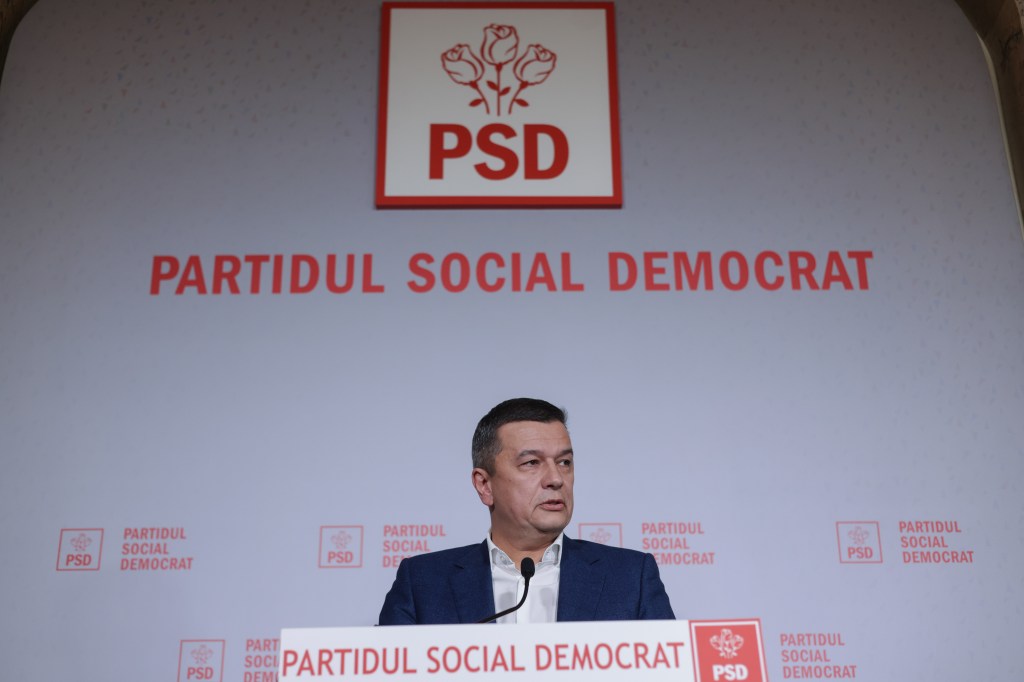 PSD's harsh attack on Emilia Șercan, who accused Radu Marinescu of plagiarism
Another example mentioned in the letter is the reaction of some institutions in the judicial system to the Recorder documentary that revealed the shortcomings of this system
“We are facing a classic pattern of intimidation: instead of a factual response, political actors and state authorities accuse investigative journalism of alleged motivations and political connections, without presenting evidence. This strategy, specific to illiberal regimes, is not only aimed at discouraging investigations into the integrity of power, but is a mechanism of systematic intimidation. Its purpose is to send a warning message to the entire press, that any journalist who dares to investigate power will be publicly punished”. the letter says.
The signatories explicitly accuse the Minister of Justice and the party he belongs to, PSD, of using their institutional position to question the legitimacy of the media's actions by “attributing alleged political motivations, without evidence”.
“In this context, we ask you to:
- to analyze this case as a possible serious example of a violation of European standards on press freedom and the rule of law;
- to ask the Romanian authorities for official explanations regarding the attacks on investigative journalism;
- to closely monitor the way in which the Romanian Government respects its obligations assumed within the EU regarding the protection of journalists;
- to send a clear and unequivocal public signal that intimidation, harassment and media lynching of the media are not tolerated in a member state of the European Union.
The silence or relativization of such slips risks turning them into an acceptable practice. The solidarity of the European institutions with investigative journalism is essential for the defense of the democratic values that the European Union claims to protect,” the letter says.
History of the reaction of the authorities
The text is also accompanied by a history of the threats and denigrations that targeted Emilia Șercan (PressOne), respectively Andreea Pocotilă and Mihai Voinea (Recorder).
“Emilia Șercan was threatened with death in 2019 by the heads of the Police Academy, who were definitively convicted for the act of inciting blackmail, and a kompromat operation was orchestrated against her in 2022 after she revealed the plagiarism of the prime minister at the time, Nicolae Ciucă,” the letter says.
Regarding the authors of the documentary “Captured Justice”, the reactions that came from the Bucharest Court of Appeal and the section of judges of the CSM are invoked.
 Recorder accuses the management of the Bucharest Court of Appeal of “lies and manipulations”, in a reply to the press release in which Liana Arsenie criticizes the “Captured Justice” investigation
“Judges from the Superior Council of the Magistracy (CSM) issued a statement in which they claimed that the material amplifies a campaign to “destabilize the judiciary by destroying confidence in the justice system” and spoke of a “well-established plan”. The head of the Bucharest Court of Appeal (CAB) publicly accused both the Recorder journalists and the public television – which rebroadcasted the documentary, of public incitement against the constitutional order (criminal act); attacked the magistrates interviewed by the Recorder; and claimed that the newsroom did not give him the right to express his point of view. (In reality, the CAB refused the request for a video interview made by the journalists 21 days before publication. The written refusal was published by the Recorder)”, the letter signed by the nine NGOs also states.