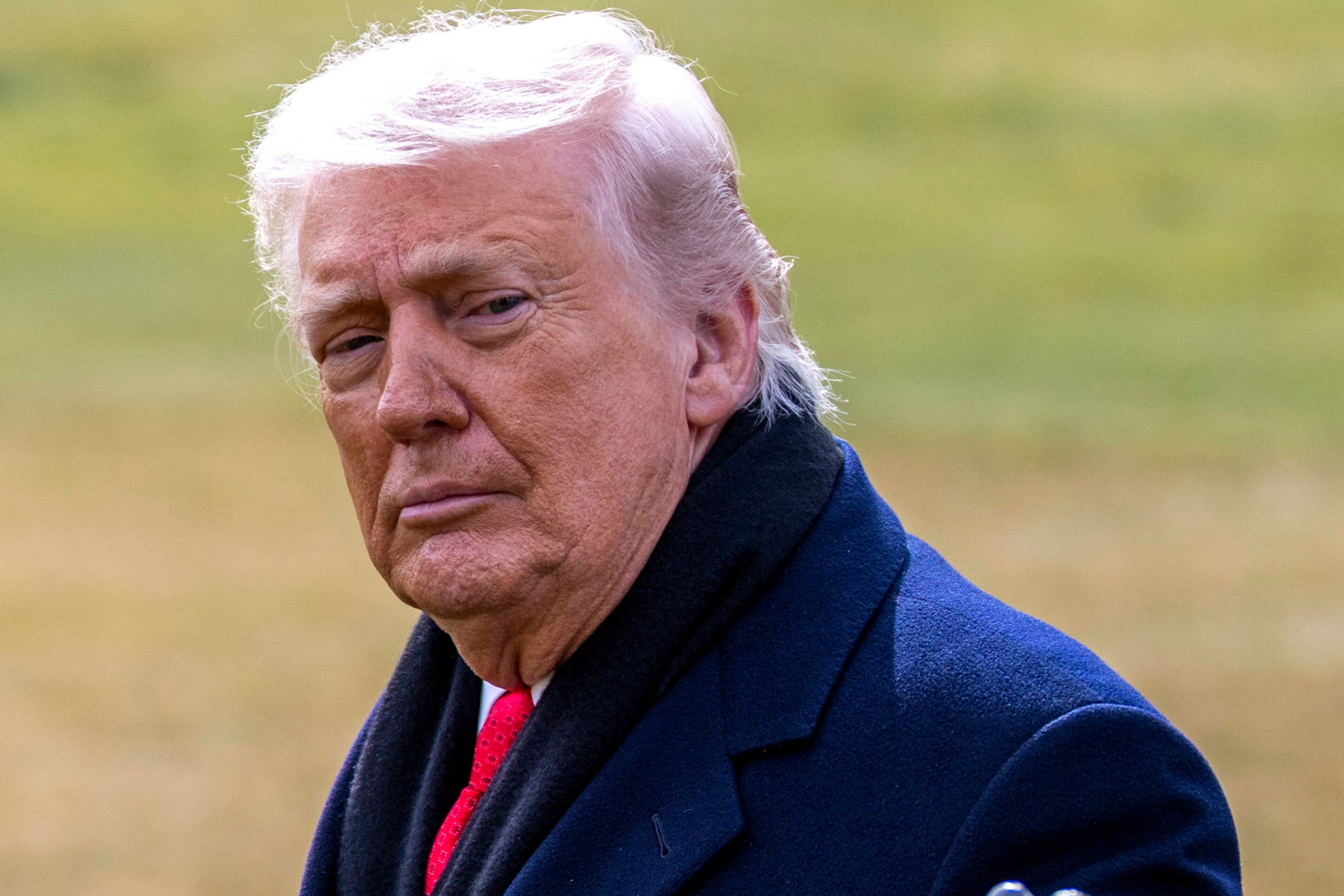
“Hardt's proposal should be thoroughly thought through and his theoretical idea should be put into practice,” writes “Die Zeit” commentator Fabian Scheler on Monday. The author also noted that the hope that the boycott will make Trump return to the path of reason is vain. “However, the threat of a boycott may be helpful in this politically decisive week,” Scheler said.
The 2026 World Cup will take place from June 11 to July 19 in Mexico, Canada and the USA.
A German newspaper encourages a boycott of the World Cup. This is a response to Donald Trump's policy towards Greenland
Donald Trump announced the imposition of tariffs on EU countries because he knows that they will be painful for Europeans. The European economy is strongly linked to the US. “In football, however, there is a different balance of power. Europeans are the world leaders. The World Cup without Europe would be what the American football competition would be without the US teams,” we read in “Die Zeit”. The World Cup without France, England and Spain would become a “meaningless tournament”, which would be a blow to Trump's image.
The threat of a boycott, the commentator continues, would not only be a matter of morality, but would also have political significance. According to “Die Zeit”, EU countries should discuss the boycott issue now, without waiting for Trump to break international law and annex Greenland. Joint action by “willing” Europeans is necessary. It will not be enough for Scandinavians or Germans to act on their own, the commentator warned. In his opinion, it would be advisable to establish contact with South America to jointly threaten a boycott.
The commentator recalled that calls for a boycott had already appeared during the previous World Cups – in Russia and Qatar, but they were not implemented. Opponents of the boycott accuse its supporters of hypocrisy. They argue that the United States liberated Europe from fascism and is a friend and partner of Europe. “But wouldn't it be more hypocritical to pretend that everything is as it was before?” – asks the “Die Zeit” commentator in conclusion.