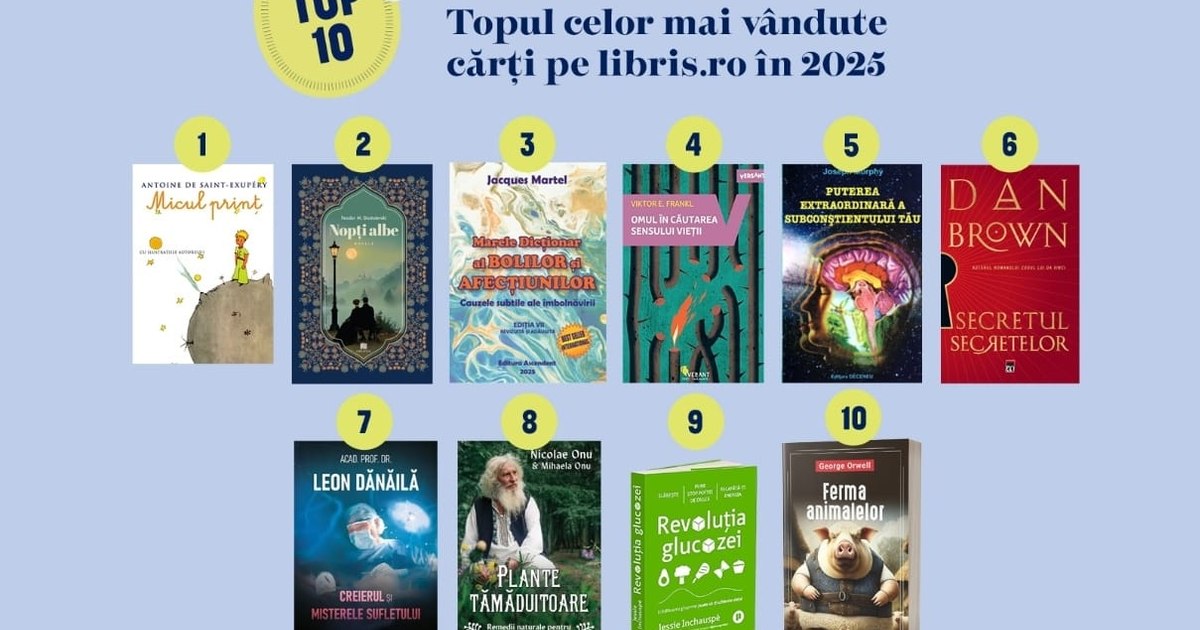
Classic or health books. These dominated the list of best-selling titles in 2025, according to data from online bookstore Libris. “The Little Prince” is in first place, followed by “White Nights” by Dostoevsky. In the top, in 10th place, is George Orwell's “Animal Farm”. However, most of the titles are non-fiction. I analyzed the sales with the creator of an online group dedicated to readers and with a book editor.
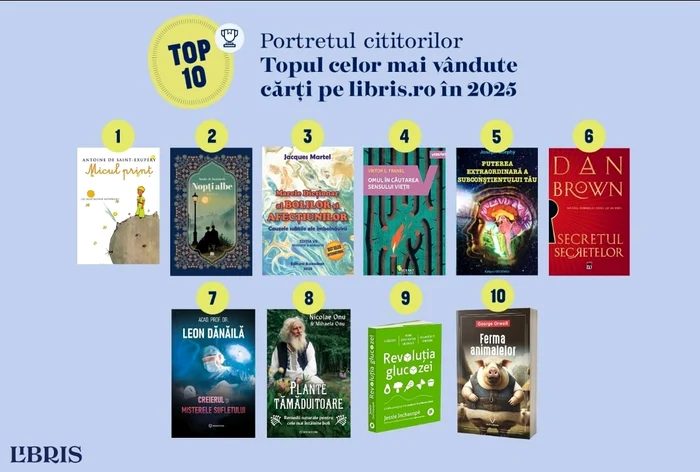
PHOTO Libris
What does the sales chart look like?
1. The Little Prince – Antoine de Saint-Exupery (fiction)
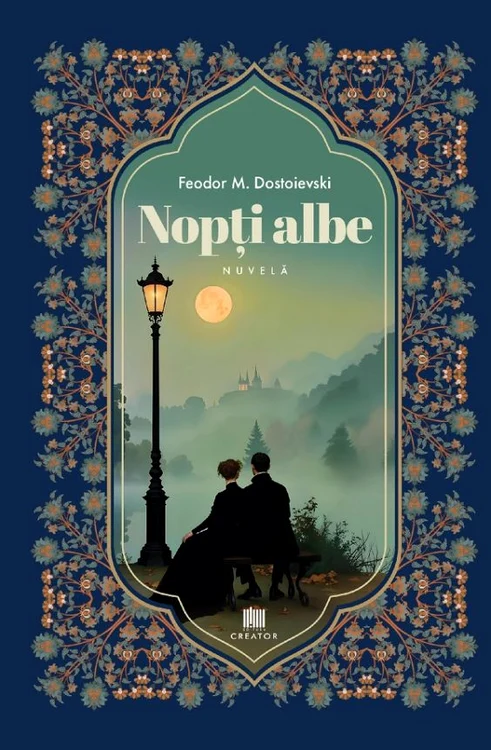
2. White nights – Feodor Dostoevsky (fiction
3. The Great Dictionary of Diseases and Conditions – Jacques Martel (Non-Fiction)
4. Man's Search for the Meaning of Life – Viktor E. Frankl (non-fiction)
5. The Extraordinary Power of Your Subconscious Mind – Joseph Murphy (Non-Fiction)
6. The Secret of Secrets – Dan Brown (Fiction)
7. The brain and the mysteries of the soul – Acad. Prof. Dr. Leon Dănăilă (non-fiction)
8. Healing plants – Nicolae Onu, Mihaela Onu (non-fiction)
9. The glucose revolution. Balancing Your Blood Sugar Can Change Your Life – Jessie Inchauspe (Non-Fiction)
10. Animal Farm – George Orwell (fiction)
The more promoted, the more bought
According to representatives of the online bookstore, the presence of Dostoevsky in the top is due, surprisingly perhaps, to the Tik Tok platform, where the reader community (BookTok) recommended the title throughout the year.
,,BookTok does not churn out quick titles, but consolidates a relatively stable core of around 15–20 volumes that remain relevant over the long term. The choice is guided mainly by the emotional impact of the reading, rather than by critical analysis or literary notoriety, which explains the return of classic authors to the charts through a contemporary reading, aligned with the current concerns of the young audience”. says Loredana Tudor, marketing manager.
“The current top gives me the impression that a large part of readers are playing it safe. The titles and authors present in the fiction area are established and highly recommended year after year. Regarding the large number of non-fiction titles, lately the trend towards a healthier lifestyle is high, the online area influences this aspect a lot and even if it doesn't surprise me that this way of information (reading) was also chosen, I'm glad”, says Lavinia Chirănescu, the founder of the Facebook group “I read, so I exist”, which has brought together over 49,000 reading lovers.
Lavinia is happy about the presence of classic books in the top and says about “The Little Prince” and “White Nights” that “they are books that reach and remain in the soul”.
I also asked Liviu Szoke, editor, translator and blogger, how he sees the top:
,,I think they have been showing us the same truth for many years now: people are still reading, but a huge share of the books bought and read are children's books (see “The Little Prince” in first place), the classics that are still studied in school and on the curriculum (at least in college, as far as I know), the non-fiction that “turns” us all into experts on diseases and self-healing (…), thrillers lightheartedness (see Dan Brown) and, shyly, a book that is becoming relevant again, unfortunately, related to the dystopia in which we increasingly seem to live (see “Animal Farm”)”.
Best selling authors
1. FM Dostoevsky
2. Freida McFadden
3. Antoine de Saint-Exupéry
4. Ioana Parvulescu
5. Liane Schneider
6. Geronimo Stilton
7. Roald Dahl
8. Jacques Martel
9. Eric-Emmanuel Schmitt
10. Dave Pilkey
“Of the top ten best sellers, five are authors of children's books (Saint-Exupéry, Schneider, Stilton, Dahl and Pilkey), one is a classic required at school and which does not go out of style, two are authors not necessarily of the dozen, but… of wide consumption, one with diseases, and Ioana Pârvulescu remains to hold the flag, which makes me very happy. (…) I'm glad the presence of Ioana Pârvulescu and Dostoievski in the top. I'm not saying it's a bad thing that there are five authors of children's books in the top ten, on the contrary, it's a gratifying thing, because from the generations that are now reading, generations of mature readers will certainly be formed, who, at least in part, will continue their current habit of reading”says Liviu Szoke.
Lavinia Chirănescu, for her part, has a name that she is happy to find in the top:
“I am extremely happy to see one of my favorite authors on the top: Eric-Emmanuel Schmitt. I love the themes he tackles, he conveys warmth and wisdom. I also met him in real life at a book launch and loved the way he spoke and connected with his appreciative readers.”
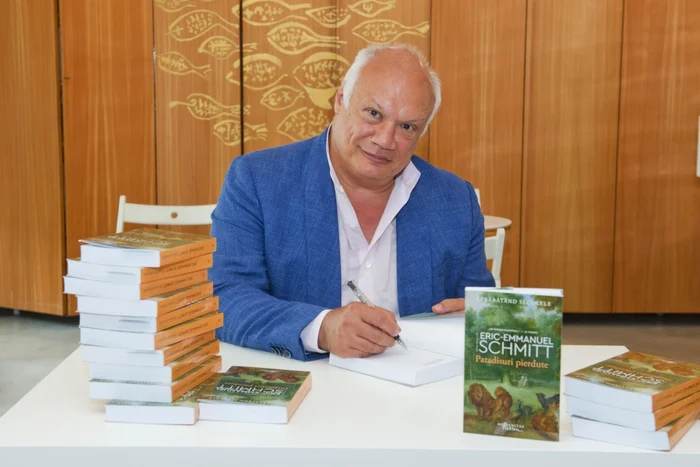
Eric-Emmanuel Schmitt, on the 9th place in the list of best-selling authors PHOTO Daniel Angelescu
I asked Lavinia what the top says about the profile of the Romanian reader.
“Romanian readers are explorers, and then dedicated. I have met many people early on in this reading area and have seen them read from all categories until they find their comfort zone. Romanian readers are open to new things and flexible. And they have another quality: they support the Romanian authors”, was her reply.
The best-selling Romanian authors
1. Ioana Pârvulescu
2. Leon Magdan
3. Ioana Chicet-Macoveiciuc
4. Alex Donovici
5. Alec Blenche
6. Veronica D. Niculescu
7. Dan-Silviu Boerescu
8. Radu Paraschivescu
9. Niculina Gheorghita
10. Igor Bergler
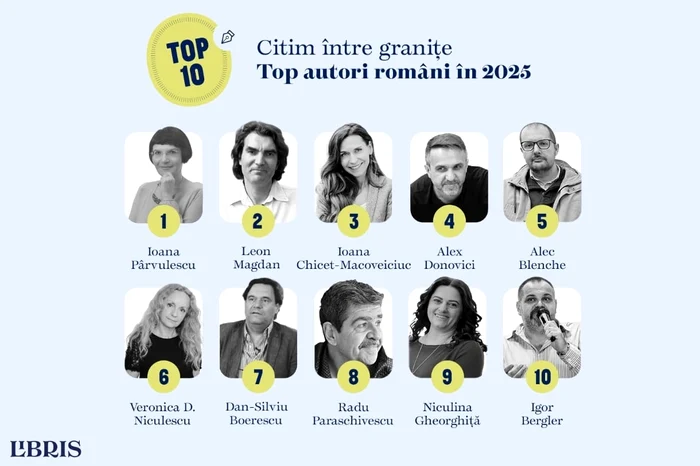
PHOTO Libris
Best selling fiction books
1. White nights – Feodor M. Dostoevsky
2. The Secret of Secrets – Dan Brown
3. Animal Farm – George Orwell
4. 1984 – George Orwell
5. As long as lemons bloom – Zoulfa Katouh
6. I am Emilia del Valle – Isabel Allende
7. The body of the soul – Ludmila Ulițkaia
8. Housekeeper – Freida McFadden
9. Don't Lie To Me – Freida McFadden
10. The Watcher in the Rye – JD Salinger
“Romanians don't read” – myth or reality?
In the last barometer of cultural consumption, almost half of the Romanians interviewed (46%) said that they had not read a single book in the last year. However, on groups like the one founded by Lavinia, there are dozens of posts about books every day.
,,The group > relies a lot on activities. We have challenges, marathons, literary games that encourage both reading and subsequent literary discussions. The choice of readings is influenced by the posts and recommendations of other members. They trust each other, they know each other, and when they need inspiration for a new shopping cart, they know what to do: they do a group search.”
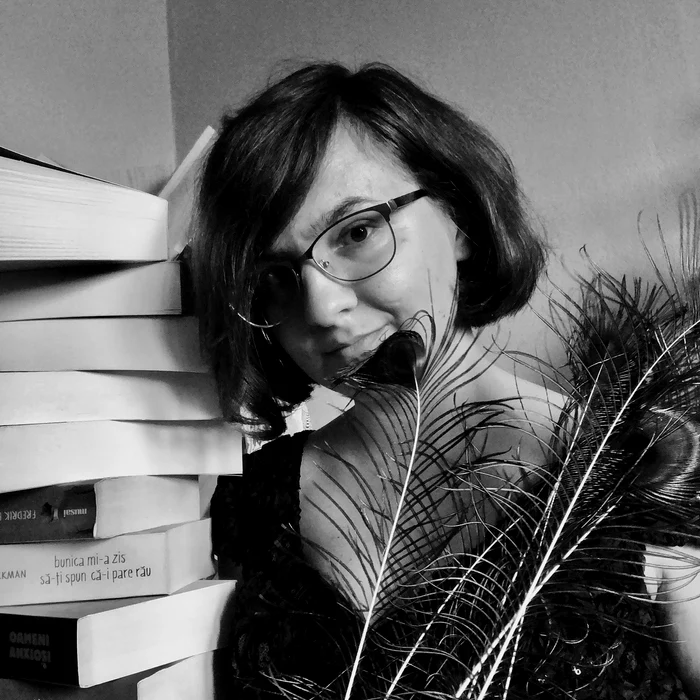
Lavinia Chiranescu
To the question “Romanians don't read – myth or reality?”, Lavinia answers:
“Many Romanians don't read, this is my truth. I see them, recognize them and hear them. But I think that the number of those who choose to embark on this adventure is increasing.”
For his part, Liviu Szoke says:
“Unfortunately, I don't think it's a myth. Dozens of people come into my house throughout the year and they all marvel at the multitude of books I have, even looking amazed at the sheer number of books. (…) I myself know dozens of cases of houses where you don't even see a book, and the bookcases are just stands for trinkets, the huge TV and framed pictures of the family.
So the idea would be that one still reads, but the number of consistent readers, who have a habit of it, is extremely small compared to the number of those who do not even consider buying a book, let alone reading it. When asked, many people blame the high price of books, which is true, it's even compared to our purchasing power (although a book is the same as two packs of cigarettes), but people don't even break down library doors to read books for free”.
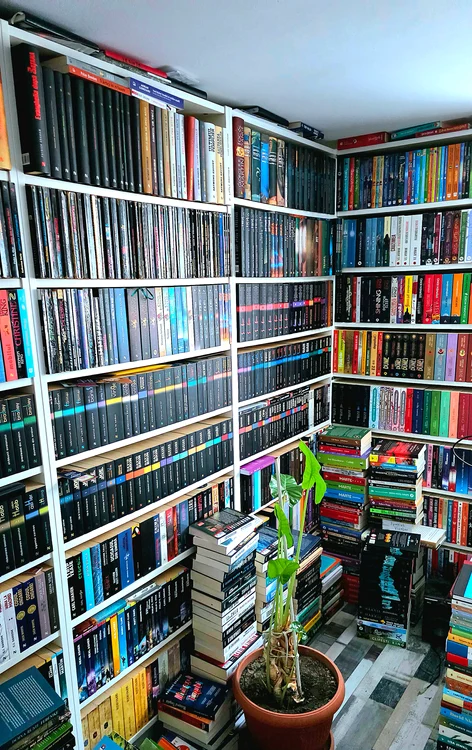
Part of Liviu Szoke's library PHOTO Personal archive
The book editor strongly recommends reading: “You will certainly discover new worlds, new characters, other styles of thinking, which, perhaps, will make you think and stimulate you!”.
And Lavinia thanks those who read and buy books for “the impulse you give to those around you”.
Other data from Libris sales
The best-selling children's books in 2025 were: The little prince (by Antoine de Saint-Exupery), 101 bedtime stories, The first poems and songs for the smallest dwarves, A summer with Isidor (by Veronica D. Niculescu), 101 animal stories, 500 clever riddles for children Ed.2, The little girl who didn't like his name (by Elif Shafak), 99 stories with large letters for dwarfs and grannies, STEM activities. Sensational science (by Stephanie Clarkson) and The invisible ones (by Ioana Pârvulescu).
To the category Humanitiesthe best selling books were: Breaking the curse. The Romanian Revolution of December 1989 (of Cătălin Ranco Pițu), The psychology of money (by Morgan Housel), Meditations (by Marcus Aurelius), Nexus. A Brief History of Information Networks from the Stone Age to AI (of Yuval Noah Harari), Mineriada was born during the Revolution. The events of June 13-15, 1990 (of Cătălin Ranco Pițu), Psychology of crowds (by Gustave Le Bon), The art of war (by Sun Tzu), Scattered minds (by Gabor Mate), Sapiens. Short history of mankind (by Yuval Noah Harari) and Religion woke (by Jean-Francois Braunstein).
In the Young Adult category, the best-selling titles were: Like the fish in the tree (by Lynda Mullaly Hunt), On watch in the rye field (by JD Salinger), Powerless: The Game. Powerless series (by Lauren Roberts), The gift of Jonas (by Lois Lowry), Fearless. The denouement. Powerless series (by Lauren Roberts), With a pocket full of stars (by Aisha Bushby), Reckless. The follow up. Powerless series (by Lauren Roberts) Cuban recipes for a broken heart (by Laura Taylor Namey), The Monet family. Princess. Part 2 (by Weronika Anna Marczak) and The last cherry blossom (by Kathleen Burkinshaw).