Russia is providing significant support to the Iranian authorities in their efforts to control large-scale protests in the country, without openly getting involved, Foreign Policy reports. According to the analysis, Moscow avoids direct military intervention, but constantly contributes to strengthening the repressive capabilities of the regime in Tehran, including through arms deliveries and technological support for information control.
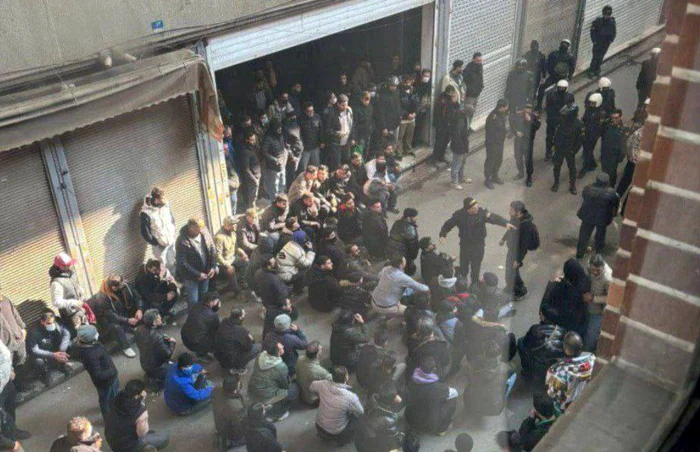
Iranian protesters attacked with tear gas/PHOTO:X
Journalists note that this is a well-known Russian strategy: supporting allied regimes to manage domestic unrest themselves by providing military, technical and political resources.
Discreet but constant military support
A key element of this support is weaponry. Iranian security forces have been using Soviet- and Russian-made equipment for years. The use of Kalashnikov automatic weapons, Dragunov sniper rifles, PKM machine guns, as well as armored vehicles, including T-72 tanks and armored personnel carriers adapted for urban interventions, have been documented during previous protests.
Foreign Policy also draws attention to more recent deliveries. In late 2025, Russia reportedly supplied Iran with Spartak MRAP armored vehicles, designed for sustained urban operations and protection of law enforcement during riots. According to the author of the analysis, these vehicles are specially adapted for internal security scenarios.
Iran is also said to have received Mi-17 transport helicopters, used for the rapid movement of security forces and for monitoring the situation during mass demonstrations.
Information control, an essential component
According to Foreign Policy, Russia's decisive support is manifested in the field of information control. In the context of the current protests, the Iranian authorities have restricted the population's access to mobile phones and the international Internet, while keeping state services, banking systems and official platforms functional.
The aim of these measures would be to limit the ability of protesters to coordinate without completely paralyzing the state's digital infrastructure.
The publication claims that these actions were possible thanks to the technological support provided by Russia, including the implementation of advanced Internet traffic inspection systems. These technologies allow authorities to identify the applications being used, detect the use of VPNs, and selectively restrict messaging services, slowing down or blocking the very channels through which protests are organized.
The role of Russian companies and technologies
The material mentions the involvement of some Russian telecommunications providers, including the company Protei, which would have helped Iranian operators install communications interception and monitoring systems, integrated with the state's security structures. This would allow not only the surveillance of online activity, but also the identification of key protest coordination points.
At the same time, Russia would have shared its experience in using means of electronic warfare. Systems such as “Krasuha” or “Murmansk” can affect the operation of satellite communications and the GPS signal. Although they do not completely disrupt the Internet, these technologies can reduce the reliability of alternative communication channels.
Diplomatic support and the limits of Moscow's influence
In addition to technical and military assistance, Russia also provides Iran with diplomatic protection. As a permanent member of the UN Security Council, Moscow can block or dilute international initiatives to increase pressure on Tehran, insisting that the situation in Iran is a domestic matter.
However, Foreign Policy points out that Russia's influence is limited. In the event of a direct escalation between Iran and the United States, Moscow's options would narrow considerably and indirect support mechanisms would become less effective.
In such a scenario, Russia would likely continue to avoid overt military intervention, but could step up arms deliveries, intelligence sharing, and political support. Even so, these measures could only buy time, without fundamentally changing the future of the Iranian regime, the author of the analysis appreciates.
According to Reuters, a possible military intervention of the United States in Iran, against the background of large-scale protests, could take place in the next period. In parallel, CBS News reported that at least 12,000 people would have died as a result of the demonstrations, and some unofficial estimates indicate a number of more than 20,000 victims.