Greenland at the center of the conflict. Denmark may use the EU clause


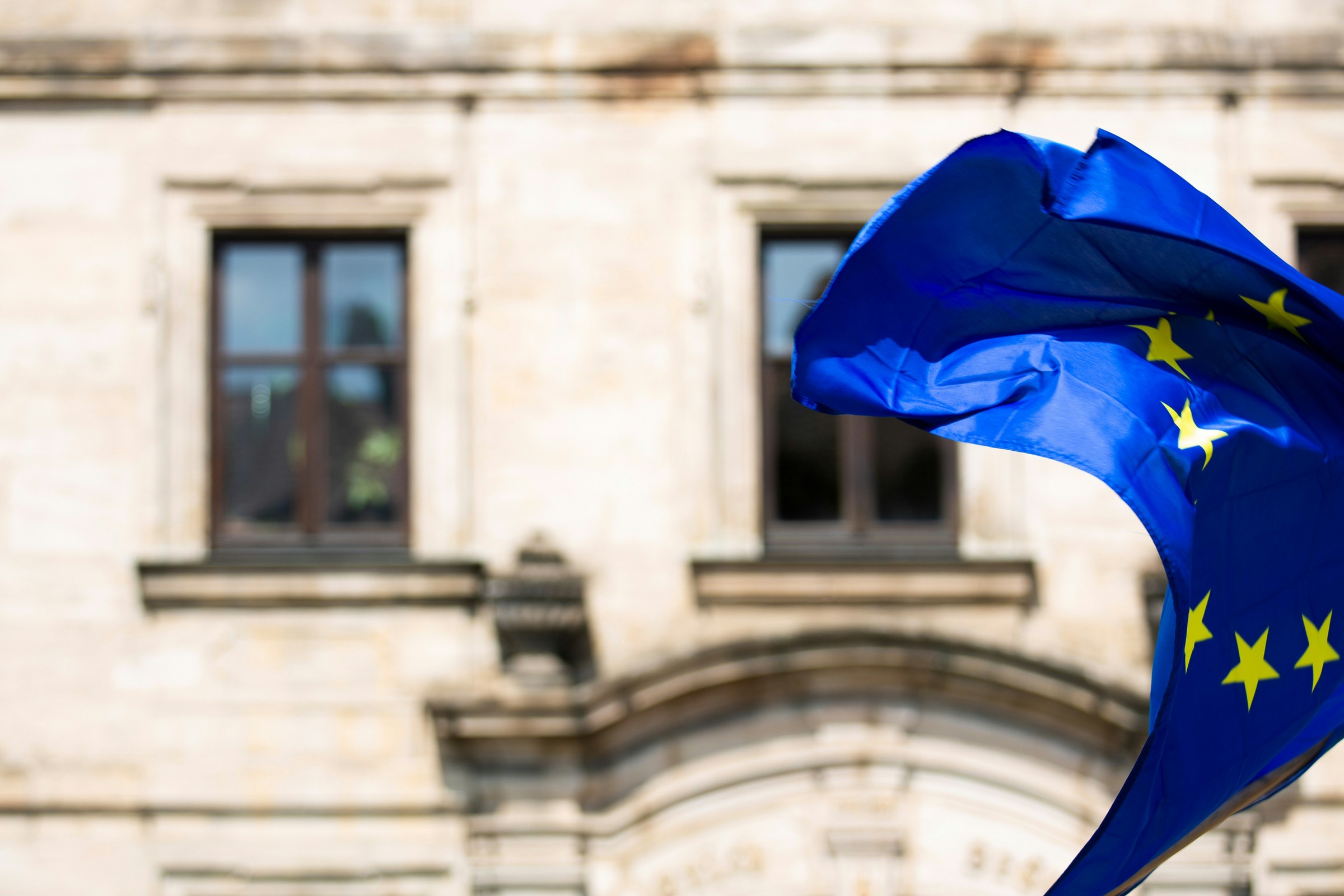
The basis of Denmark's security is the transatlantic alliance, but it will probably not be of much help in the confrontation with the United States, because America dominates NATO. Instead, Denmark could trigger a little-known clause in EU treaties: art. 42.7 of the Treaty on European Union.
While some analysts argue that it is actually stronger than NATO's better-known Article 5 on common defense, Article 42.7 contains many caveats and uncertainties.
POLITICO looked at five questions about this provision and whether it would make sense for Denmark to trigger it:
1. What does he say?
“If any Member State becomes the victim of an armed attack on its territory, the other Member States shall be obliged to provide assistance and support by all means at their disposal, in accordance with Article 51 of the Charter of the United Nations. This does not affect the specific nature of the security and defense policy of certain Member States.”
This clause was introduced into the Lisbon Treaty in 2009 to provide EU members with protection similar to that provided by NATO. It gives neutral countries some freedom to opt out of participating.
For many analysts, the EU's mutual assistance clause “is more binding” because it states that member states have an “obligation” to provide “all assistance and support using all available means.” NATO's Article 5 includes language about aid measures “deemed necessary”, which leaves more room for individual countries to decide.
The EU version “is stronger in terms of diplomatic language, but the pool of power is smaller than under NATO,” says Alexander Mattelaer, associate professor of international security at the School of Management of the Free University of Brussels.
2. Has it ever been used?
Yes, once.
In 2015, France invoked this article in response to terrorist attacks carried out by ISIS. This allowed Paris to transfer some of its troops from Africa to patrol French streets, while EU countries such as Germany sent their troops to countries such as Mali.
The proposal was then unanimously supported by other EU defense ministers. Because the EU has no army, Paris had to negotiate with other EU countries for specific military assistance.
3. How does it work?
It would be up to Denmark to decide to invoke this article. Then, as in the case of France, it would have to be unanimously accepted by all other member states.
However, any EU response requiring unanimity means Denmark could face problems if countries such as Hungary veto its approval. — I don't think Denmark would invoke this article without the certainty that it would achieve unanimity, because it would be very risky, says Antonio Missiroli, a former NATO deputy secretary general who also worked in the European Commission. — Certainly a country like Hungary would not oppose the United States, he adds.
There is also some uncertainty as to whether this clause would apply to the crisis in Greenland, which left the European Communities in 1985 although it is still part of the EU Kingdom of Denmark.
On Sunday, EU Defense Commissioner Andrius Kubilius said clause 42.7 would “definitely” apply, and the European Commission suggested the same last year. A spokeswoman for the Commission said at the time: — Greenland is part of the territory of the Kingdom of Denmark and is therefore, in principle, covered by the mutual solidarity clause contained in Article 42.7.
4. What will happen then?
If Denmark successfully invokes this clause, it will send a “very strong political and legal signal,” says Sven Biscop, director general of the Egmont Institute think tank and an expert on European security.
This mechanism does not require intervention by the EU itself, leaving the decision on further steps to the capitals of the Member States, and in particular to the country that invoked this clause. Options include issuing solidarity statements, financial assistance and even military support, adds one EU diplomat. Missiroli suggests that one option for Denmark could be to use the article “to ask another country to mediate.”
While “it's too early to say” what such a response would look like in practice, says one European government official, “we will offer the support we would expect” in a similar situation.
This could also constitute a legal basis for proposing economic sanctions, Biscop believes.
Sergey Lagodinsky, a German member of the European Parliament and vice-chairman of the Green Group, said that the legislator should prepare a “list of possible countermeasures” in case Article is invoked. 42.7, including the expulsion of US troops from European bases, a ban on overflights of US aircraft and restrictions on the access of US companies to the EU market.
Invoking the article could involve limited troop deployments by the EU's military committee and military headquarters, advisory bodies composed of the bloc's most senior generals and military representatives based in Brussels, Biscop said.
Analysts agree that the probability of a war breaking out between the EU and the US is zero. Even if the bloc wanted to do this, it has only “a few dozen” military personnel in Brussels, a miniature command structure capable of directing “at most” 3,000 people. soldiers and limited experience outside of peacekeeping missions, Biscop emphasizes. However, member states could decide to provide more significant military assistance using their own resources.
Meanwhile, the responsibilities of states themselves remain undefined, meaning Denmark may face a “political reality” in which some EU capitals make few concrete aid commitments.
Because of these uncertainties about how the article should be applied, Kubilius told POLITICO last month that he wanted to start a discussion this year on “institutional defense preparedness,” which could include amending the article. 42.7 to make it fully operational, with clear procedure and integrated military command.
5. What would this mean for NATO?
Denmark has warned that annexation of Greenland by the United States would mean the end of the alliance, although Donald Trump disagrees.
If the United States goes through with a takeover, “it doesn't necessarily mean… at least legally, the end of NATO, but it would mean politically undermining NATO's credibility,” says Fabrice Pothier, CEO of Rasmussen Global, a policy consulting firm. This may lead to “some EU Member States moving towards more EU-like solutions, perhaps strengthening Article 42.7,” he adds.
However, this would involve the creation of a new security architecture for Europe without the participation of the US, which has been the key guarantor of the continent's security since World War II.
Seb Starcevic contributed to this article.