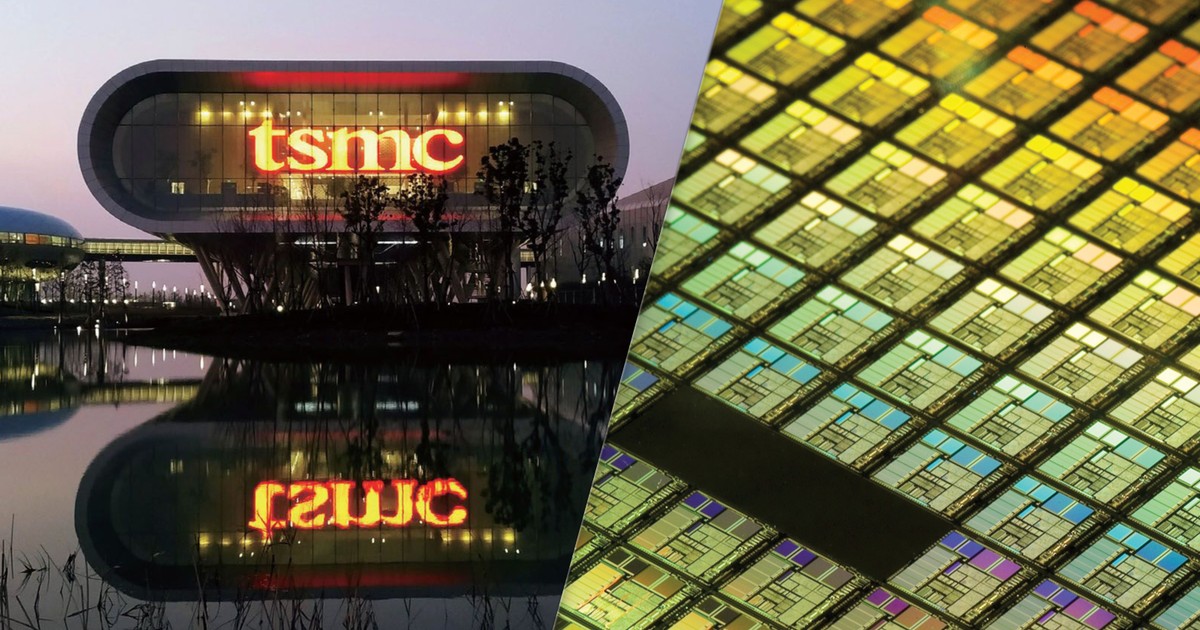
TSMC, the largest semiconductor manufacturer based in Taiwan one of the most important companies in the worldannounced its financial results for the fourth quarter of last year. In short, they look phenomenal.
Customers are fighting for access to the Taiwanese production lines, which are working at full speed, accepting the rising prices of services, which has resulted in year-on-year revenue growth by 25.5%. and an increase in income by as much as 35%.. Even TSMC itself is a bit surprised that the last quarter was so good, because… these results exceed the forecasts from a few months ago.
It's clear that while AI-based service providers still have trouble making money from AI (ask Open AI), producing and providing the hardware on which these services run is one of the most profitable businesses today.
However, there is a disturbing thought running through investors' heads: is this a permanent situation, or is there a drastic correction due to the fact that we are dealing with a bubble or that chip recipients will face the problem of… lack of electricity to power all the purchased accelerators.
The rest of the article is below the video
TSMC: AI is not fake, there is enough electricity in the US
During the press conference however, the company's CEO, CC Wei, stated that AI is a “real” technology and has an increasing impact on our lives, and TSMC's customers are very rich – also thanks to AI.
— AI is real, not only real, it's starting to grow in our daily life.
In other words, in his opinion, it is not “hoax”, but something that happens in the real world.
Interestingly, he also stated that the USA has or will have enough energyto power all ordered accelerators. Currently, this is the topic of a very heated debate, because not only many analysts, but also Big Tech bosses such as Elon Musk and Mark Zuckerberg believe problems with access to energy as the biggest obstacle to the expansion of data centers.
To somehow cope with it, hyperscalers place gas turbines or modified jet engines next to their new data centers, which are intended to power the purchased accelerators until the newly built campuses can be connected to the classic energy infrastructure that cannot keep up with the AI fever. The demand for solutions of this type is currently so high that all major suppliers have production booked several years in advance.
In parallel, market giants are investing billions of dollars in nuclear energy as a more permanent solution to the problem. Therefore, it is clear that increasing orders from TSMC indefinitely does not make sense. The question is which side of the equilibrium the supply chain is on. Unfortunately it looks like that it is a bit of a technological “Schrödinger's cat”i.e. we will only find out when we try it ourselves.
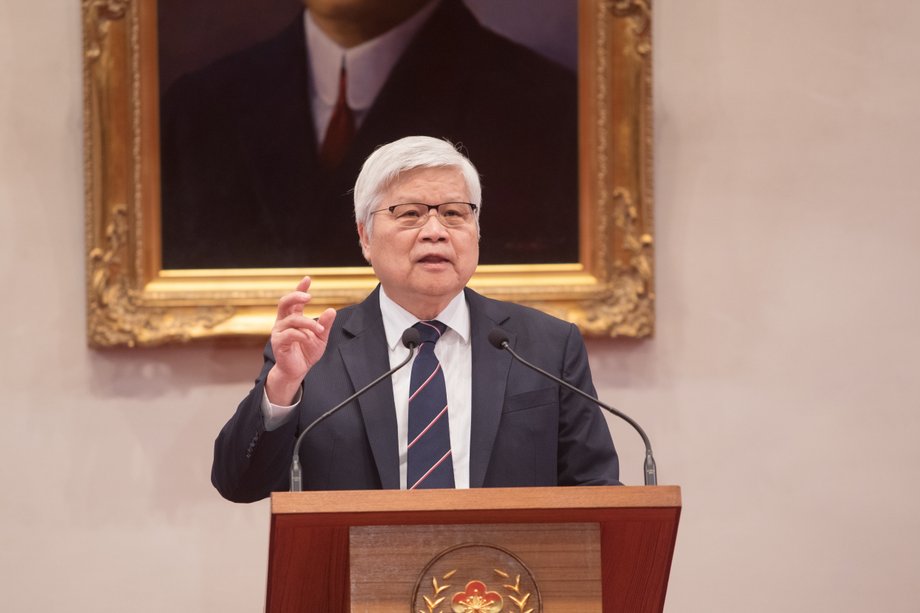
Dr. CC Wei, head of TSMC and one of the most important figures in the semiconductor world.
|
jamesonwu1972 / Shutterstock
Carefully increase investment in new factories
This does not mean that TSMC is 100 percent. confident. However, it is certain enough that the increased demand for chips will continue to (with some nervousness, but still) invest USD 52-56 billion this year. in the expansion of its infrastructurewhich is several billion more than last year.
— We're also very nervous about it. We're investing $52-$56 billion in capex. If we didn't do it carefully, that would be a disaster for TSMC for sure, said the company's head during the conference.
Historically, TSMC has been very cautious about building more factories. Modern factories for the production of the most advanced chips cost approximately USD 20+ billion. and if their production lines are not at least 80% occupied, it is a disaster for their owners.
The fact that one of the most restrained and financially disciplined companies on the semiconductor market decides to increase expenses is not something that can be ignored. There is certainly a lot of market research behind this decision. On the other hand, we must remember that TSMC is in a more comfortable situation than, for example, Nvidia, Broadcom, AMD, or any other company's client fighting in the world of AI, because TSMC has no competition — regardless of who ultimately wins the fight for accelerators or AI services, the Taiwanese will also win.
Taiwan continues to be in the spotlight
It will cover a significant part of the planned expenses expansion of the TSMC campus in Arizona. Despite initial concerns and problems with starting production, the first Taiwanese foundry in Arizona turned out to be a success and TSMC is accelerating the expansion of the campus, which, in addition to foundries producing the most advanced semiconductors, will also include a facility dealing with advanced packaging (i.e. joining together) chips.
This is of great importance to the American supply chain because reduces the number of key steps in the accelerator production process that cannot be performed in the US. The expansion of the American TSMC facility is important for one more reason. It is a very important bargaining chip with the US administration, used for reducing customs duties on imports of goods from Taiwan from 20 to 15 percent.
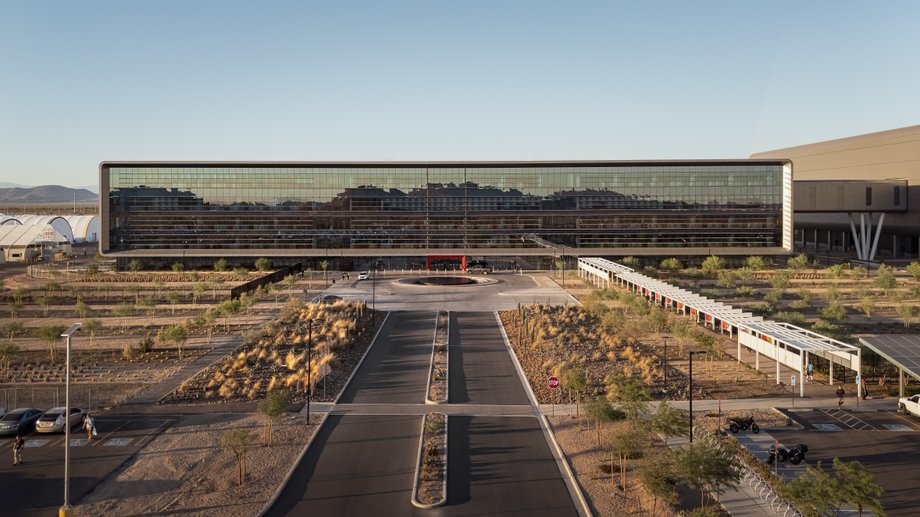
TSMC factory in Arizona
Despite this, TSMC still maintains that most of the planned investments are in Taiwan. TSMC assured that the Taiwanese factories already began mass production of semiconductors using a 2 nm class processand even more modern production lines using the A16 process are scheduled to launch in the second half of this year. So, although Arizona is important for TSMC and the company is ready to invest further billions of dollars here, it is the production of the most advanced chips will initially be limited to a small island located several dozen kilometers from Chinese beaches.
Monopolists benefit from the good performance of the monopolist
The market reacted positively to TSMC's report and the wave that the Taiwanese are surfing took with it another semiconductor monopoly: the Dutch ASML. After the Taiwanese announced their financial results, ASML became the most valuable European company.
It is the only existing manufacturer of machines necessary to produce the most advanced chips, so since TSMC, its largest customer, is planning gigantic investments in new factories, in practice this means larger orders from ASML.
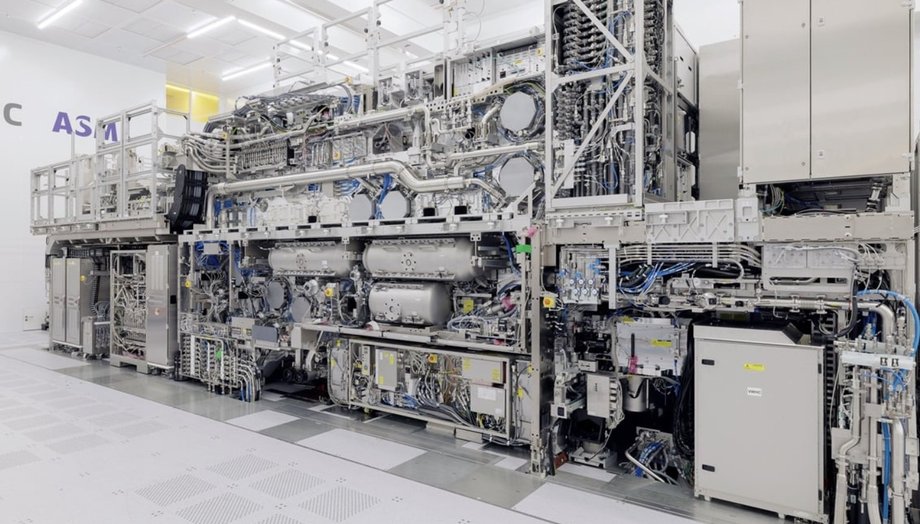
The photo shows one of the ASML machines used to produce the most advanced chips.
|
ASML
Investors and business clients are celebrating, consumers are not necessarily
Great results and cautious, but optimistic forecasts of companies that are one of the most important elements of the global technological puzzle certainly please many investors, because they can be interpreted as an assurance that, at least for now, there is nothing to fear (although, of course, not everyone is convinced of this).
Consumers have a bigger problem. Demand significantly exceeding supply allows TSMC to maintain high margins, which in turn translates into… prices of consumer products. Combined with the crisis that the memory market is currently going through, this portends a bad situation for the average person on the consumer electronics market.
The largest players – especially Apple, which has great chips with TSMC and has secured memory supplies, but also, for example, Intel, which has its own factories – will somehow cope and perhaps ultimately make a profit. Present chip shortage expected to last until 2028 or even 2029but many smaller players will certainly not survive, making the market less competitive. So if you are thinking about buying a new computer, console, smartphone, or other equipment whose important parts are an advanced processor and memory, we strongly advise against delaying. It definitely won't be cheaper.