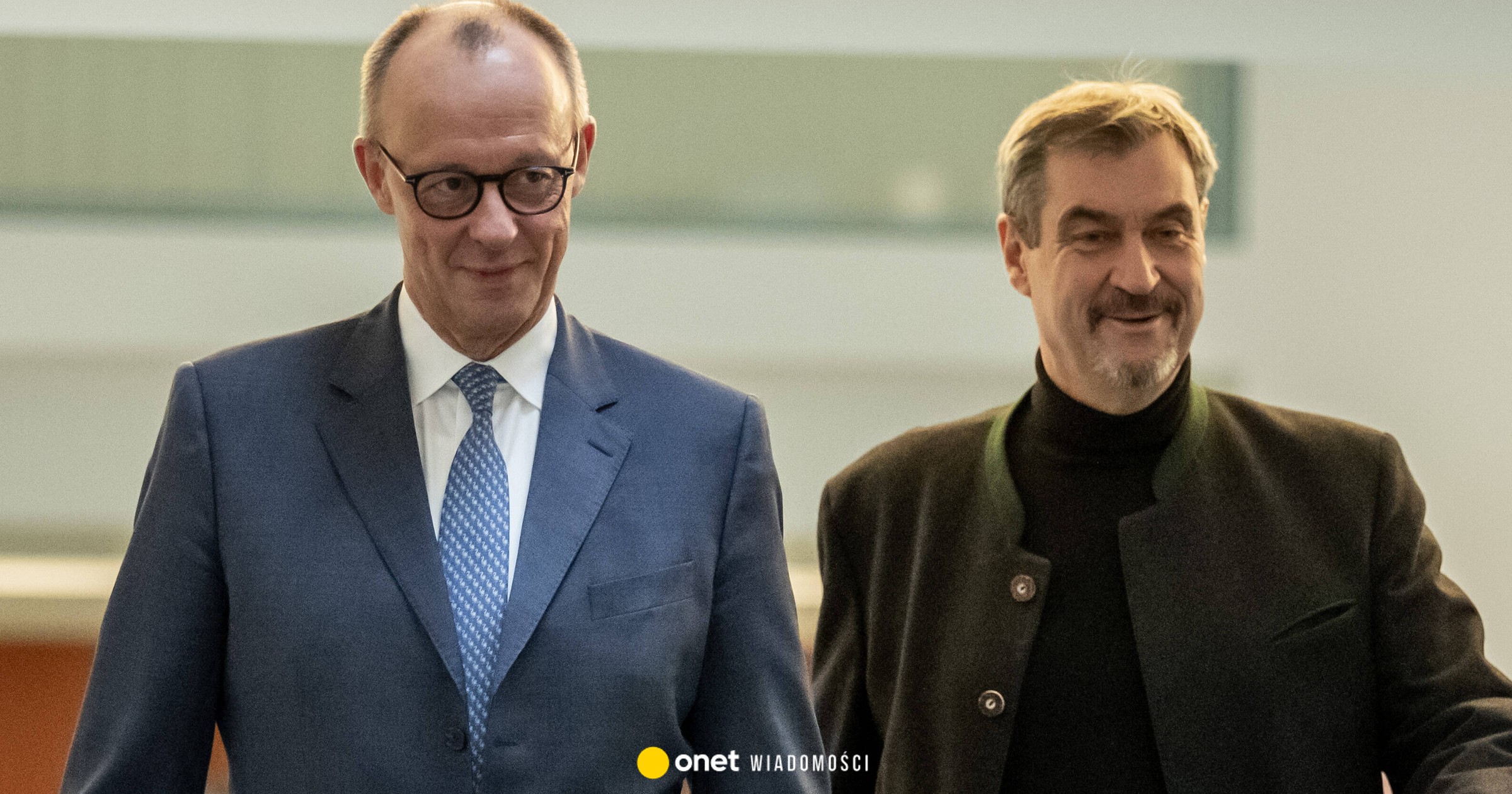
Chancellor Friedrich Merz publicly appeals to Ukrainian President Volodymyr Zelensky for young Ukrainians “to engage in the future for a safe and economically regenerating Ukraine, instead of going to Germany, Poland or Franceas we see it now.”
In turn, Markus Soeder, head of the Bavarian Christian Democrats, wrote on the X platform (formerly Twitter): “Ukraine must be defended and rebuilt by Ukrainian citizens. For this purpose, especially young Ukrainian men must return to their homeland“Both statements clearly show that there is a hierarchy of values for life and risk.
In their opinion, Ukrainian men – including those who have legally found shelter in Germany, work, pay taxes, study or start families here – should return and fight. Germans, however, are to be excluded from this. Soeder's additional remark — “We don't want German conscripts in Ukraine” — is a purely rhetorical device. No one is advocating sending German conscripts abroad without their consent. Besides, it would be almost impossible from a legal point of view.
“Ukraine is to be defended by Ukrainians.” Empty words that are supposed to sound patriotic
These types of statements serve rather to build a suggestive contrast: The Ukrainians are to return, the Germans are to remain safe. This is not true solidarity based on equality: Germany supports Ukraine financially and militarily on a billion-dollar scale, but consistently transfers the risk of death to Ukrainians.
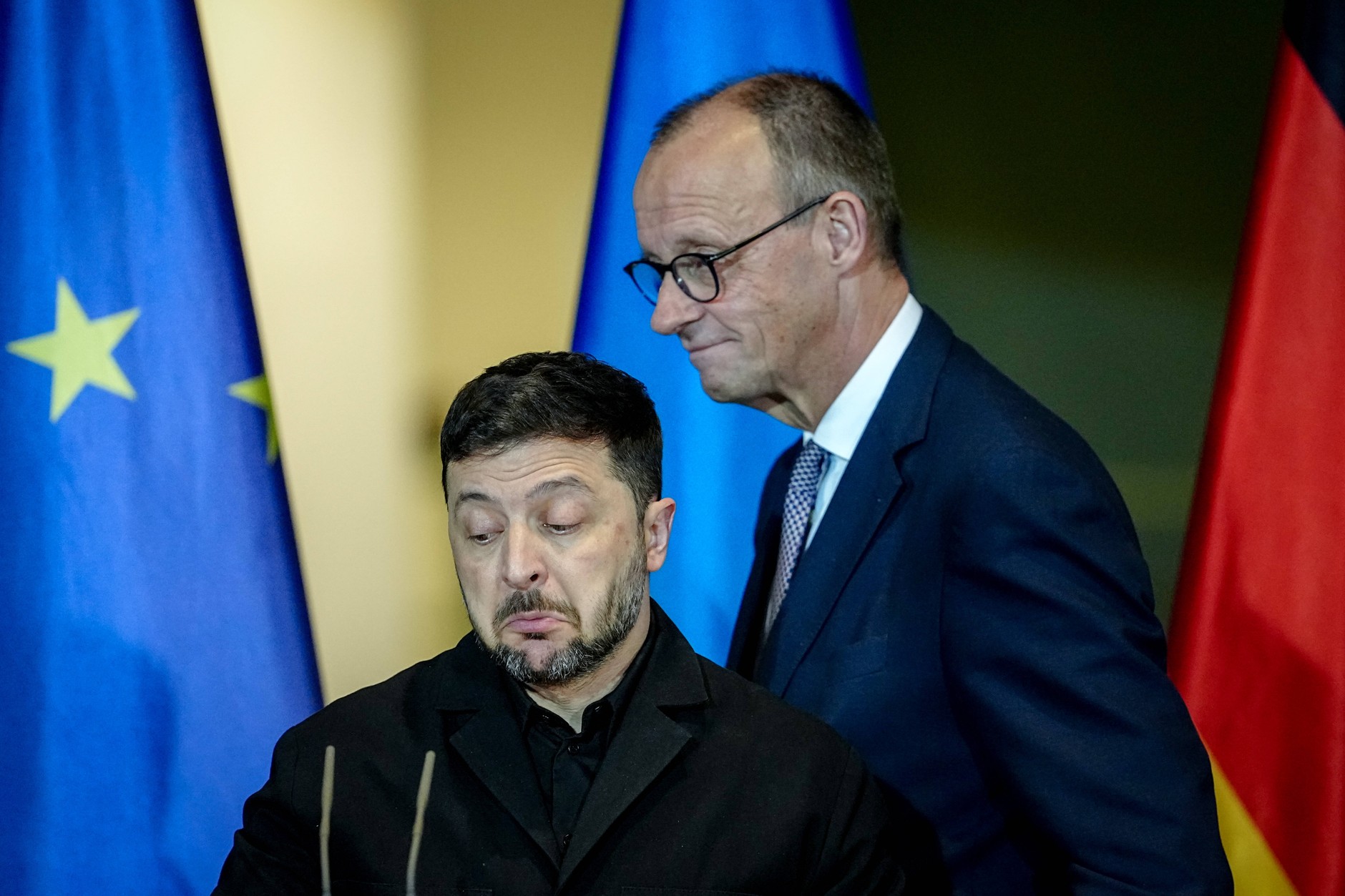
Press conference of Volodymyr Zelensky, President of Ukraine, and Friedrich Merz, Chancellor of Germany. Berlin, December 15, 2025Kay Nietfeld/dpa/PAP
The formula “Ukraine must be defended by Ukrainians” sounds patriotic and logical, but it is empty in the analytical layer and serves mainly one thing: populist simplification. It systematically ignores the fact that Ukraine is primarily struggling with an internal mobilization problem. Many Ukrainian men living in Germany are not subject to military service at all: due to age (calls to the front in Ukraine start only from the age of 25), health restrictions, family responsibilities or other reasons.
Moreover, forced deportations during war would be highly problematic from the point of view of international and European law, because would violate the EU's protection status for war refugees.
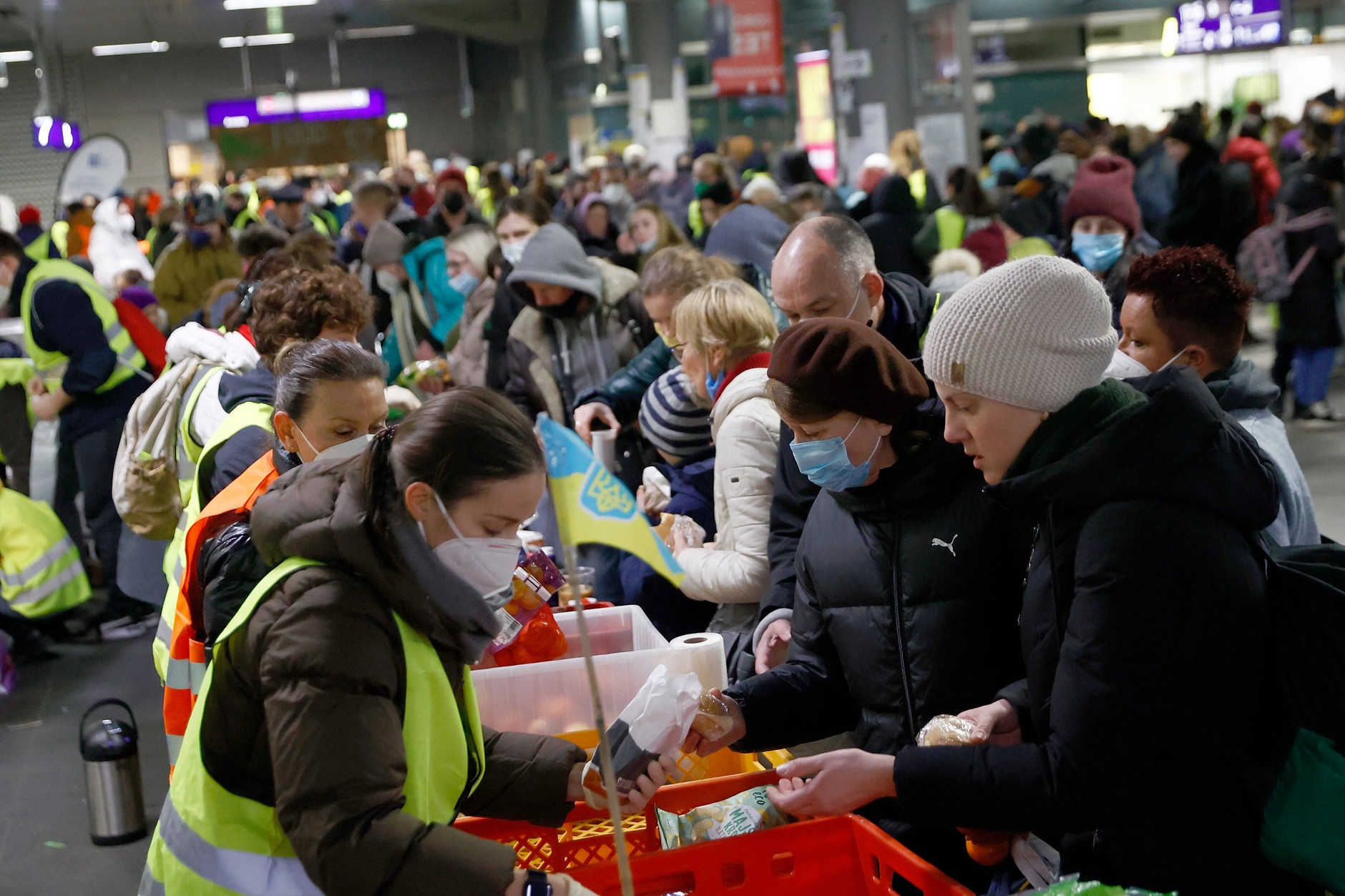
Aid for Ukrainian refugees at the Berlin train station, March 7, 2022.CARSTEN KOALL / DPA / PAP
All specifics have been deliberately left unsaid here. This is a tactical calculation to avoid responsibility. What specific actions would be taken? Should deportations be organized? Restriction of residence status? Cooperation with Kiev to expel people seeking protection? Termination of temporary EU protection status? And above all: what is the time horizon?
Ukrainian refugees are treated as a resource, not as a person
None of the politicians attaches these demands to a clear condition such as “after a ceasefire” or “with guaranteed security.” Instead, there are allusions. Vague enough to avoid legal conflicts, but loud enough to demonstrate toughness in domestic politics and win the applause of those who perceive refugees as a threat.
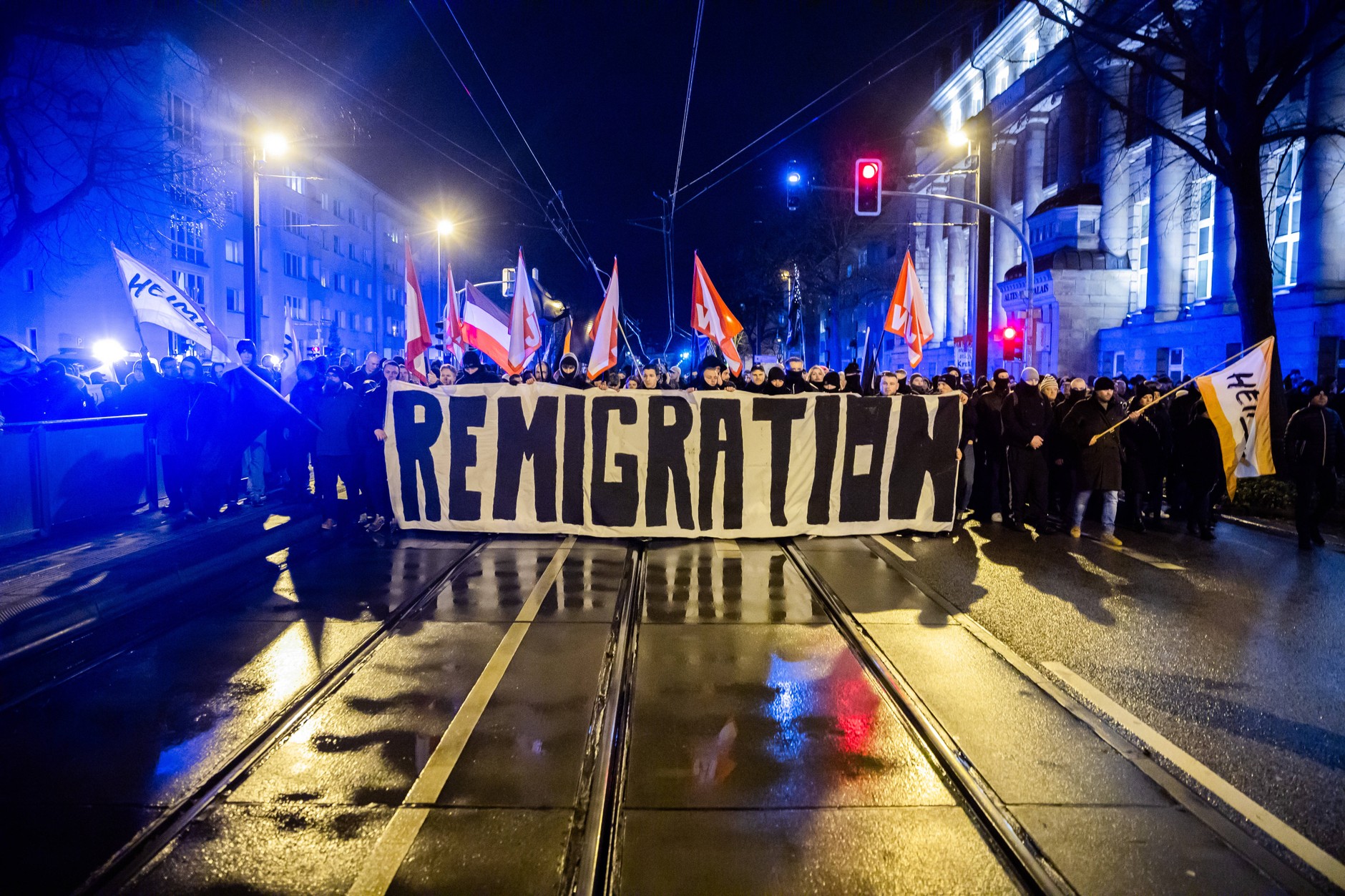
A banner with the words “Reemigration” during a far-right demonstration. Magdeburg, December 21, 2024dpa / PAP
It is in this clash of the migration debate, the discussion on military conscription and solidarity with Ukraine that the mechanism of instrumentalization is revealed: Ukrainian refugees are not treated primarily as people requiring protection, but as a “resource” that can be moved freely. Ukrainian men are to pay to secure German electoral votes. This is a cynical calculation: solidarity is sacrificed for self-promotion.
As a result, we see a policy of the Christian Democrats who want to signal strength and responsibility without bearing the burden of them. It is morally asymmetric, populistically simplistic and strategically opaque — and it undermines credibility, which is crucial for a serious debate. Is this the new German ruthlessness? Ukrainian blood at stake in the German election campaign?