Map of the new express roads expected in Romania. Only two expressways can be inaugurated by 2027

Although more than a decade ago, the Romanian state planned the construction of more than 2,400 kilometers of express roads, the success of these projects encountered difficulties. In 2026, only an 11-kilometer section could be inaugurated. In 2027, the situation will be similar.
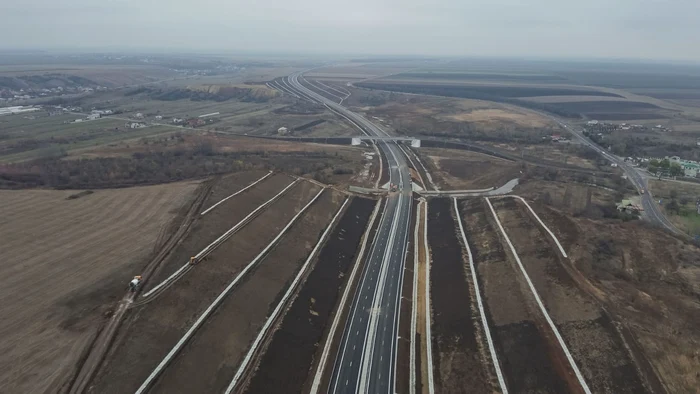
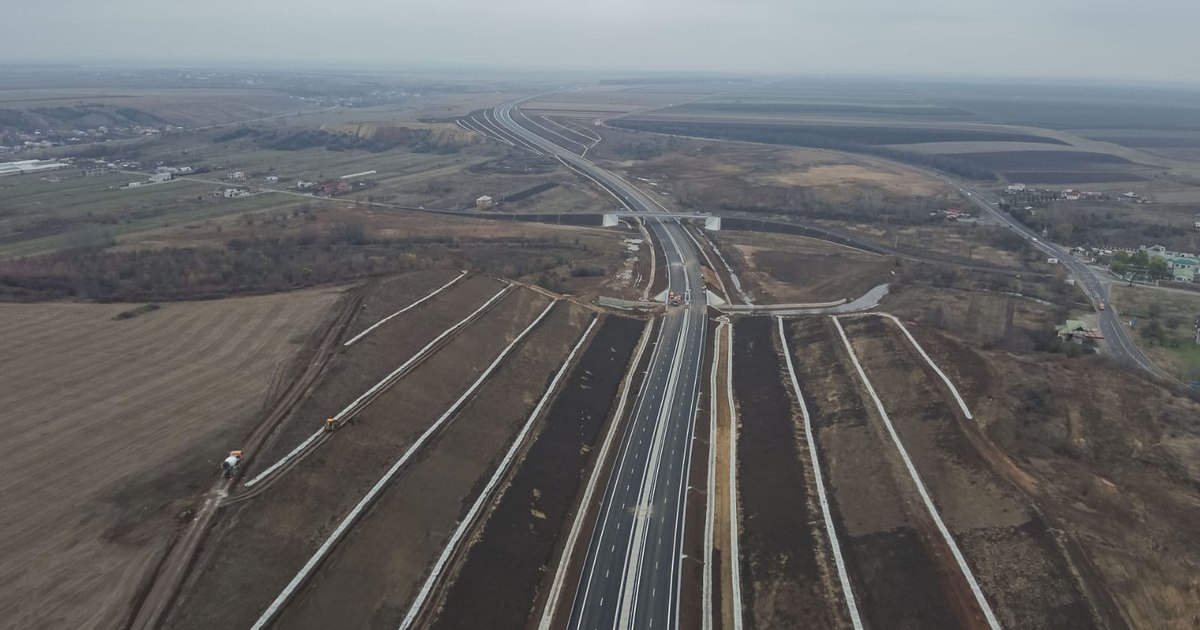
DEx 12 Craiova – Pitesti. PHOTO: DRDP Craiova
Less than 150 kilometers of express roads have been built in Romania, but the next four years could double the network of national express roads. A decade ago, road infrastructure development plans targeted the construction of 2,400 kilometers of express roads.
Dex12 Craiova – Pitesti, the only complete express road
Over time, investments were prioritized, and express roads were no longer among the vital projects.
The DEx12 Express Road Craiova – Pitesti, 122 kilometers long, was completed in 2025, being the only fully completed national high-speed road.
The list of express roads in Romania also includes two segments totaling 15 kilometers, from DEx16 Arad – Oradea – A3, and a five kilometer section of DEx4 Turda – Dej, used as a connecting road between Autostrada Transilvania (A3) and DN1 (Turda – Cluj-Napoca).
In 2026, the network of fast roads in Romania will be completed with a single express road segment: the 11 kilometers of DEx6 Brăila – Galați, currently under construction, which will complete the Bridge over the Danube from Brăila (two kilometers), completed in 2023.
“The Danube closer: we open DEx Brăila – Galați (10.76 km) in the first half of the year, maximizing the utility of the Brăila Suspension Bridge”, recently informed Cristian Pistol, manager of the National Road Infrastructure Administration Company (CNAIR).
By 2029, according to the estimates of the 130km.ro platform, which monitors large road infrastructure projects, the network of express roads will be completed by approximately 170 kilometers. DEx6 Brăila – Galati (11 kilometers) should be completed in 2026, the inauguration of which was originally expected in 2025.
In 2027, the 11-kilometer segment of DEx14 Oar – Satu Mare, for which the execution contract was signed in October 2025, is scheduled to be completed. In 2028, the completion of two sections (lots 1 and 2), totaling 73 kilometers, of DEx16 Arad – Oradea, between Oradea and Chișinău Criș, is estimated. For lot 3, Chișinău Criș – Arad (47 kilometers), and the connecting road to the Arad West industrial area (2.9 kilometers), the completion period remained uncertain. Contracts for all lots have been signed, but it remains unclear when the work on the ground will actually begin.
Prime Minister Ilie Bolojan recently mentioned that the order to start the works was pushed until the spring of 2027, due to the massive overcontracting in the investment projects.
“It is an important project for the western part of Romania, but the start of which we are not in a position to discuss in the immediate future. I understand from the discussions I had with the colleagues who lead CNAIR that there is an intention of the builders to start the works at their expense earlier”added the prime minister.
DEx6 Focșani – Brăila is expected to be completed in 2029, with a length of 74 kilometers. The contract signed at the end of 2025 has a duration of 42 months, of which six months are allocated to design and 36 months to execution.
The 2015 Master Plan targeted over 2,400 kilometers
The map of high-speed roads in Romania, outlined by the General Transport Master Plan, approved by the Government of Romania on February 25, 2015, included over 2,400 kilometers of express roads planned, expressways seen as a cheaper and simpler alternative to the construction of highways.
In 2021, the plans were updated and prioritized through the Transport Infrastructure Development Investment Program 2021–2030.
In the new form of the documents regarding road infrastructure investments, only a few express roads were included in the reference scenario: DEx 12 Pitesti – Craiova, DEx 6 Brăila – Galați, Bridge over the Danube from Brăila, DEx 4 the connecting road A3 – Tureni and Someș Express (A14) Satu Mare – Oar.
The reference scenario concerned, in total, 16 high-speed roads, mostly motorways, for which funding was provided. The expressways included in this scenario have been completed or are under construction.
Priority express roads for the coming years
In the same program, 27 other priority road sectors were mentioned, totaling over 2,500 kilometers, mostly highways, but also some express roads.
The list of priority projects included, in the south, the Giurgiu – Bucharest express road (DX Transdanubium), with a length of 55 kilometers, the Bucharest – Alexandria express road (Danubius Express), 70 kilometers long, continued by the Alexandria – Craiova section, with a length of 125 kilometers, as well as DEx16 Arad – Oradea, 134 kilometers long.
In the area of Bucovina and Moldova, among the priorities were the Suceava – Siret express road (Moldova Express), 41 kilometers long, which will connect the internal network to the northern border, and the Focșani – Brăila express road (Milcovia Express), with a length of 86 kilometers.
In the southwest and west of Romania, the 78.7-kilometer Craiova-Calafat (Tracia Express) expressway and the 72.8-kilometer Drobeta-Turnu Severin-Calafat (Tracia Express) expressway were planned, both up to the exit from the country to Bulgaria, on the Calafat-Vidin bridge, as well as the 142-kilometer Drobeta-Turnu Severin-Caransebeș-Lugoj (Danubius Express) expressway. The projects Timișoara – Moravița (Banat Express), with a length of 88 kilometers, and Craiova – Filiași – Drobeta-Turnu Severin (Danubius Express), with a length of 104 kilometers, complete the transport corridors that will connect Romania with Serbia.
In the northwest, the Someș Expres network covers the sections Cluj-Napoca – Dej, 75 kilometers long, Dej – Baia Mare – Halmeu, 95.2 kilometers long, and Baia Mare – Satu Mare, 55 kilometers long. The 20-kilometer long Brașov Nord Bypass, the 98-kilometer Buzău-Brăila express road (Muntenia Express), and the 188-kilometer Măcin-Tulcea-Constanța express road (Dobrogea Express), which also includes an access road to the Danube Delta, were also considered priorities.
Express roads, simpler versions of highways
Express roads were considered by specialists to be an effective solution, but less expensive than highways, to ensure fast and safe traffic in regions with medium or growing traffic in Romania.
The cost and estimated completion time for express roads offer advantages to such projects, but, unlike highways, these roads usually have two lanes in each direction, without a continuous emergency lane, a narrower cross-sectional profile and simpler technical equipment, aspects that reduce execution costs, but also the level of safety compared to a highway.
According to the regulations for the design of express roads, published in 2013 by CNAIR (then CNADNR), these expressways are national roads, reserved exclusively for the movement of vehicles that do not serve riverside properties. Access to pedestrians, cyclists, agricultural machinery and other slow vehicles is prohibited.
Express roads are designed with at least two lanes in each direction, separated by a median space, and their routes do not cross any other road at level. The entry and exit of cars are allowed only through specially arranged road junctions, through right-turn relations.
According to the provisions of the Order of the Ministry of Transport no. 45/1998, the design speeds for expressways are set according to the relief: 120 km/h in plain regions, 100 km/h in hilly regions and 80 km/h in mountainous regions.