The Hungarian press announces a possible blackout in Romania. How real is the danger and what trap does the coming winter hide

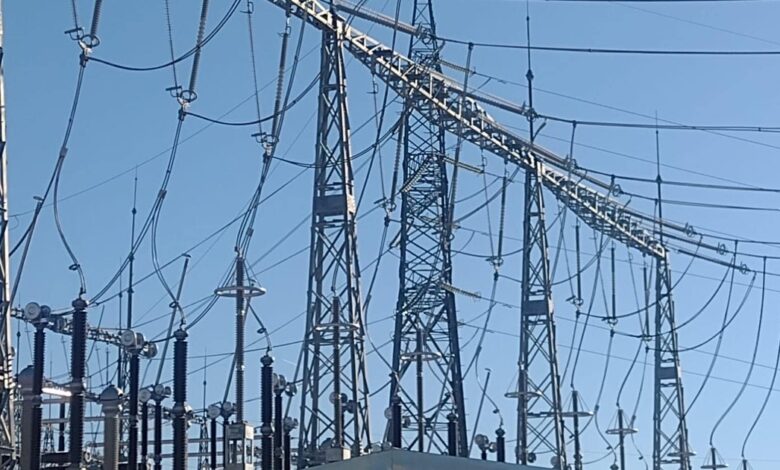
Warnings in the Hungarian press, according to which Romania could have serious problems with energy supply next winter, have reignited the debate about the closure of coal plants and the country's energy security. Although the energy system faces real vulnerabilities, experts in the field say that a blackout scenario is unlikely.
Romania must invest massively in energy. Archive photo
But the stake is different: Romania risks entering a period in which energy will be more and more expensive, and the system will operate closer to the limit, against the backdrop of the delay in strategic investments and the accelerated abandonment of conventional production capacities.
Why did Romania come to the attention of the Hungarian media
The subject came to the attention of the Hungarian publication Világgazdaság after the Government of Romania began negotiations with the European Commission to postpone the closure of a coal-fired unit of the Oltenia Energy Complex, a deadline assumed by the National Recovery and Resilience Plan (PNRR).
According to the commitments assumed, Romania should close a new lignite capacity by August 31. But the authorities argue that its elimination could create problems of energy adequacy in the cold season, in the context in which several projects that should replace conventional production are experiencing delays.
The new plant from Ișalnița, which should have been completed as early as 2020, will enter tests at the end of the year at the latest. The Mintia plant is also behind schedule, and next winter the Cernavodă nuclear plant will operate with only one reactor. Under these conditions, every remaining coal-fired power group takes on strategic importance.
Experts reject the scenario of a blackout, but warn of system vulnerabilities
Although the article published by the Hungarian press suggests that Romania could have serious problems with energy supply in the cold season, specialists in the field believe that the risk of a generalized blackout remains low.
Energy expert Silviu Gresoi explained to “Adevărul” that the discussion should rather be held around the increasing pressure exerted on the energy system during periods of maximum consumption.
“I wouldn't talk about a blackout risk in Romania, but rather about a greater pressure on the energy system during peak consumption periods.
Romania has assumed the reduction of coal production through the decarbonization calendar, but the alternatives that should replace it are not yet fully functional. New gas capacities, renewables and storage solutions have not advanced fast enough to fully cover the retirement of coal-fired generators.
In this context, CE Oltenia no longer represents Romania's energy future, but it temporarily remains a safety capacity, especially in winter, when consumption is high. That is why a possible postponement of the closure of some groups must be seen pragmatically, not as a step backwards.
In short, it is not a signal to panic, but a signal that the energy transition must be done in a controlled manner, at a pace where the system can remain stable and safe for consumers“, the energy expert declared for “Adevărul”.
Gresoi's opinion is in line with the conclusions of the latest Adequacy Study of Transelectrica, also analyzed by the energy expert Dumitru Chisăliță. He claims that Romania is not facing an imminent blackout risk, but is entering a period where the availability of production capacities at critical moments becomes more important than the total number of megawatts installed.
Solar records do not solve the problem of winter
At first glance, Romania's energy situation seems favorable. At the end of May, photovoltaic production reached a new record of about 2,600 MW, covering almost two-thirds of the national lunchtime consumption.
In those moments, energy prices dropped to almost zero, and Romania exported energy to neighboring countries.
However, Dumitru Chisăliță points out that the success of solar energy hides a structural problem. The system produces too much when demand is low and too little when consumption is at its peak.
“The problem of the future will not be lack of energy at lunch. The problem of the future will be the lack of power between 18:00 and 22:00 on cold winter days”explains the specialist.
During the winter months, precisely during the peak intervals, PV production is nil, wind production can be reduced, hydropower is limited by hydrological conditions, and imports become harder to access as all states in the region simultaneously experience high demand.
Transelectrica's warning: the problem is adequacy, not the energy produced annually
According to Dumitru Chisăliță, the biggest confusion in the current energy debate is between the total amount of energy produced in a year and the ability of the system to respond in critical moments.
“The biggest mistake made today in the energy debate in Romania is confusing the energy produced during a year with the real security of the system. On paper, Romania does not lack installed capacities. In practice, a much more serious problem begins to emerge, the lack of available firm capacity precisely at the critical times of winter, when consumption peaks, solar output is nil, wind may be lacking, hydro is limited, and imports become uncertain and expensive“, says the expert.
The truth about Romanians' bills: Why electricity costs us “more” than the rest of Europeans, even though the rates are lower
Transelectrica's Adequacy Study conveys, in his opinion, a message that should concern both authorities and investors: the success of the energy transition will no longer be determined by how many new MW are installed, but by how many MWh they can actually produce when the system is under pressure.
In the central scenario analyzed for the year 2027, the LOLE (Loss of Load Expectation) indicator, which measures the estimated number of hours in which demand cannot be fully covered, reaches 143.55 hours per year. Also, the estimated non-supplied energy (ENS) is 36,070 MWh.
For comparison, during the same period, the estimated indicators for other European states are significantly lower: under one hour in France and Germany, between one and three hours in Italy and around five hours in Spain.
According to the specialist, these figures show that Romania eliminates conventional capacities faster than it succeeds in putting into operation substitutes capable of offering the same level of safety.
Why the Government insists on keeping coal
The most politically inconvenient conclusion is that lignite groups remain essential for Romania's energy security in the coming years.
“Coal remains indispensable in the coming winter, no matter how inconvenient it is”claims Chisăliță.
The data analyzed by him show that keeping some groups from Rovinari and Turceni in operation dramatically reduces the adequacy risks. The LOLE indicator would drop from 143.55 hours to 11.34 hours annually, and the unsupplied energy would decrease more than ten times, from 36,070 MWh to 3,456 MWh.
This does not mean that lignite represents the future of the Romanian energy system, but that its elimination must be synchronized with the emergence of functional alternatives.
“Romania cannot eliminate conventional capabilities before having real, secure replacements. Not promises. Not projects on paper. Not political objectives. Functional and available capabilities”emphasizes the expert.
Natural gas and energy storage, the great unknowns
In the medium term, natural gas plants are considered the main pillar of the energy transition. The problem is that many of the projects on which Romania's energy strategy is based are still in the construction or development phase.
Delays at Mintia, Ișalnita or other similar projects can significantly affect the balance of the energy system.
In parallel, Romania urgently needs storage capacities. Transelectrica estimates that by 2027 approximately 3,000 MW of power installed in storage systems and a capacity of 11,000 MWh would be needed.
Compared to these values, the current level of storage remains modest.
Imports cannot guarantee energy security
Another idea that Chisăliță disputes is that European interconnections can automatically solve Romania's adequacy problems.
“Imports work great when the problem is local. They become much less reliable when the problem is regional. If Romania, Hungary, Bulgaria, Serbia and Central Europe simultaneously face low temperatures and high consumption, each system will try to protect its own energy security”warns the specialist.
Warning about the enormous electricity prices in Romania: “It's not how much you produce, but when and how”
In such situations, the availability of energy for export decreases precisely at the moment when it is most needed.
Romania does not risk a blackout, but it does risk more expensive energy
The conclusion of the analysis is that the scenario of a widespread blackout in the winter of 2026-2027 remains unlikely.
“The biggest mistake would be to reduce the whole discussion to the question: Will Romania have a blackout? Probably not. The correct question is: How much will it cost to avoid a blackout?”says Dumitru Chisăliță.
The real threat is permanent operation at the limit of available capacities, which can lead to high prices, increased volatility and an increasing dependence on imports.
According to the expert, the real test for the Romanian energy system will not be only next winter, but the interval 2027-2032, when the reduction of the role of coal, the re-technology of Unit 1 from Cernavodă, the increase in consumption through electrification, delays in the new gas plants, the insufficient expansion of the network and the incomplete development of energy storage could overlap.
If strategic projects are completed on time, risks can be managed. However, if several important investments are delayed simultaneously, Romania could enter a period of unprecedented energy and economic vulnerability after joining the European Union.
Under these conditions, warnings about the vulnerabilities of the energy system are justified. But, at least for the coming winter, data and experts' opinions indicate that Romania is not facing a major blackout risk, but a much more complex challenge: ensuring an energy transition that does not sacrifice the security of electricity supply.