Is the Arctic headed for open conflict? The polar region could become the next great theater of global confrontation


Amid Donald Trump's renewed interest in Greenland, the planet's frozen north is back in the geopolitical spotlight. The US president, who has described the purchase of Greenland as “a big real estate deal”, has talked about the idea for nearly a decade and has repeatedly suggested that the United States will gain control of the island “one way or another”.
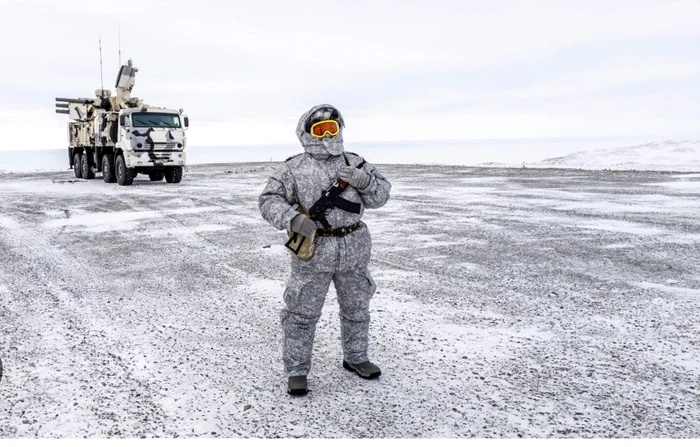
The Arctic, a new land of conflicts/PHOTO: AFP
In this context appears the book of the American journalist Kenneth R. Rosen, Polar War, which claims that the Arctic is approaching a critical point. According to the author, the polar region could become the next great theater of global confrontation as climate change and strategic ambitions overlap.
Eight states, including Russia and the United States, already maintain bases officially described as research centers. Meanwhile, military and strategic interest is steadily growing: US military academies teach courses dedicated to the Arctic, and India has declared itself a “near-Arctic state”. In this landscape, Rosen states that the possibility of conflict “now seems inevitable”, writes The Telegraph.
Natural resources and new sea routes increase conflicts between great powers
His argument is based on a hard-to-ignore reality: the Arctic is warming four to five times faster than the rest of the world. As the ice retreats, natural resources and new sea routes become more accessible, intensifying competition between the great powers. “What happens here spreads everywhere,” a Norwegian navy commander told the author.
Russia, Rosen argues, is the dominant player in the region. With multiple Arctic military bases, superior experience in operating in extreme conditions, and an unrivaled fleet of icebreakers, Moscow has solidified its leadership position. A Norwegian official quoted in the book sums up the situation starkly: “Putin says: I'm the boss in the Arctic – and he is.”
China, for its part, is investing heavily in polar infrastructure, including icebreakers, as part of a future “Polar Silk Road”. Rosen suggests increasingly close cooperation between Beijing and Moscow, including in surveillance activities near NATO borders, although these actions remain officially unconfirmed.
Another important thread of the book is the lack of preparedness of the United States. Rosen notes that the American desire to control Greenland is not new, but what worries him is the “incompetence” with which this ambition is being approached. According to the author, such an approach risks either leaving the initiative to rivals or triggering hasty reactions that could destabilize the region.
The real tragedy of a new Cold War fought on ice
At the same time, Arctic diplomacy seems stuck in sterile formulas, and warning signs are often ignored. The increase in the number of heavily armed fishing vessels, which function practically as military vessels, is one phenomenon that deserves much greater attention, warns Rosen.
Although Britain has no permanent military bases in the Arctic, the implications are also being felt in London. A House of Lords committee recently drew attention to the increasingly aggressive interests of Russia and China, stressing the need to review Britain's strategy for the region.
Although the tensions are real, an all-out war in the Arctic does not seem inevitable. The huge costs and extreme conditions could cause states to withdraw before an open confrontation. Several international leaders have recently come to Denmark's defense amid the Greenland dispute.
But what is missing, the author notes, are the voices of those who would suffer the most: the indigenous populations of the Arctic. Caught between the great geopolitical games, they remain almost invisible. And this, Rosen suggests, could be the real tragedy of a new Cold War fought on ice.