US-EU commercial tensions. After Trump's threats with new taxes, Macron wants Europe to hit the American Tech giants


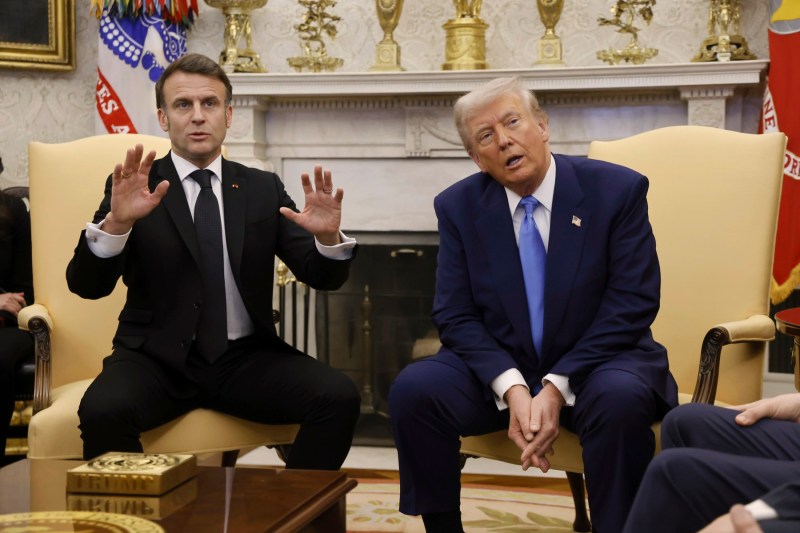
President of France Emmanuel Macron during the meeting with US President Donald Trump, in the Oval Office of the White House in Washington, DC, February 24, 2025. Photo: Ludovic Marin / AP / Profimedia
French President Emmanuel Macron told his ministers that the European Union should consider measures against the US digital sector, after President Donald Trump has threatened the countries that through taxes, rules or laws “discriminate” American technology companies.
At the weekly meeting of the Cabinet on Wednesday, the French president said that Europe “should not exclude the analysis of the digital sector” after the threat launched by Donald Trump on Monday, an official said under anonymity with Politico.
“The European Union has a large commercial deficit with the United States, we must focus on this,” said Emmanuel Macron, referring to the EU negative trade balance.
The block has a commercial surplus when it comes to exchange of goods, such as cars, pharmaceuticals and foods, which Trump wants to reduce.
A person close to Macron has confirmed that exploring possible reprisals against American technology companies really represents “his position”.
Trump threatened to impose additional taxes on Mondays on countries whose digital rules, in his opinion, discriminate American companies.
The statement came a few weeks after Washington and Brussels have concluded a commercial agreement that sets a 15% basic customs fee for EU exports to the US. The two parties only published a common statement last week that confirms this agreement, and Trump's last criticism came as an unpleasant surprise for EU officials.
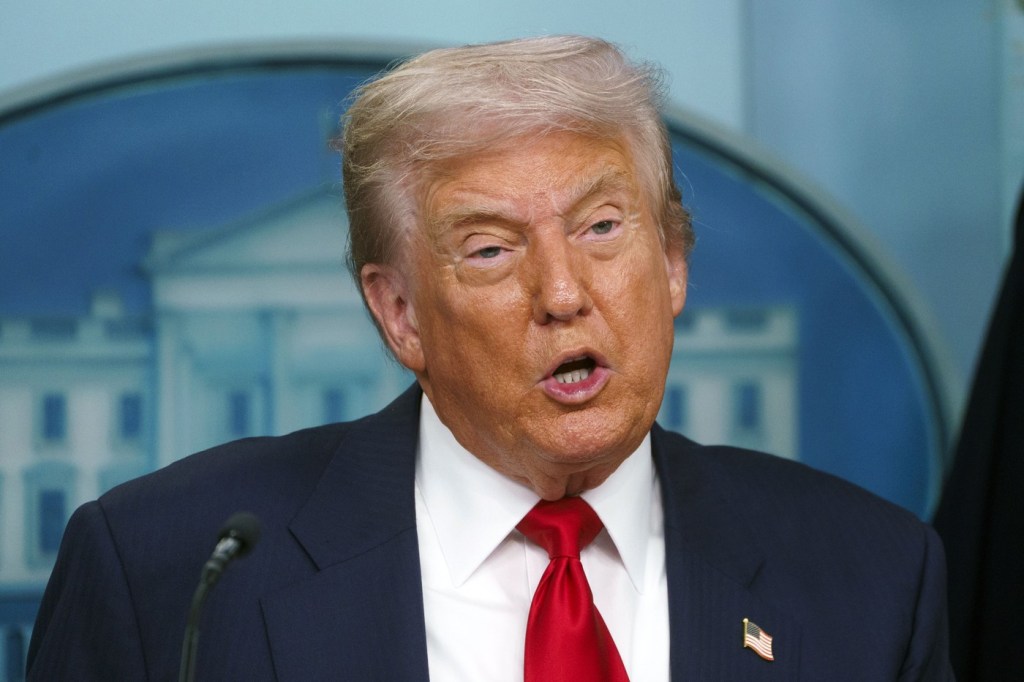 Donald Trump promises harsh measures against countries that wrongs Tech giants in the US, and the EU is in the US president's viewfinder
One of the critics of the Trump administration is the legislation by which the EU wants to regulate the digital sector much more.
The Trump administration criticizes the EU Digital Regulation for months, claiming that the law of digital services and the law of digital markets censors American citizens and unfairly target American companies.
At the same time, France has long been at the forefront of European calls to adopt a tougher position compared to Trump in terms of trade.
However, most EU countries do not want to launch a large-scale commercial war, which has led Brussels to refrain from imposing tariff countermeasures or activating the anti-coercion instrument.
It could be used, with the support of most member countries, to restrict the intellectual property rights of American technological giants or to prohibit them from investing in the EU.
At the culminating moment of the recent transatlantic commercial tensions, the President of the European Commission, Ursula von der Leyen, said that “all the instruments are on the table.” The EU eventually avoided adopting a hard position.
The French president expressed his veiled dissatisfaction with the commercial agreement concluded with Trump, meaning that Europe was not threatening to obtain an advantageous commercial agreement.
According to an official quoted by Politico, Macron would approach this problem with German Chancellor Friedrich Merz at the end of this week.