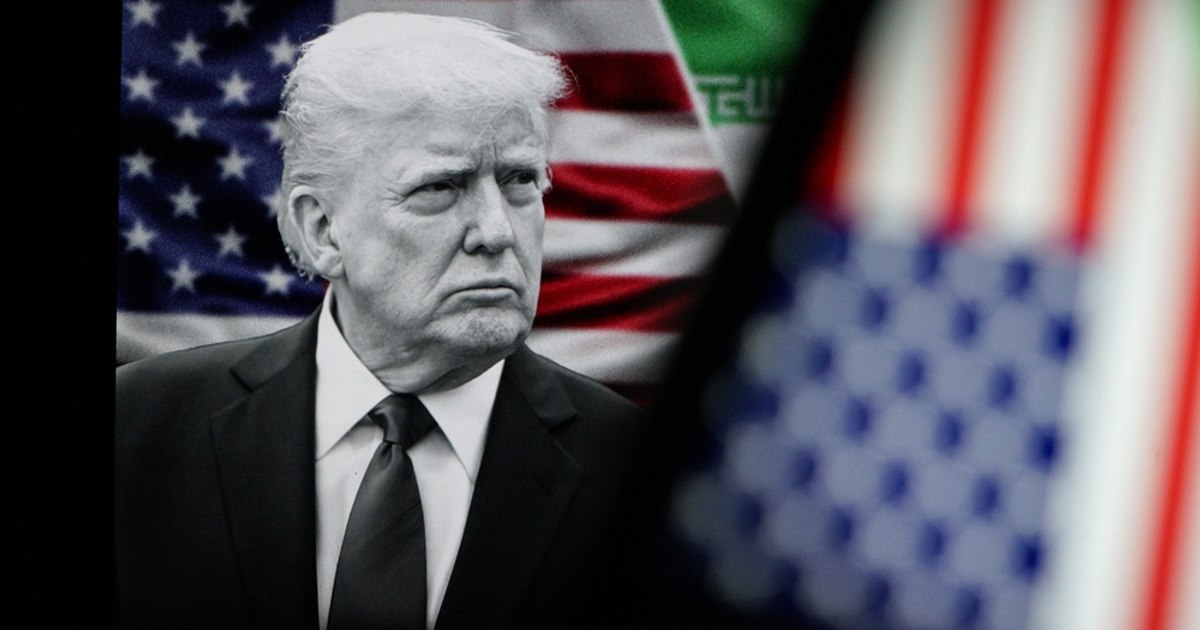
US President Donald Trump has changed his strategy in the conflict with Iran, moving from direct military confrontation to an economic offensive, imposing a blockade on Iranian ports. The move is intended to force Tehran to accept Washington's conditions without resorting to a new joint military offensive with Israel, but it is a double-edged sword, a CNN analysis shows.
Trump preserves military options as he engages in diplomacy SHUTTERSTOCK PHOTO
The logic of the operation is as follows: limiting oil exports and imports of essential goods could cause a severe economic and humanitarian crisis in Iran, causing the leadership to finally succumb to pressure from Washington. In a context where the Iranian economy is already affected by sanctions, it could be a winning strategy and in the mirror, to the extent that this time Iran would actually feel the consequences, risking a worsening of the existing crisis: food shortages, hyperinflation and banking crisis.
However, Trump's maneuver is based on a risky assumption: that Iran will react according to Western logic. However, recent history shows that US adversaries in the region – such as Iraq, Afghanistan, Russia or Libya – have often acted unpredictably, ignoring Washington's calculations regarding its own national interest.
The American plan also relies on the possibility that economic pressure could trigger internal tensions in Iran and weaken the regime. However, Iranian authorities have in the past demonstrated a high tolerance for domestic costs, including violent repression of protests and maintaining power despite the loss of important leaders in the conflict.
The efficiency of the blockade relies on the speed with which it produces effects, but another factor also enters the equation, namely the perception of the stake by Iran, but this is not part of a rational logic, but of the struggle for survival. From this point of view, the US reasoning may not hold. Factors such as the opportunity to apply that pressure at this stage of the conflict could also play a role: how much pressure can Iran take before the blockade becomes economically devastating? Will Iran respond to pressure as its options narrow?
The US blockade can seriously affect Iran's economy
On the other hand, from a military point of view, the operation is feasible. The US Navy has the resources and experience to enforce blockades. According to an analysis by the Foundation for Defense of Democracies, more than 90 percent of Iran's annual trade, estimated at $109.7 billion, transits the Strait of Hormuz, making the economy extremely vulnerable. The blockade could halt oil exports, generating inflationary pressures in just days.
“Iran has been hit hard militarily, but its economy has not been completely suffocated. So its leaders believe they still have options.”retired Admiral James Stavridis, former Supreme Allied Commander Europe, commented to CNN.
Iran now faces limited and risky options. A potential escalation could reignite conflict with the US and Israel, and its allies, such as Yemen's Houthi rebels, could block alternative oil shipping routes through the Red Sea, with devastating effects on the global economy but also putting political pressure on Trump.
The blockade also carries risks for the US, including possible diplomatic tensions with countries such as China and India, importers of Iranian oil. The interception of a Chinese vessel could trigger a major diplomatic incident ahead of a planned meeting between Trump and Chinese President Xi Jinping.
Despite the risks, the White House is optimistic about the next round of negotiations, which could end with a deal “We feel optimistic about the prospects for a deal,” spokeswoman Karoline Leavitt said.
The differences remain deep, perhaps even irreconcilable, given the failure of the first round of negotiations, brokered by Pakistan: the US demands that Iran give up its nuclear program, limit its missile capabilities and end support for groups such as Hezbollah and Hamas. Iran is demanding reparations for the war and maintaining the right to enrich uranium.
A compromise would still be possible, according to some sources, for example finding a middle ground between the US proposal to suspend uranium enrichment for 20 years and Iran's five-year offer.
One fundamental question remains unanswered, and that is this: If the blockade works and forces Iran to compromise in the negotiations, what will happen next? Diplomatic success will undoubtedly require complex and lengthy negotiations, as well as a more nuanced and patient approach than the US administration has so far demonstrated, notes CNN.