Events related to Nicolas Maduro show one thing. For the USA, the “guardian of democracy”, international law has become secondary. It is true that federal judge Alvin Hellerstein did not make any decision on Monday, but an analysis of the shortened indictment provided by the prosecutor's office shows that the United States treats international law in a peculiar way. This means that the proceedings before the International Criminal Court may be “frozen”.
See also: What does the US action in Venezuela mean for Poland? Two scenarios on the table [ANALIZA]
What did the American court decide after the first trial?
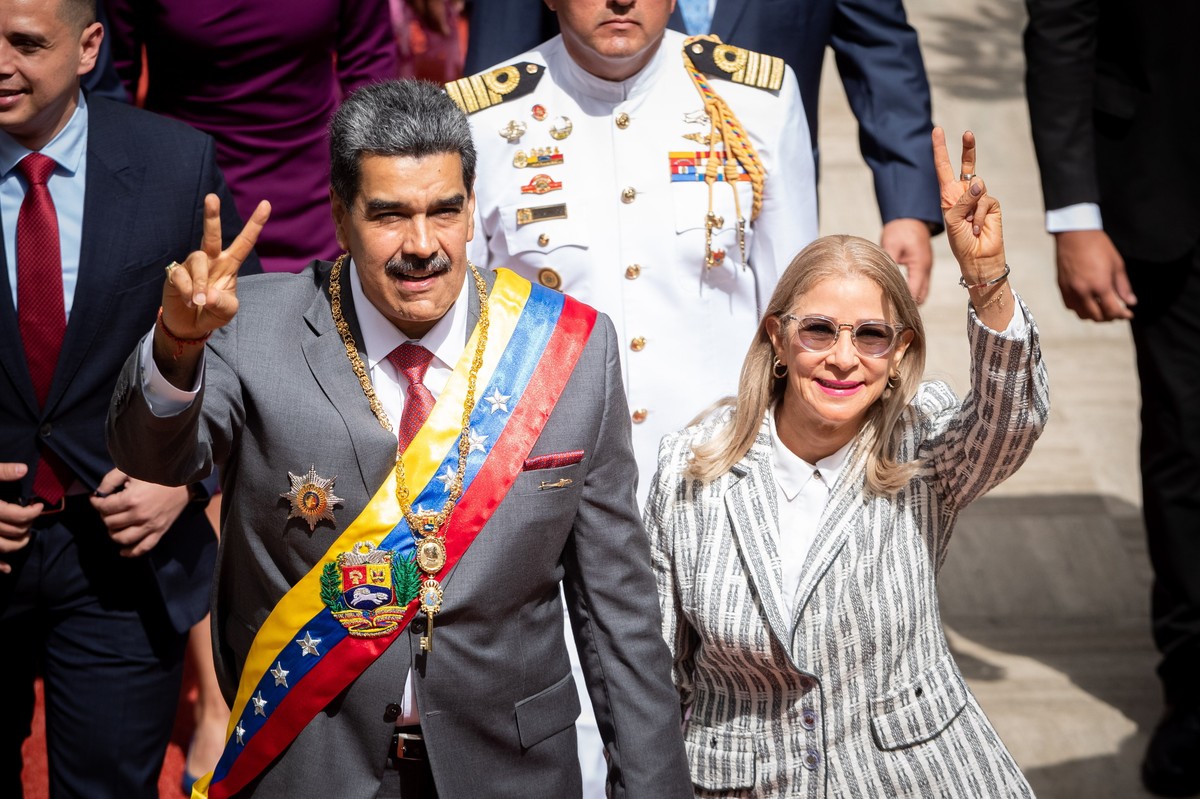
On Monday at noon American time, the first hearing in the case of Venezuelan leader Nicolás Maduro and his wife Cilia Flores was held.
The prosecutor's office presented them with a shortened indictment. Maduro was charged with, among others: participation in a narco-terrorist conspiracy, managing a structure that sent large amounts of cocaine abroad and possessing weapons, uher life against the USA and ordering murders.
Maduro pleaded not guilty and repeatedly emphasized that he was the president of Venezuela and had been kidnapped.
According to CNN reporters, during a short meeting, Nicolas Maduro's defender, Barry Pollack, announced the submission of a series of motions, claiming that Maduro is the head of a sovereign state, therefore he is entitled to immunity. He also questioned the legality of the leader's kidnapping.
These weren't random claims. If the court found that Maduro is president, as the defenders are requesting, it would mean that he would be covered by immunity. However, such a scenario is unlikely.
Americanist Rafał Michalski emphasizes on the X website that the key here is the allegation of possessing a machine gun, which many people were surprised by. And it allows him to be accused of engaging in activities against US national security, which in turn allows him to circumvent international law.
The indictment is against a citizen of a third country, a person ruling the country under the constitution, and not the president.
– Rafał Michalski shows very well how the intricacies of American law and precedent cases treat international law in a peculiar way – says Dr. Mateusz Piątkowski from the Faculty of Law and Administration of the University of Lodz.
Prof. does not entirely agree with this view. Artur Nowak-Far, former deputy minister of foreign affairs in 2013-2015. — The most important are the allegations concerning consequential crimes, i.e. those whose effects occurred in the USA. Possessing a machine gun may be a crime, but it has no consequences in the USA, so this accusation, in my opinion, makes no sense – explains Prof. Artur Nowak-Far.
However, it is agreed that the remaining allegations regarding the negative effects of Maduro's actions on US society will cause the court to take up the Maduro case and will not recognize his immunity.
The Americans are acting against international law
Mateusz Piątkowski points out that the Maduro case shows the peculiar approach of Americans to international law.
— International law customarily establishes jurisdictional immunity for heads of state in criminal matters. This means that a country should not judge the leader of another country in criminal cases, explains Dr. Mateusz Piątkowski. The issue here is not whether Maduro is guilty or not, but whether he can be tried.
According to international law, Maduro is the head of state. — It's always the effect that counts. If someone rules a country, represents it and maintains relations with other countries, he is the head of the state – explains Piątkowski. What if the head of state was elected in undemocratic, rigged elections?
— Of course, it has some political and social significance, but from the point of view of international law it does not. Even if we believe that they are not law-abiding rulers. Otherwise, we would be treading on very thin ice, where one country could consider that the authorities of another are elected undemocratically, emphasizes Dr. Piątkowski.
There is a principle in international law that also de facto regimes – i.e. those that do not have a completely clear constitutional basis – benefit from the protection resulting from the United Nations Charter.
In his opinion However, the American administration does not see any dilemma because it believes that Maduro can be tried. — The US therefore has a peculiar approach to international law. Since the executive, including the prosecutor's office, claims that Maduro does not have immunity, the court may state that it will not investigate this issue – explains the expert.
However, on Monday, China condemned the US actions. Beijing demanded the immediate release of President Nicolas Maduro, who has been deported from the country, and an end to attempts to overthrow the government in Caracas.
Read also: Donald Trump talks about “stolen oil”. What is his plan for Venezuela?
US actions could block the International Criminal Court
In 2021, Karim Khan, Attorney General of the International Criminal Court, opened an investigation into the situation in Venezuela. This concerns the use of violence, torture and random detentions against citizens by the security services. However, no charges have been brought against anyone so far. Maduro did not agree to initiate an investigation because he believed that the Venezuelan authorities should investigate the case themselves. Now it may turn out that the case will be “frozen” altogether.
— The United States opposes the jurisdiction of the ICC. This means that if the Hague tribunal wanted to bring charges against Maduro, the US would probably not extradite him – explains Mateusz Piątkowski.
The expert draws attention to one more aspect. For example, in 2023, the ICC issued an arrest warrant against Russian President Vladimir Putin, accusing him of committing war crimes. “So this is about the most serious crimes, not the use of violence against our own citizens,” says Piątkowski.
However, so far the order has not been enforced, even though Putin was in the USA, and in accordance with Art. 27 of the ICC Statute, persons prosecuted by the Court do not enjoy the immunities of, for example, the head of state.
Switzerland blocks Maduro's funds
When criminal proceedings against Maduro began in the United States, Switzerland froze his assets for four years.. The decision aims to ensure that potentially illegally obtained assets cannot be transferred outside Switzerland, the government said in a statement on Monday.
The Swiss government said that the freeze was due to Maduro's loss of power, which raises the possibility that Venezuela would in the future initiate international legal assistance proceedings regarding illegally obtained assets. As noted, the freeze does not apply to any members of Venezuela's current government.
As reported, this is the first case in which Switzerland has introduced sanctions against Maduro and people close to him. The regulation issued on Monday complements measures against Venezuela adopted in 2018 under the embargo law, which did not cover Maduro, the Swiss Foreign Ministry said.
US actions legally questionable
First of all, according to experts the operation against Venezuela, which resulted in the capture of President Maduro and his wife, constitutes a serious violation of fundamental principles of international law.
It constitutes a gross violation of the prohibition on the use of force provided for in Art. 2 points 4 of the United Nations Charter. According to it, “All Members shall refrain, in their international relations, from the threat or use of force against the integrity of the territory or political independence of any State, or in any other manner inconsistent with the principles of the United Nations.”
Prof. Nowak-Far has no doubt that the UN Charter requires conciliatory actions. — If we have a problem with another country, we talk – he explains.
The claim that drug trafficking or state involvement in such trafficking constitutes an “armed attack” sufficient to justify the use of force in self-defense has no support in customary international law or state practice.
— Although according to the United States, Maduro is an illegitimate leader, under international law there is no justification for the operation. Neither Venezuela is attacking the US, nor are the cartels carrying out an armed attack that would be treated as a terrorist attack under Art. 51 of the United Nations Charter. There is also no UN Security Council resolution that would authorize intervention in Venezuela. All this means, in my opinion, that we are dealing with an act of aggression and a violation of the United Nations Charter – says Matusz Piątkowski.
In this situation, could Donald Trump be held accountable for violating the law? — This is a matter for the majority in Congress. This is not an unrealistic scenario in the future, says Prof. Nowak-Far.