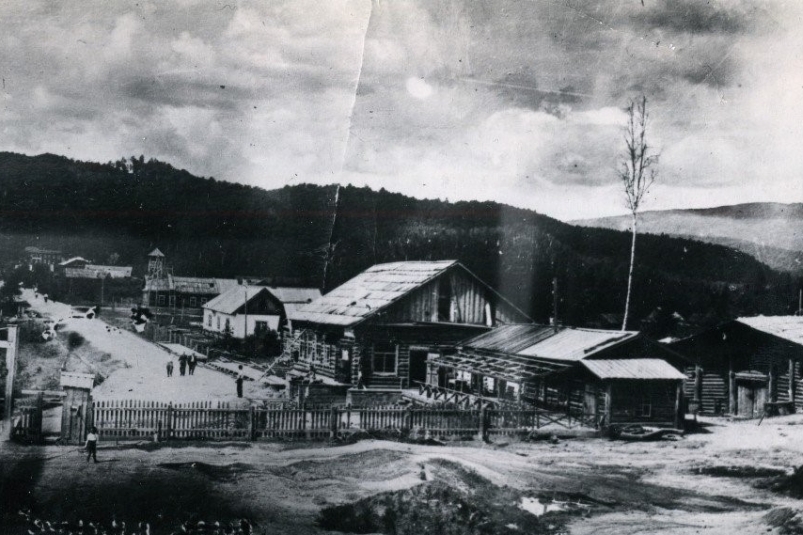
Kuldur. 1939
Photo: State Archive of the Jewish Autonomous Region
January 4, 1926
In the reference and information publication “Administrative-territorial structure of the Jewish Autonomous Region 1858-2003.” (0+) information is posted that on January 4, 1926, the government of the RSFSR made a decision on the formation and zoning of the Far Eastern Territory (DVK), which stated: “To form the Far Eastern Territory, with the center in the city of Khabarovsk, from the provinces: Transbaikal, Amur, Primorsky (with the northern part of Sakhalin Island) and Kamchatka with the transition from the district and provincial division into district and district system.” Instead of four provinces, nine districts and 75 districts were formed as part of the DCK. The names of the districts in most cases were the names of the volosts in which district centers were formed, and the names of the districts were preserved from the names of the former counties of the Far Eastern District.

When the Far East was divided into districts and districts, the Mikhailo-Semenovsky and Ekaterino-Nikolsky districts were formed on the territory of the future region, the eastern part of the territory became Nekrasovsky, the western part – the Khingan-Arkharinsky districts.
The Mikhailo-Semenovsky and part of the Nekrasovsky districts, which occupied the territory inclusive of the Tikhonkaya station along the railway line and the village of Ventselevo on the Amur, were assigned to the Khabarovsk district, and the Ekaterino-Nikolsky and part of the Khingan-Arkharinsky district – to the Amur district.
From the Ekaterino-Nikolsky district, the Mikhailo-Semyonovsky district included the following settlements: Bashmak, Kozulino, Novotroitsky – a total of 57 households.
The village of Pompeyevka – eight households – was transferred from the Khingan-Arkharinsky district. The following settlements were transferred from the Mikhailo-Semenovsky district to the Khingan-Arkharinsky district: Bira, Bolshoy Kitai, Budukan, Ivanovka, Kandalik, Katon, Londoko-Kamenushka, Sagdy-Bira, Trek, Uspenovka – a total of 204 households.
The interdistrict boundaries of the Mikhailo-Semyonovsky and Ekaterino-Nikolsky districts were different compared to modern ones.
January 4, 1935
Based on the resolution of the regional executive committee of January 4, 1935, a radio committee was formed. On this day, residents of Birobidzhan, then still a working-class village, heard for the first time from a loudspeaker: “Attention, this is Birobidzhan speaking!” From February 6, 1935, regional radio broadcasting became regular and then daily.
During the war years, radio was the voice of hope.
On December 30, 1949, the radio committee became known as the radio information committee, then the editorial office of radio broadcasting, and in 1961 it received the status of a committee on radio broadcasting and television under the executive committee of the regional Council of People's Deputies of the Jewish Autonomous Region. In the 50-60s, there was a significant technical re-equipment of the regional radio, which led to an improvement in the quality of broadcasting.
In 1998, the state television and radio broadcasting company was transformed into the federal state unitary enterprise “State Television and Radio Broadcasting Company of the Jewish Autonomous Region “Bira” (18+). In 2005, a modern radio broadcasting equipment room was put into operation.
Over the past few years, experts have been converting television and radio archives into digital format. This allows you not only to save unique records, but also makes it possible to post them on the Internet.
January 4, 1937
The newspaper “Birobidzhan Star” (12+) on January 4, 1937, in the section “Around the city and region” wrote that a new Russian school was built in the city of Birobidzhan and work had already begun on the internal equipment of the new building “from January 11, at the end of the holidays, classes will begin in the new school building.”
This newspaper tells that Komsomol members of the In station depot went on skis in search of a mass grave of partisans who died in the battle near Olgokhta “Komsomol members found a grave in which 49 partisans were buried 30 km from the In station to the left of Olgokhta. On one of the four oak trees surrounding the grave, Komsomol members nailed a temporary memorial plaque.”
The same newspaper wrote about the expansion of the Kuldur resort, that huge sums were being invested in its expansion, for which large workshops, a residential building and technical transport would be built, “40 million rubles will be invested in Kuldur, so that the resort can handle six thousand people annually.”
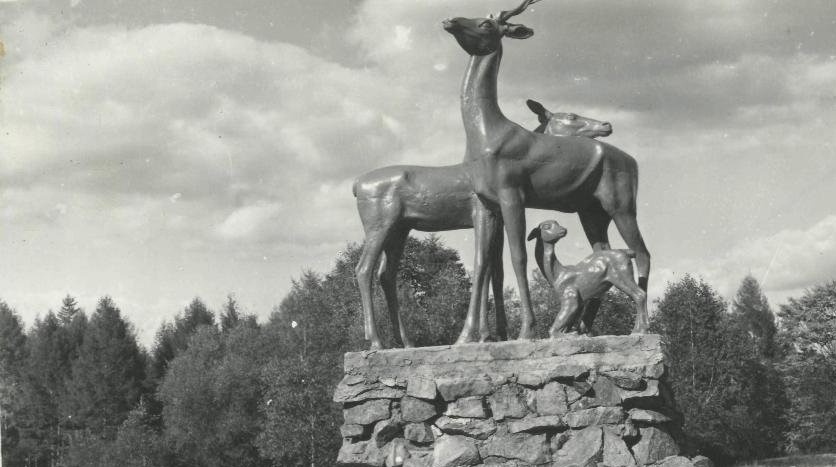
The symbol of Kuldur is a sculptural group of Far Eastern red deer.. Photo: State Archive of the Jewish Autonomous Region
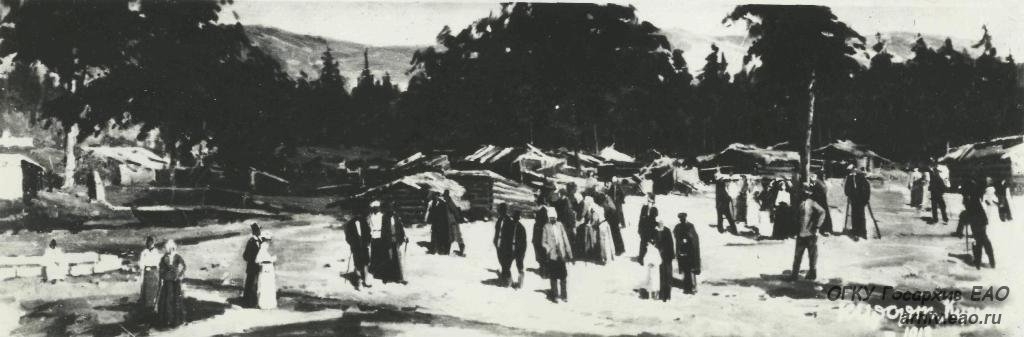
Resort “Kuldur”. 1913. Photo: State Archive of the Jewish Autonomous Region
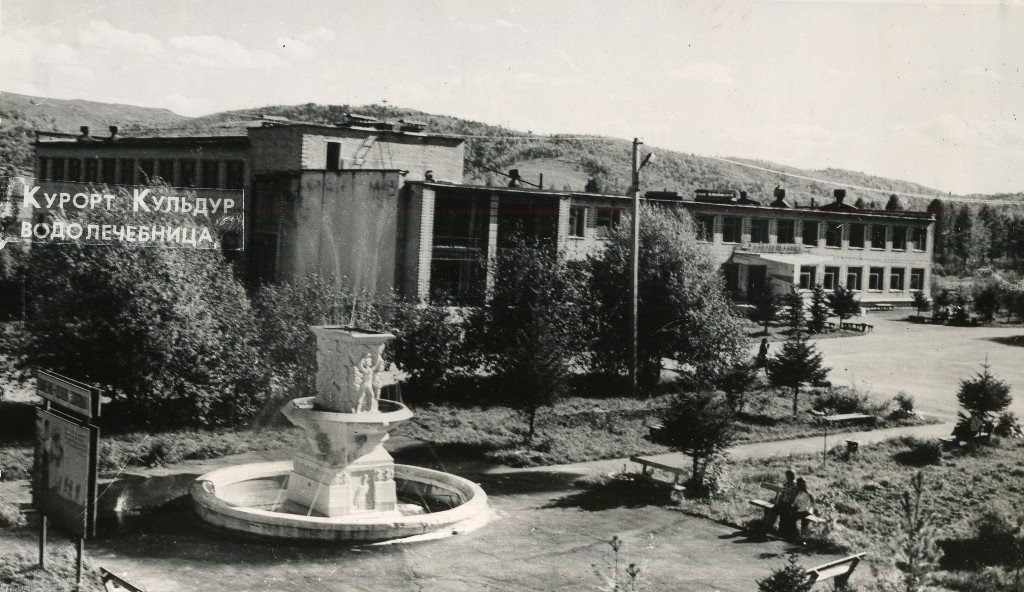
Resort “Kuldur”. Hydropathic clinic. Photo: State Archive of the Jewish Autonomous Region
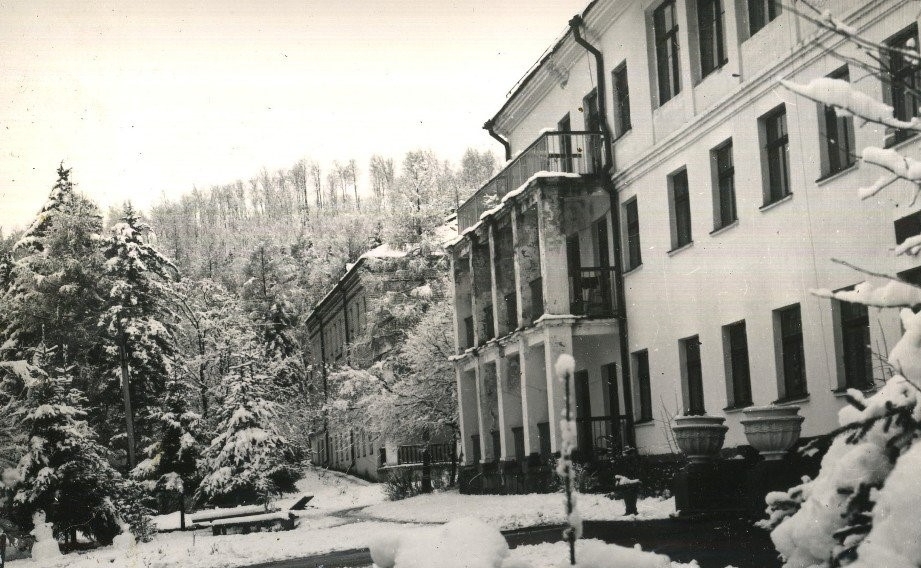
Resort “Kuldur”. Sleeping buildings. Photo: State Archive of the Jewish Autonomous Region
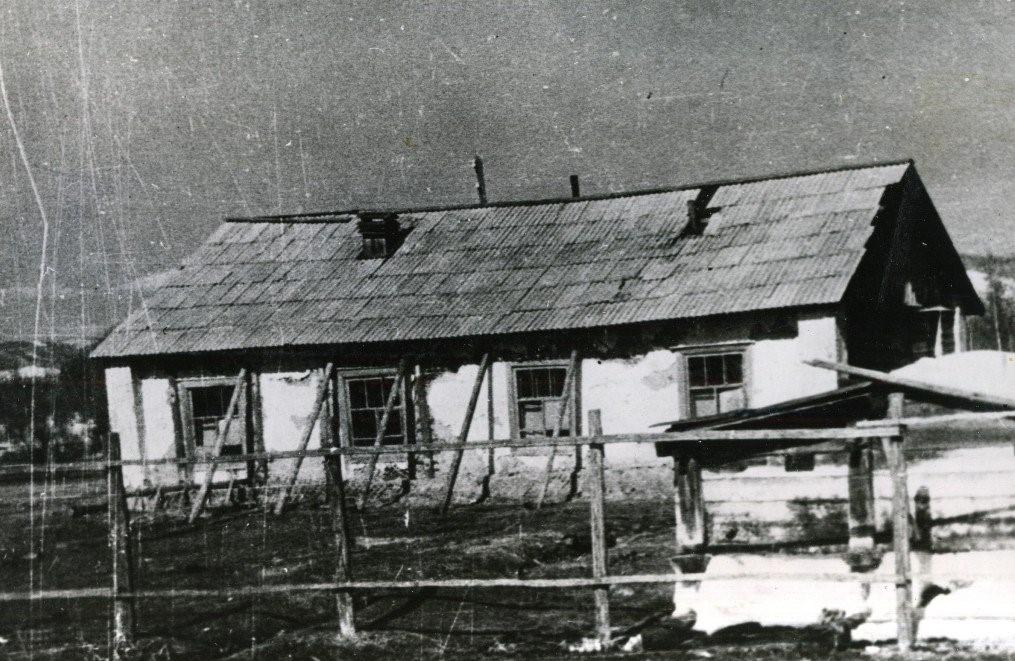
The first hydropathic clinic. Photo: State Archive of the Jewish Autonomous Region
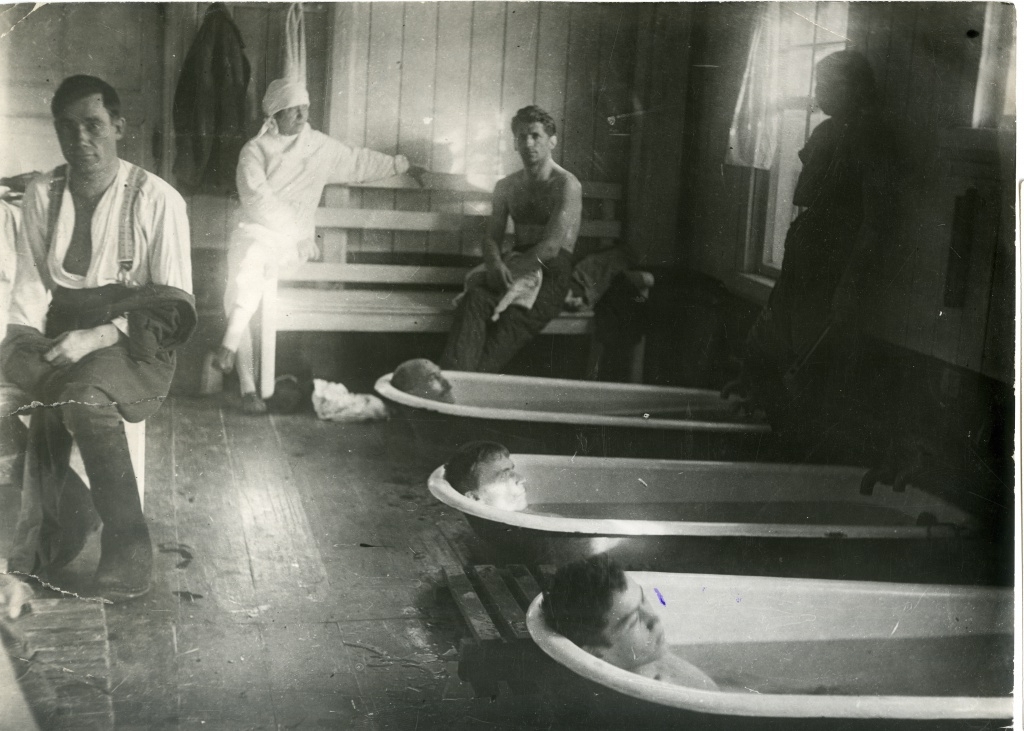
Patients in baths with hot sulfurous water from springs. Resort Kuldur. 1930s Photo: Heritage JAO
January 4, 1954
The Bureau of the Regional Committee of the CPSU and the Regional Executive Committee adopted a resolution “On measures to increase the production of potatoes and vegetables on collective farms and other farms in the region for 1954.” On collective farms in the region, 4,800 hectares are allocated for potatoes and 1,540 hectares for vegetables. In the individual gardens of workers and employees, 2,400 hectares are devoted to potatoes, and in the personal plots of collective farmers – 1,350.
18+. Information agency EAOMedia, registration number IA No. FS 77 – 83168 dated 05/12/2022, registration authority – Federal Service for Supervision of Communications, Information Technologies and Mass Communications.