WELT: Since around 2019, crime among children and teenagers has been rising rapidly across the country. How do you explain this brutalization among young people and how do you intend to counteract it?
Andreas Stenger: Also in Baden-Württemberg [kraju związkowym Niemiec, którego stolicą jest Stuttgart] We are seeing an increase in violence, especially among children. We analyze very carefully what crimes are involved. These are often typical actions of young people, i.e. breaking the rules, such as destroying property, vandalism or theft, which are part of the maturation process and, at best, pass with time. But of course there are also serious cases and I have the impression that there are more of them than before. Recently, for example, a 16-year-old was apparently shot by a peer on a playground in Stuttgart. From the police point of view, it is crucial that in the event of serious acts of violence committed by minors, the punishment is immediate. The consequences must be clear and tangible.
The patterns are often similar. In many cases, these are young men from economically disadvantaged backgrounds, brought up in an environment with a low level of education and do not see great prospects for the future. A significant proportion of them have a family history of immigration.
However, in Germany, perpetrators under the age of 14 are not subject to criminal liability. Should we change our approach to this issue?
We treat such cases as juvenile delinquency, in which we need to focus on social rehabilitation. The Penal Code and the Code of Criminal Procedure can only help us to a limited extent, I am and remain convinced of that. Also in this case, it is important for us that the proceedings are carried out very quickly, so that the punishment occurs as soon as possible after the crime has been committed. There is nothing worse than not reacting – it reinforces negative tendencies and in extreme cases can lead to a criminal career. In Baden-Württemberg, we have good experience with “youth rights centers”: the police, the prosecutor's office and judicial assistance for young people are all under one roof – desk by desk. This helps to recognize changes early and conduct the procedure quickly.
For about two years you have been dealing with a particular form of organized crime that emerged in Baden-Württemberg and caused a stir throughout the country. [chodzi o dwie rywalizujące ze sobą od lipca 2022 r. grupy młodych mężczyzn]. How would you describe what happened there?
We encountered a phenomenon that could not be assigned to any of our classical definition systems. These were not clan clashes, nor were they typical organized crime, nor were they gangs looking to make a lot of money quickly from cocaine. Our investigators quickly noticed that these were young men, up to 30 years old, of many different nationalities, coming from the same district. It was a connecting factor, the same zip code, social environment. We now call these structures “subcultural violent crime.”
Where did they come from?
Today it can no longer be precisely determined. [Pojawiły się] criminal attempts to seize power combined with insults taken as insults – and things took their course. These are often impulsive actions that are difficult for the police to predict. These two groups from the Stuttgart area are fighting each other with extreme brutality, even going as far as shooting from passing cars and throwing hand grenades. So far, the security services have detected 149 weapons, including 36 firearms.
Is it a dispute over territory?
These groups are not fighting for drugs or territory, it plays a marginal role at best. What is decisive is what I call “toxic masculinity” – male norms that legitimize violence, exaggerated ideas about masculinity, “toxic honorability.” They use social media as a stage to add fuel to the fire. None of the members talk to the police, even if they face severe prison sentences. They take a vow of silence, just like in the mafia. State power also no longer inspires fear. Prison is not a punishment. Some are downright disappointed when they don't get to [zakładu karnego w Stuttgarcie] Stammheim. A stay in a maximum security prison is treated as an honor on the street.
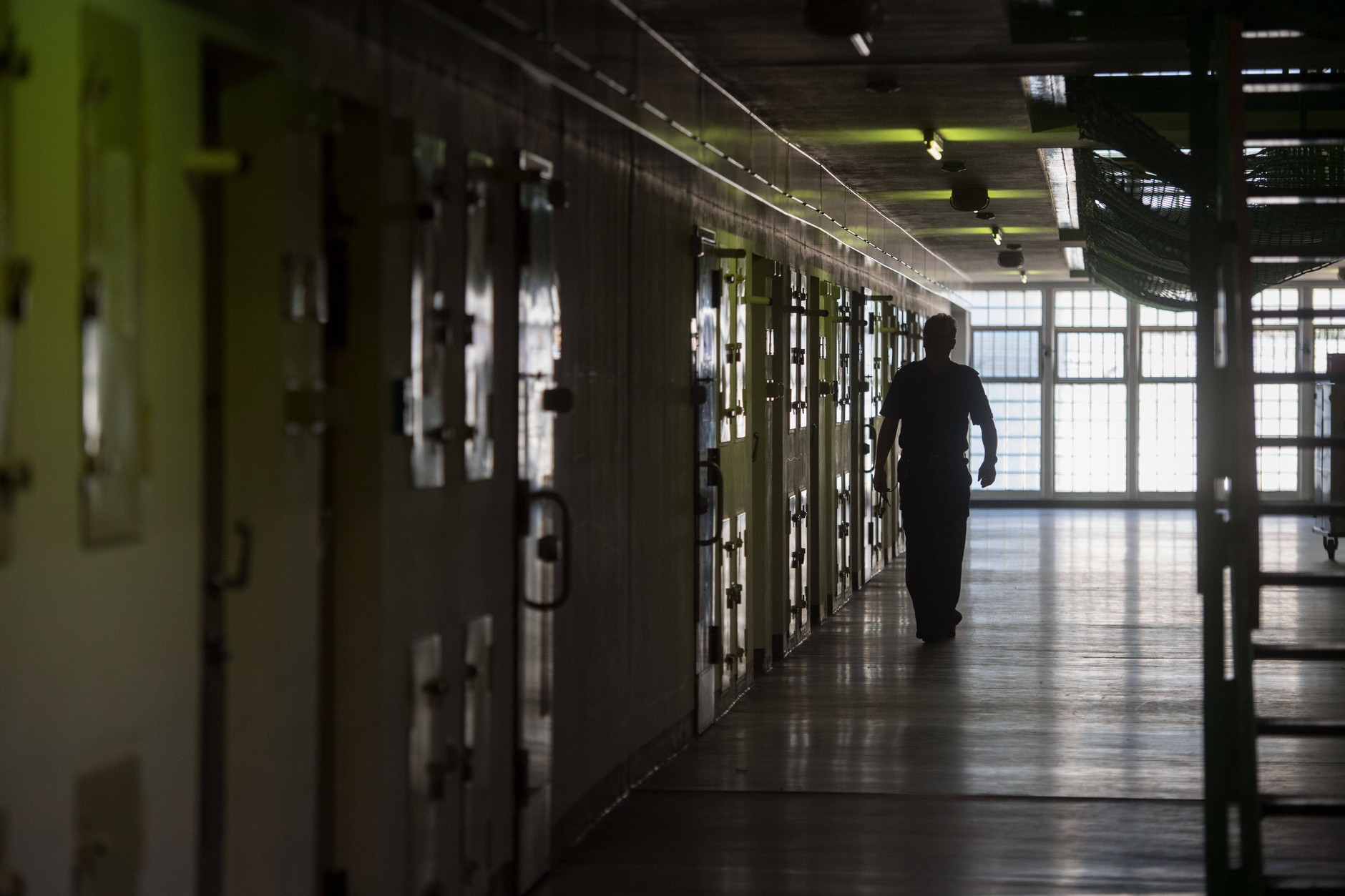
A corridor in Stammheim prison in Stuttgart, Germany, May 17, 2017.MARIJAN MURAT / PAP
There have been no shootings for several months and the situation seems to be calming down for now. How did you manage to do this?
Our state is famous for its stability and order. It was immediately clear to us that we could not tolerate the establishment of such structures in Baden-Württemberg. We responded to this situation with significant manpower. 170 officers worked in our special organizational structure “Fokus”. In addition to strong control and investigative pressure, preventive action was also important to us. Many members of these groups are currently in prison. As a result, the structures were significantly weakened.
How to approach such a very closed group [walczących ze sobą młodych mężczyzn]?
Through the “second row”, which in our opinion was still open to dialogue. We started by talking to hundreds of potential recruits, also involving parents in the case of very young people. We were also present with officers at boxing fights, MMA events and rap concerts, checking who was there and who was interacting with whom. We wanted to disrupt the process of recruiting new members by these groups. It worked.
At the same time, the prosecutor's office and judges acted very consistently. Meanwhile, courts in the Stuttgart region convicted [członków obu grup] a total of approximately 137 years in prison for crimes related to this conflict. In addition, there were the possibilities of administrative law, if you can call them that, minor “pins”: we tried, for example, to withdraw driving licenses and refuse to issue them. Only with the cooperation of all interested parties can such a phenomenon be permanently stopped.
Knives also play a role in these conflicts. It seems that these weapons have long since taken on a life of their own in the public eye.
Yes, these weapons have become a powerful symbol of what society believes is wrong with violent crime. Carrying a knife allows us to compensate for our weaknesses and makes us feel more important than we actually are. Knives are available in every kitchen, fit in your pants pocket – and can cause very serious injuries. In some environments, a knife is a status symbol, and young people are now committing more knife crimes. We must continue to educate and warn: those who carry a knife, unfortunately, often use it in unpredictable situations.
Images of violence also flood social media. Teachers, social workers and police officers report that instant messaging and platforms have made violence even more dynamic. Do you share this opinion?
We're seeing the “Tiktokization” of violent crimes: people [za pomocą mediów społecznościowych] they arrange meetings and find like-minded people. Social media is a means of communication for young people – and of course it also plays an increasingly important role in the context of crime. This opens up new possibilities in group communication and increases dynamics. This makes it difficult for us to observe because there is a huge variety of platforms and formats.
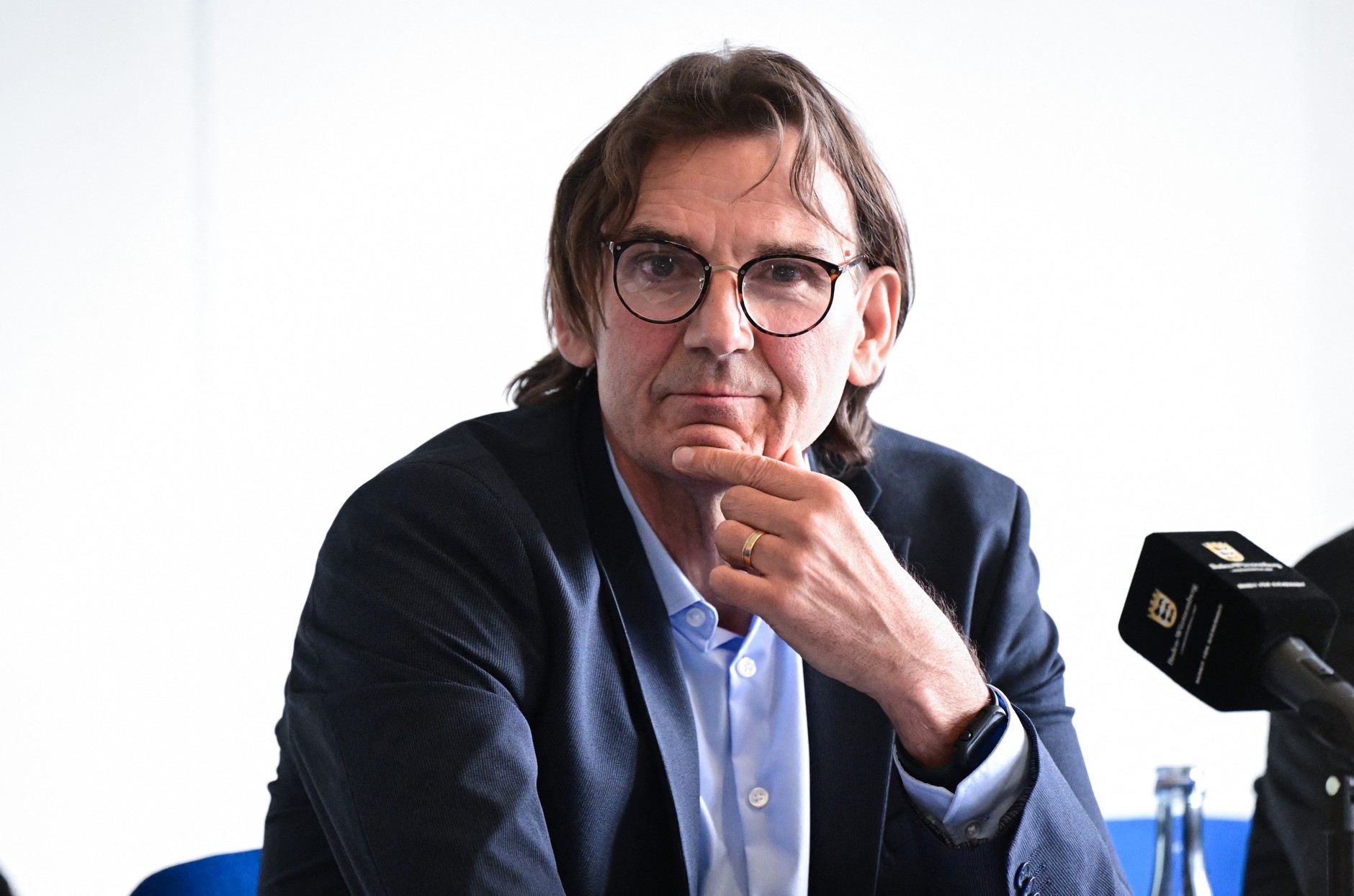
Andreas Stenger during a press conference on gang crime at the National Office of Investigation, Stuttgart, Germany, February 22, 2024.BERND WEISSBROD / DPA / dpa Picture-Alliance via AFP / AFP
In this context, are stricter regulations and greater protection of young people on social media needed? for example, based on the Australian model [gdzie dzieci i młodzież do 16. roku życia nie mogą korzystać z platform społecznościowych]?
There are many arguments that the protection of young people on social media should be increased, especially in terms of protection against pornography and violent images. Above all, we need to provide more opportunities for early media literacy and to immunize young people against the temptations of social media. Family homes, socialization and upbringing play an important role here: we need to know what our children do online, what they consume, and talk about it in the family. In the case of people committing serious acts of violence, we are often dealing with completely destroyed family structures, so this approach is difficult. However, the basic idea remains the same: before we start talking about bans, we should strengthen media competences – in families and, above all, in schools.
What role does the rap and music scene play in “subcultural violence”? In music videos [raperów] you can observe close, personal connections with gangs, as well as clear symbolism.
If someone constantly raps “We are criminals, we don't do it for money, it's about honor and respect”, then this is the kind of ideology that can be imposed on certain groups. I called it “crime as a lifestyle”: someone presents himself as a cool Instagram rapper, as a criminal by default. Such environments are often the starting point for recruiting new members. We are watching this and taking it seriously. However, I would argue against a simple cause-and-effect relationship: no one automatically becomes a criminal because of the lyrics in a rap song. It is rather an image conveyed in this art that some people try to imitate on the street. For some content we cooperate with the Federal Office for Control of Media Dangerous to Youth. However, it is a difficult field: on the one hand, it is an art form that can be considered good or bad. Not everything has to be banned.
I’m Ashley Davis as an editor, I’m committed to upholding the highest standards of integrity and accuracy in every piece we publish. My work is driven by curiosity, a passion for truth, and a belief that journalism plays a crucial role in shaping public discourse. I strive to tell stories that not only inform but also inspire action and conversation.