What happens when we wash too often? How the excess of cleanliness ended up sabotaging our immune system


Always cleaning the “moon” is not necessarily a healthy habit, say a series of studies. Including excessive personal hygiene can lead to various health problems. The subject is debated in the scientific world with potential effects on the immune system.
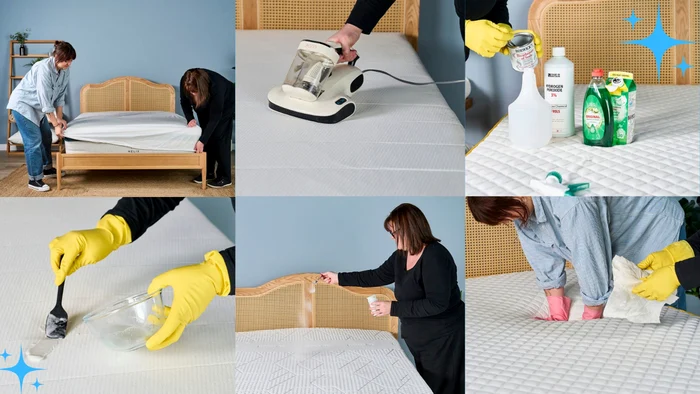
Cleanliness is a constant concern of modern man PHOTO Toms guide
The poor hygiene of living spaces as well as individual hygiene have been a public health problem for centuries. It is assumed that poor hygiene has been one of the main causes of outbreaks of deadly epidemics and pandemics that have affected mankind throughout history. In the 21st century, there are specialists and studies that indicate that humanity has gone to the other extreme. That is, they pay excessive, even compulsive, attention to personal hygiene, but also to the environment. People, especially in urban areas and with a high degree of civilization, spend significant amounts of money, allocate increased time, to the cleanliness of the house and their own body.
There are numerous cleaning products, strong disinfectants, biocidal products, but also a range of cosmetics to keep us as clean as possible and with a pleasant smell. For Romanians, a “moon” house, fragrant and without a bit of dust, is a clear sign of a family of householders, of civilization and health. Obviously, a clean environment, a well-groomed body, ward off many diseases.
However, certain studies indicate that excessive cleanliness can have the opposite effect, especially on children. In particular it can lead to deficiencies related to the immune system. Not to mention the fact that when we wash our body too often we also risk all kinds of health problems. At the moment, in the scientific world, the subject is debated, activating controversies and numerous opinions for and against.
The “Hygiene Hypothesis” or when too much cleanliness spoils
Especially with the COVID-19 pandemic, the idea of constantly sanitizing the house has become an increasingly important habit in society. It even reached obsessions related to the degree of cleanliness and the complete killing of germs. More and more cleaning products on the market promise to eliminate 99.9% of germs, covering this need for compulsive cleaning of the population. Germs are very harmful to human health, obviously, and cleanliness is not a bad thing.
Excess, on the other hand, can be harmful, especially since not certain germs can help our immune system, in childhood, adapt to the microbiome and successfully deal with allergies and various ailments throughout life. Being too clean in the house, some scientists say, could contribute to the onset of asthma and various types of allergies. And that's because, living in an excessively clean, almost sterile domestic environment, our body is no longer used to confronting the surrounding bacteria and microorganisms and gradually loses its natural immunity. That is precisely why, in the last 15 years or so, there has been a resurgence of interest in an older theory related to hygiene: the “hygiene hypothesis”. Formulated in 1989 by British epidemiologist David Strachan, this theory dates back to the late 1980s.
He was the first to suggest that exposure to infections during childhood would provide good defense against allergies later in life.
An allergy is actually an abnormal deviation of our immune system, perceiving a harmless substance as a major attack. In other words, if everything is too clean and an almost non-existent exposure to bacteria, it can lead to a weakening of the immune system in the face of allergies and various diseases. The “hygiene hypothesis” was first formulated in 1989 by an epidemiologist, Dr. Strachan, who reported an inverse relationship between family size and the development of atopic disorders and proposed that a lower incidence of infections in early childhood, transmitted through unhygienic contact with older siblings or acquired prenatally, could be a cause of the increase in allergic diseases. Later, as the concept was further explored by allergists and immunologists, it evolved into the broader notion that decreased microbial exposure is a major causal factor in the increased incidence of atopy in recent years. A wide range of factors that could have led to altered microbial exposure were examined, such as clean water and food, sanitation, antibiotics and vaccines, birthing practices, as well as incidental factors such as the move from farm to urban life.”shows a group of British specialists in the paper “Too clean, or not too clean: the Hygiene Hypothesis and home hygiene” for PubMed Central.
Other specialists, such as epidemiologist Graham Rook of University College London, say that it is essential that man has contact with the environment and all that it entails. “It is essential to pass on the maternal microbiota – harmless symbiotic organisms in the gut, skin and elsewhere – and we need contact with the microbial biodiversity in the environment”says Graham Rook for the BBC. The same expert shows that our exposure to good microbes in the early years of life can be of enormous health benefit.
For example, early exposure to microbes in our gut activates some immune cells in such a way that, as we age, they do not overreact to the microorganisms. Rook calls these microbes “our old friends.” And we miss their friendliness because extreme cleanliness means we often don't come into contact with microbes in the same way our ancestors did.
Far from nature, with an increasingly unadapted immune system
A major problem identified by some specialists is that the lifestyle change in the contemporary world has completely removed us from the natural microbiome, and our immune system no longer knows how to react properly when it encounters different microorganisms. It can even react exaggeratedly, dubiously, including to totally harmless germs or even to good bacteria. However, specialists point out that this does not mean that people should give up good hygiene practices. Hygiene is good, but not excessive.
Moreover, through urban living, man has moved further and further away from the natural world, populated with microorganisms. Especially after the pandemic and in the age of technology, people leave the house less and less, or when they do, they use their personal car. In addition, some don't even get to shops, confectioneries or restaurants anymore due to the spread of home delivery services.
“Consensus is beginning to develop around the idea that fundamental lifestyle changes have led to decreased exposure to certain microbial or other species, such as helminths, that are important for the development of immunoregulatory mechanisms. Although this review concludes that the hypothesis' relationship to hygiene practices is not proven, it provides strong support for initiatives aimed at improving hygiene practices. However, it would be useful if the hypothesis were renamed, for example, as the “microbial exposure” hypothesis or the “microbial deprivation” hypothesis, as proposed, for example, by Bjorksten. Avoiding the term 'hygiene' would help focus attention on determining the true impact of microbes on atopic diseases, while reducing the risks of discouraging good hygiene practices.”states SF Bloomfield , R Stanwell-Smith , RWR Crevel , J Pickup in “Too clean, or not too clean: the Hygiene Hypothesis and home hygiene”.
And as examples in the studies, the cases of peoples living in developing countries, in greater contact with the environment, were taken. For example, countries where children still play outside with their peers, without technology abuse and solitude in front of devices.
“This idea stems from observations that some developing countries, where children may be exposed to more pathogens, tend to have lower rates of certain diseases, such as allergies and asthma.”states the doctor James Fernandez for the publication of the clinic in Cleveland, United States. Likewise, biologist Dorothy Matthews, at Russell Sage College in Troy, New York, states that under these conditions our body “can overreact to beneficial microbes because our immune system has forgotten how to live with them.”
Controversies and cautions
There are also specialists who say that these findings are biologically correct, but that there is not enough scientific evidence to prove a clear link between contemporary, much improved household hygiene and the intensification of allergies or the appearance of conditions such as asthma. At least not in adults. “For adults, at this time and given the hygiene measures we take, I don't think there is too much clinical risk to our immune system”specifies Jame Fernandez. “In theory, it makes sense, but there isn't much solid scientific evidence behind it”adds the doctor.
Instead, most specialists agree that the growing distance of contemporary man from the natural environment can lead to problems in the adaptation of the immune system to microorganisms.
Too clean, too washed, too unwholesome
If there are pros and cons to the obsession with house cleanliness in the contemporary world, there is almost a scientific consensus on exaggerated personal hygiene. That is, if we exaggerate with washing and sanitizing our own body, we risk doing more harm than good. And that's because our body is already equipped with cleaning mechanisms, with a beneficial microbial microflora but also with other microorganisms that help us both internally and externally. “Obsessive washing generally disrupts the normal flora that keeps you healthy by competing with harmful organisms”says Mary Ruebush, a microbiologist and instructor at the Becker School of Professional Education, for the BBC. The same specialist says that an almost sterile environment is a real sensory deprivation for the brain with health risks.
“Running the immune system in a sterile environment is like sensory deprivation for the brain. It eventually goes crazy, hence the rise in allergies and autoimmunity associated with people trying too hard to avoid all exposure to everything in their environment.”says Ruebush to the same publication.
In other words, a long shower every day is not recommended because it removes the “good bacteria” from our skin. And excess cosmetics can kill these good bacteria. But, experts say, we should wash our genital area and anywhere else we sweat a lot every day. Also, also daily, the underwear must be changed.