Viktor Orban and the mandate with which he will present himself in the 2026 elections: “I want to keep Hungary out of the European war alliance”


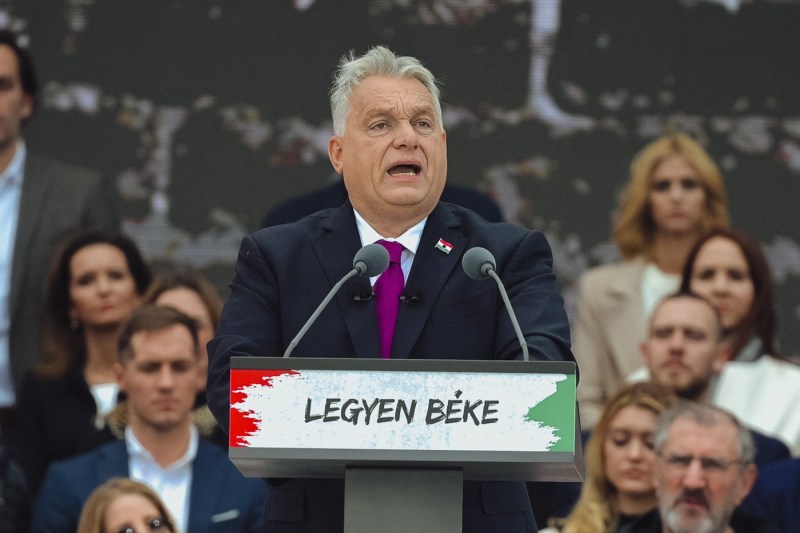
Viktor Orban, speech at a demonstration organized in Budapest, Thursday, October 23, 2025, to commemorate the Revolution of 1956. Credit: Robert Nemeti / AFP / Profimedia
The legislative elections that will take place in 2026 in Hungary will be a referendum through which this country will decide whether to keep its neutrality or align itself with Brussels' policies regarding migration, gender issues or supporting Ukraine in the war with Russia, Hungarian Prime Minister Viktor Orban estimated on Wednesday, in an interview at the end of the year.
“I will seek a mandate to keep Hungary out of the war” and also “out of the European war alliance”, Viktor Orban indicated in the interview given to the public news station M1, as recorded by the official Hungarian agency MTI, quoted by Agerpres.
The legislative elections in April, he added, must clarify whether Hungary joins the “Coalition of the Will” supporting Ukraine or remains neutral.
According to Orban, while the European Union summits have come to resemble a kind of “war councils”, a new world is “taking shape before our eyes” and people want a path that will lead them to a future as secure as possible. Hungary's stability, he explained, is based on two pillars, namely an economic system based on work and a society centered on families, both very different from the model promoted by Brussels. “Hungary supports sovereignty, family policy and merit-based economy, not migration, gender ideology or subordination to Brussels”, the Hungarian conservative prime minister summarized his policy.
Orban reaffirmed that, under his leadership, Hungary will refuse to comply with the EU pact on migration and will thus refuse to receive migrants, even if Brussels will impose the financial penalties included in that pact in case any member state rejects the quotas of non-EU migrants.
Alluding to the rise of Hungarian opposition leader Peter Magyar, Hungary's conservative prime minister criticized “forces determined to implement Brussels' policies by accepting the migration pact, joining Europe's war, adopting gender norms.” Therefore, the legislative elections in 2026 will be “a decisive referendum: does Hungary continue its policy of neutrality or align itself with Brussels?”, he assessed.
“Europeans rejected peace and chose war”
About the year 2025, the Hungarian prime minister noted what he described as a turning point in which a division appeared between the US and Europe on a strategic issue, namely that while his ally in the White House, President Donald Trump, made efforts to reach peace in Ukraine, the latter's European allies continued to support it to continue the war.
“The Europeans rejected peace and chose war, forcing us to recalibrate (…), we opposed Brussels' war agenda and suffered the consequences”, namely the maintenance of blocked European funds for Hungary, noted Orban, according to which the European supporters of Ukraine have already entered a “war economy”, with economic policies focused on austerity, tax increases, the increase in the cost of living and public debt.
“The key question for 2026 is whether the United States will continue to seek peace with Russia, even without Europe,” predicted Viktor Orban. “We don't want to leave the Western alliance, but we want it to be led by reason,” concluded the Hungarian conservative prime minister, now faced with the prospect of losing power to his opponent Peter Magyar.
A former ally of Orban, Magyar became his adversary following a political-marital affair. Magyar resigned early last year from Orban's Fidesz party after divorcing Judit Varga, the former Justice portfolio holder and an ally of the prime minister.
He then founded the Tisza party, which describes itself as a center-right pro-European party and is supported by Brussels, which challenges the sovereignist policy of the Hungarian prime minister. The Tisza party quickly established itself as the main opposition party, and in the European parliamentary elections it ranked second, after Fidesz, with almost 30% of the votes. Some recent polls claim that Tisza is ahead of Fidesz in voting intentions.