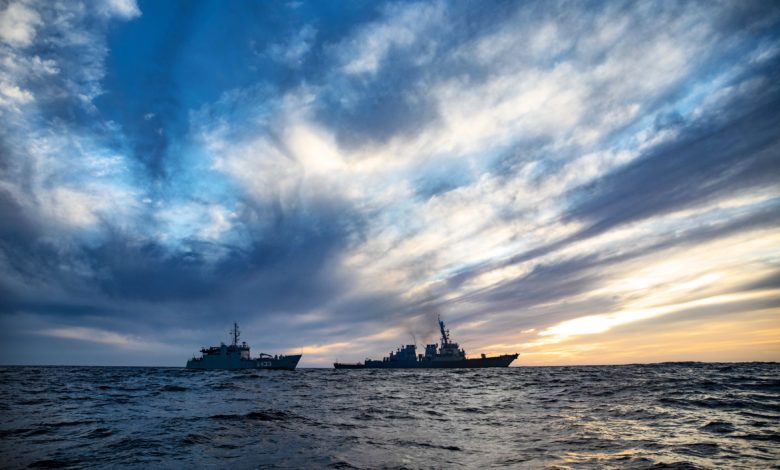
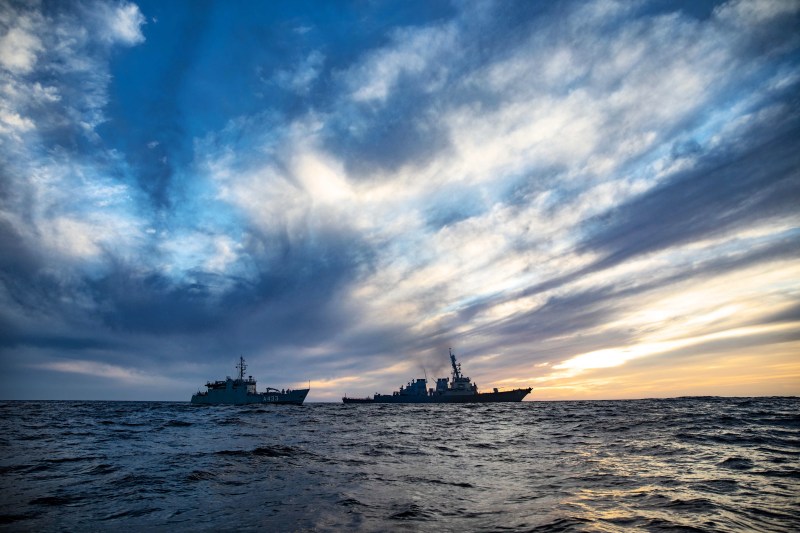
Estonian military ships on the Baltic Sea. Photo: US Navy / Zuma Press / Profimedia
The Nestone Naval Forces have detained and climbed on a oil tank that was heading for Russia and is under EU sanctions, accusing it for navigating illegally without a valid country pavilion, Reuters reports.
The “Kiwala” ship is under the European sanctions in February, in the context of the measures introduced by the EU against the “shadow fleet” of Russia, a term used by Western states for the vessels that, they say, are used by Moscow to circumvent the international sanctions.
Kiwala was heading for Russia at the time of confiscation, MarinetraFfic data shows. The ship had a djibouti pavilion, but an official from the Estone Transport Authority revealed that Djibouti denied that he would be registered there.
“In this morning, Marina Estona detained a sanctioned ship, without a national pavilion,” said Prime Minister Eston Kristen Michal in a post on platform X.
“Estonia takes very seriously the suspicious activities in the Baltic Sea,” the official added.
When it included the ship in the Sanction Register in February, the EU stated that it was involved in Russian oil transport “while practicing irregular and high risk”.
“Due to the suspicion that the ship does not have a flag, the authorities Estone reacted. The crew and the captain cooperated,” said Kristjan Truu, director of the Maritime Division within the Estone Transport Authority.
Truu mentioned that ships and helicopters of naval forces were involved in the operation and that the ship is inspected while Estonia is discussing Djibouti to confirm the details.
No damages have been reported at the level of submarine cables or other equipment. In recent years, the countries in the region have accused Moscow of using ships to damage the submarine infrastructure in the Baltic Sea.
In January, in a summit with allies in the region, Secretary General Mark Rutte announced that NATO will strengthen the protection of the critical infrastructure within the “Baltic Sentry” (Baltic Santinela), which will increase the military presence in the Baltic Sea and allow the Allies to respond to the destabilizing documents, as NATO explained in a press release.