This may be a prelude to a conflict between Beijing and Washington. “China will turn off the tap”


– Then how heavyweight fightand we're in this short break between rounds, but both sides need to prepare for what comes after the ceasefire, says Greg Stanton, a member of the House Select Committee on China.
POLITICO spoke with more than 25 lawmakers to get their views on the trade deal's durability. Both Republicans and Democrats are warning of turmoil to come.
More than 20 lawmakers are expressing doubts whether Xi Jinping will keep key promises the White House says the Chinese leader made in October — including limiting the flow of precursor chemicals to Mexico that cartels turn into fentanyl and purchasing agreed amounts of U.S. agricultural products. — China can never be trusted. They are always looking for opportunities says Senator Thom Tillis.
The pessimism comes despite an easing of tensions between the United States and China since Trump and Xi met in South Korea. The heavy cycle of mutual tariffs, which briefly reached triple digits earlier this year, is now on hold.
Both countries have eased export restrictions on core products (rare earth metals for the U.S., chip design software for China), and Beijing has pledged to “expand agricultural trade,” an apparent reference to the suspension of U.S. agricultural imports it imposed earlier this year.
This trend may continue, given that Trump will likely seek to stabilize relations between the United States and China ahead of a summit with Xi scheduled for April in Beijing. “We're starting to see some changes with tariffs and fentanyl precursors,” says Sen. Steve Daines.
However, a number of issues were left out of the negotiations – or left on hold. This includes: about a status quo that the Trump administration can only maintain for so long. The U.S.-China rare earths trade deal that Commerce Secretary Scott Bessent said the two countries were expected to finalize before Thanksgiving remains unresolved. The White House also would not confirm reports earlier this month that Beijing-based ByteDance had finalized the sale of social media app TikTok ahead of the Jan. 23 deadline in the deal.
Pessimism in the USA
“The idea that we are in a period of stability in relations with Beijing is simply not true,” said Senator Jeanne Shaheen, a member of the Senate Foreign Relations Committee.
Shaheen has been sounding the alarm about China's national security threats since entering the Senate in 2009. But even some lawmakers who have been more open to working with Beijing — such as California Democratic Reps. Ro Khanna and Ami Bera — say they don't expect the truce to last long.
The White House is more optimistic about the prospects for trade relations between the United States and China.
“President Trump's close relationship with President Xi helps ensure that both countries can continue to make progress and resolve outstanding issues” the White House said in a statement, adding that the administration “continues to monitor China's compliance with our trade agreement.” The administration declined to comment on the TikTok deal.
Still, lawmakers interviewed by POLITICO described four issues that could disrupt U.S.-China relations in the new year.
The soy dispute
The dependence of American soybean producers on the Chinese market gives Beijing a powerful advantage commercial weapons in the form of tariffs — and China does not appear to be keeping its promises to resume purchases.
The stalemate regarding soybeans began in May, when China suspended purchases. That raised the prospect of financial ruin in rural states like Illinois, Iowa, Minnesota, Nebraska and Indiana — key constituencies for the Republican Party in next year's congressional elections.
Last month, the White House said Xi had committed to the purchase 12 million tons of American soybeans in November and December. But as NBC reported this month, Beijing has so far purchased only a fraction of the agreed amount.
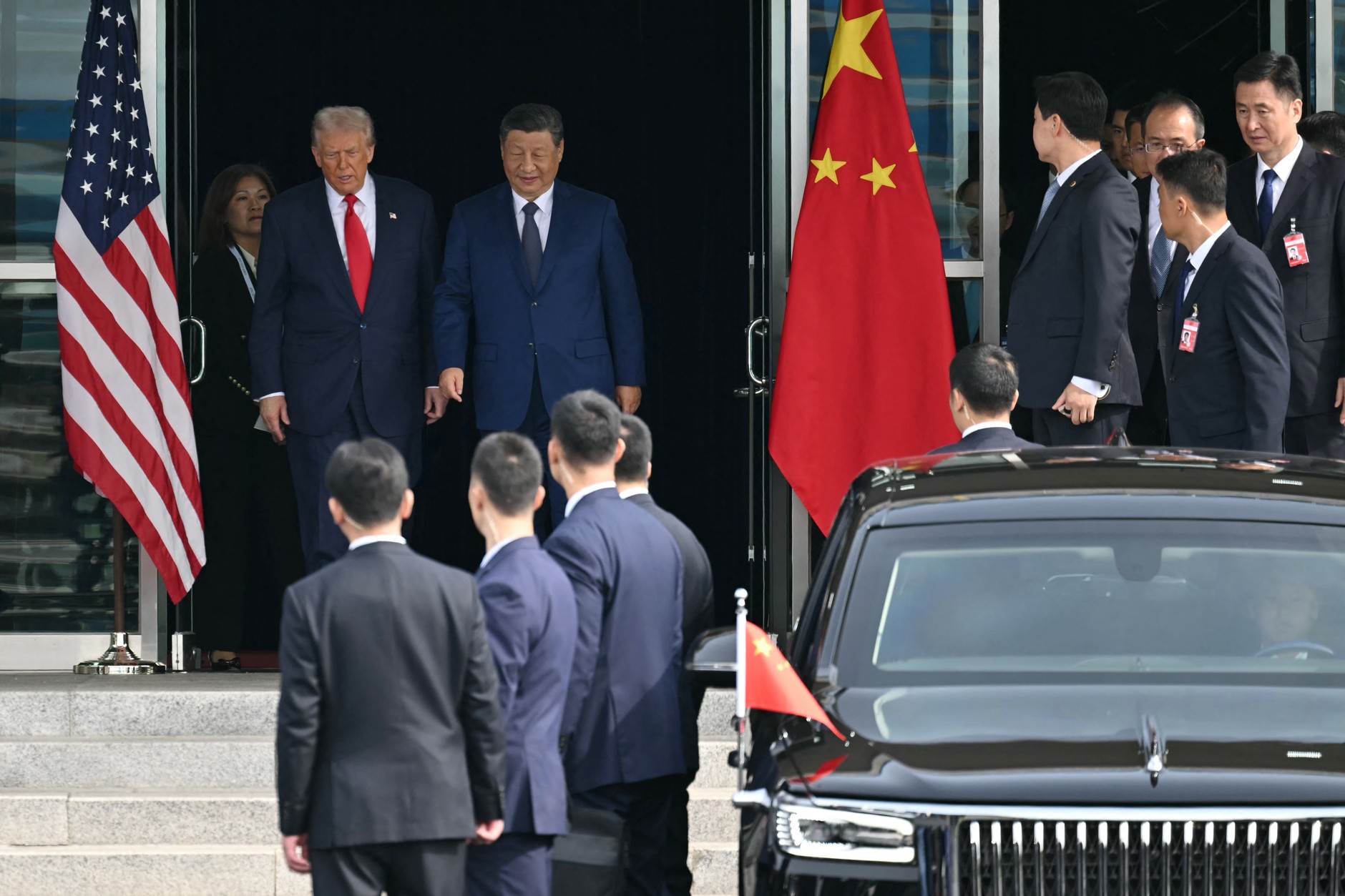
Donald Trump and Xi Jinping in Busan, South Korea, October 30, 2025.Andrew Caballero-Reynolds / AFP
“What irritates Trump and causes him to react quickly are issues that are more internal and closer to his heart,” says Jill Tokuda, a Democratic representative from Hawaii. China's delays in soybean purchases “are the most irritating because they harm American farmers and consumers, which is why we may see the most instability in relations between the two countries on this issue.”
This moment may occur on February 28 – this is the new date for the purchase of 12 million tons of soybeans, announced earlier this month by Scott Bessent.
The Chinese embassy in Washington declined to comment on whether Beijing plans to meet the deadline. The White House said one aspect of the trade deal it is monitoring is soybean purchases during the current growing season.
It's hot in Taiwan
Beijing's threats to invade Taiwan are another potential flashpoint in the near future, even though the United States has not prioritized the issue in its national security strategy or in talks between Xi and Trump.
This year China intensified preparations to invade Taiwan. In October, China's armed forces unveiled a new military barge system that solves some of the problems associated with landing on the island's beaches by deploying a bridge that allows cargo ships to land tanks or trucks directly on shore.
— China is tightening the noose around the island says Congressman Ro Khanna, who joined a bipartisan congressional delegation to China in September and upon his return called for better communication between the U.S. and Chinese militaries.
Some of the tensions over Taiwan are playing out in the broader region as Beijing seeks to expand its military reach and influence. Earlier this month, Chinese fighter jets targeted Japanese aircraft in the East China Sea on radar — a prelude to opening fire.
“There is a real chance that Xi will miscalculate in antagonizing our allies, especially Australia and Japan,” says Congressman Seth Moulton. — There's still a limit to which [Chiny] they cannot cross without jeopardizing the maintenance of the truce.
The United States has been pursuing the policy for decades “strategic ambiguity”in which they refuse to specify how they would respond to Chinese aggression against Taiwan. Trump also follows this policy. “You'll know if it happens,” he said in an interview on 60 Minutes in November.
More export restrictions
Beijing has eased export restrictions on rare earth metals — elements that are essential for both civilian and military uses — but may re-enter at any time.
Ten of the 25 lawmakers interviewed by POLITICO suspect Beijing will reimpose export restrictions in the coming months as a comfortable means of pressure.
“At the heart of the cracks in the truce is China's ability to impose export restrictions, especially its control over global supplies of rare earth metals and other key minerals,” says Congressman Andre Carson.
Others fear that China will decide to extend export controls to another product category in which it dominates the market: pharmaceuticals. Beijing supplies 80 percent. active pharmaceutical ingredients in the United States – the basic ingredients of popular drugs to treat conditions ranging from hypertension to type 2 diabetes.
“Overnight, China could shut down the spigot and many essential medicines, including aspirin, would disappear from the U.S. supply chain,” says Congressman Nathaniel Moran.
China resumed exports of rare earth metals this month, with China's Commerce Ministry pledging to “timely approve” such exports under a new licensing system, state media reported. Beijing has not expressed any intention to restrict the export of medicines or their ingredients as commercial weapons. However, in its annual report last month, the U.S.-China Economic and Security Review Commission called on the Food and Drug Administration (FDA) to reducing US dependence from Chinese drug sources.
The Chinese embassy in Washington did not respond to a request for comment.
China's growing military power
China's quest to build a world-class military force that could challenge the traditional dominance of the United States in the Indo-Pacific region, could also disrupt relations between Washington and Beijing in 2026.
China's expanding navy, which now has more than 200 warships and is the largest in the world, is helping Beijing project its power across the region.
The centerpiece of the 2025 effort was the addition of a third aircraft carrier, Fujianwhich entered service last month. Fujian is two-thirds the size of the aircraft carrier USS Gerald R. Ford. However, like the Ford, it has state-of-the-art electromagnetic catapults to launch J-35 and J-15T fighters. The Trump administration sees this as a threat.
The United States seeks to protect allies and partners in the Indo-Pacific region from a possible “sustained and effective military aggression” by China, fueled by Beijing's “historic military strengthening,” Defense Secretary Pete Hegseth said earlier this month at the Reagan National Defense Forum.
Five officials say they see China's increasingly aggressive military presence in the region as inconsistent with U.S. efforts to maintain stable relations with Beijing in the coming months.
“We know that China's long-term goal is economic, diplomatic and military domination around the world, and the United States is viewed as an adversary,” Moran says.