“Ideology of childlessness”. The Kremlin's propaganda targets Russian women

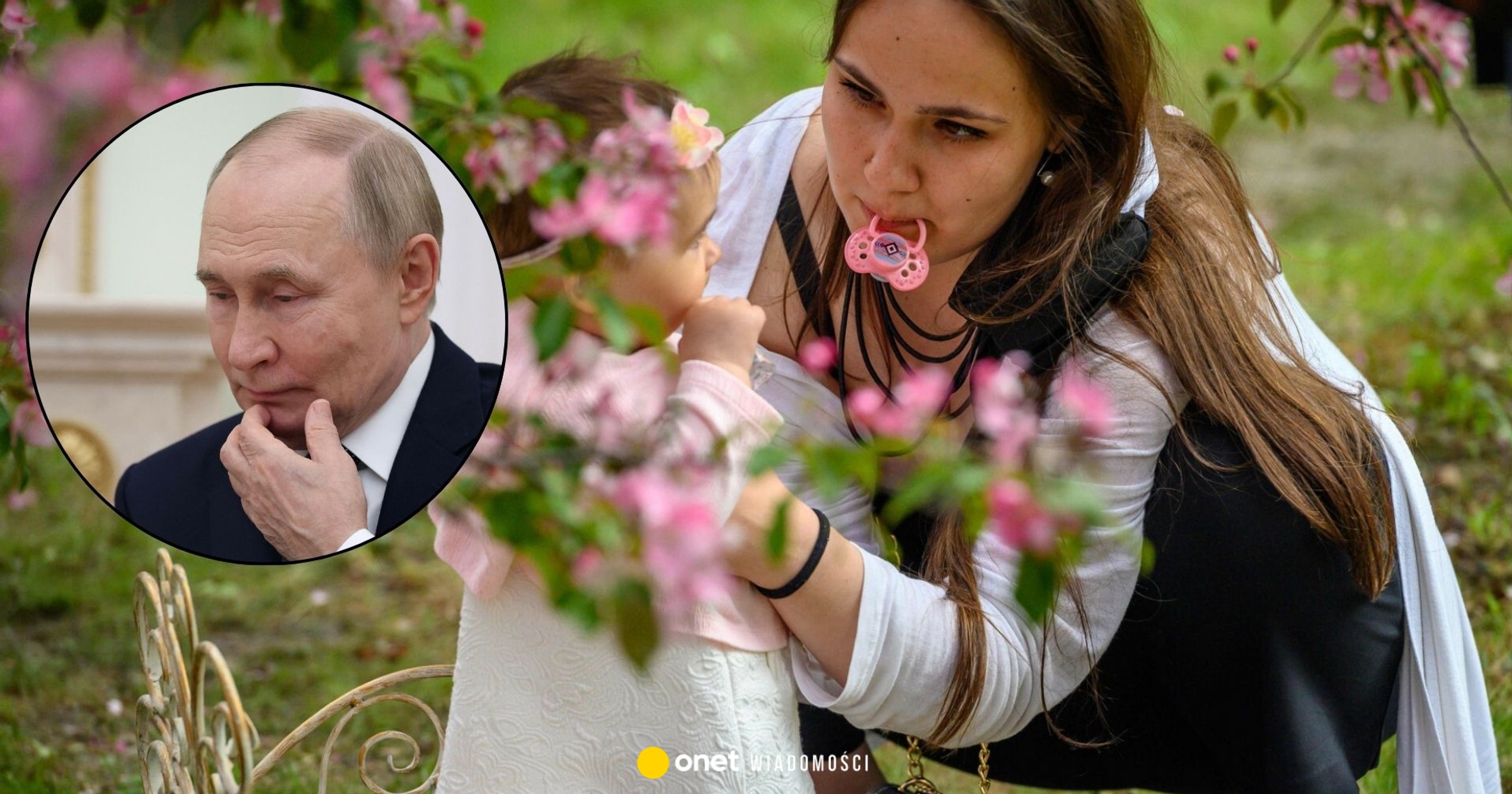
Earlier this month, President Vladimir Putin said that “support for families” and stimulating an increase in the birth rate are the “most important” of all Russian national projects and strategic plans.
Russian officials, who have repeatedly described the country's demographics and “very low” birth rate as a serious problem, are stepping up efforts to encourage citizens to have more children.
However, despite officials' best efforts, experts say Russia's current demographic situation should be viewed as deep crisis.
The birth rate in Russia is one of the lowest in its recent history.
According to state statistics agency Rosstat, the country's total fertility rate – the average number of children a woman is expected to have in her lifetime – is about 1.41.
This is below the level required for population replacementwhich means that each new generation of Russian citizens is smaller than the generation of their parents.
For example, in 2024, Russia's natural population decline – deaths minus births – totaled 596,000. 200 people. The total number of births this year fell to 1.22 million, a decline of 3.4%. compared to 1.27 million in the previous year. The only time the number was lower was 1999, when the number of newborns dropped to 1.21 million.
Russian problems
A low birth rate ultimately leads to population decline and an aging population as fewer children are born, creating a labor shortage, slowing economic growth, and increasing spending on pensions and health care.
In the case of Russia, these effects are not yet fully felt — notes independent demographer Alexei Raksha.
Russia's situation reflects broader global trends in fertility decline. In 2023, the total fertility rate in the EU was 1.38 live births per woman. In the United States it was 1.59 in 2024.
While the nationwide birth rate is declining, fertility levels may vary by region.
Last year, Putin introduced the fertility rate as a benchmark for assessing the performance of governors.
The Republic of Chechnya (2.7), the Republic of Tuva (2.3), the Yamalo-Nenets Autonomous Okrug (1.9), the Republic of Altai (1.8) and the Republic of Ingushetia (1.8) can boast the highest birth rates in the country.
The article continues below the video
These leading regions show different fertility patterns. Experts say that in Chechnya and Ingushetia in the North Caucasus, high birth rates are mainly due to large families, more conservative cultural norms and the practice of Islam.
The Kremlin encourages Russian women
Raksha also notes that the high birth rate in Tuva is accompanied by another indicator: a large number of underage mothers. In 2023, the republic in the Far East recorded a record rate of 9.5 births per 1,000 in Russia as a whole. girls aged 15 to 17 – says the demographer.
According to experts, 33 regions, mainly in the Central and Northwest Federal District, have very low fertility rates (below 1.3). The lowest fertility rates in 2024 were recorded in the Leningrad Oblast (0.89), Mordovia (0.99) and the annexed city of Sevastopol (1.0).
In recent years, the Russian authorities have introduced many programs aimed at encouraging families to having more children.
But even so, raising Russia's fertility rate is probably unrealistic at the moment “in the face of prolonged armed conflict, sanctions pressure, international isolation and the serious economic problems caused by these factors,” Salavat Abylkalikov, PhD in sociology and demographer, tells The Moscow Times.
One of the main measures is the maternity capital program, which provides families with lump sum payments for the birth of their first and second children, as well as subsequent children. Mothers can currently receive one-off payments ranging from PLN 690,000. 266 to 912 thousand 162 rubles (according to the current exchange rate from PLN 31,000 to PLN 41,000) for the birth of a child.
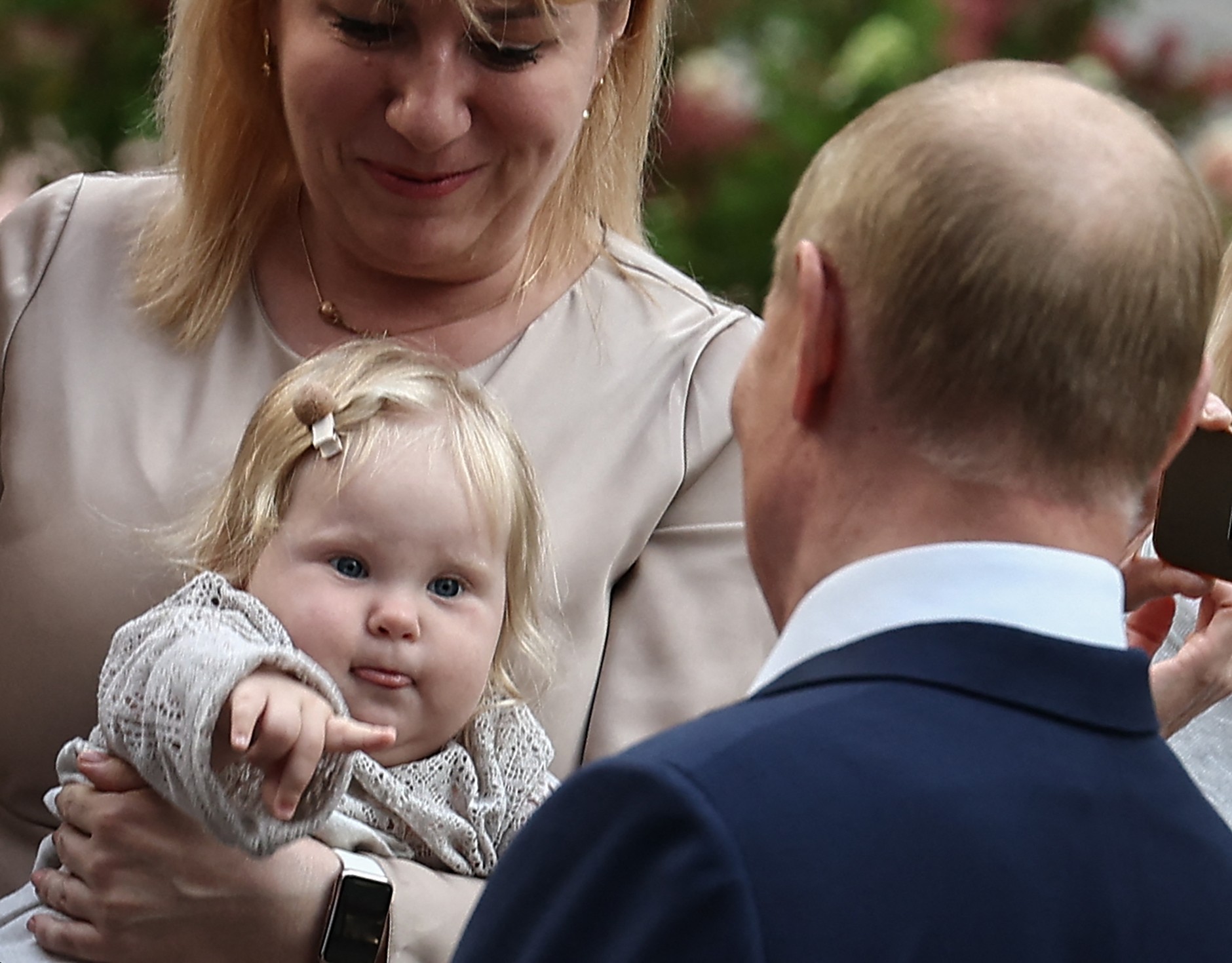
Russian President Vladimir Putin during a meeting at a children's hospital, Krasnogorsk, August 2024.Mikhail Tereshchenko / AFP
In addition, the state offers various benefits for families with children and monthly benefits for pregnant women who register for prenatal care.
“Traditional values”
Authorities have also expanded housing support, offering preferential mortgage programs and other benefits for large families, including proposals for discounted car loans and tax credit programs that increase with the number of children.
Behind the financial incentives is a strong state campaign promoting the so-called traditional family values and ideals, which has intensified in recent years. Russian authorities contrast it with what they call “Western degeneration.” One of the most discussed measures is a law introducing high fines for alleged promotion “ideology of childlessness”.
At least 27 regions of Russia have also introduced penalties for “encouraging abortion”, which covers any attempt to induce women to have an abortion, as well as providing any information about abortion, which may result in administrative liability.
Abylkalikow calls initiatives promoting “traditional values” “ineffective,” but says they “require little financial outlay, which makes them a convenient way to create the appearance of active policy-making“For example, the number of abortions had already fallen sharply and continued to decline throughout the post-Soviet period, the expert notes.
According to Raksha, the measures to increase birth rates that are being implemented in Russia often appear to be merely a “formality” intended to show that the government is taking action.
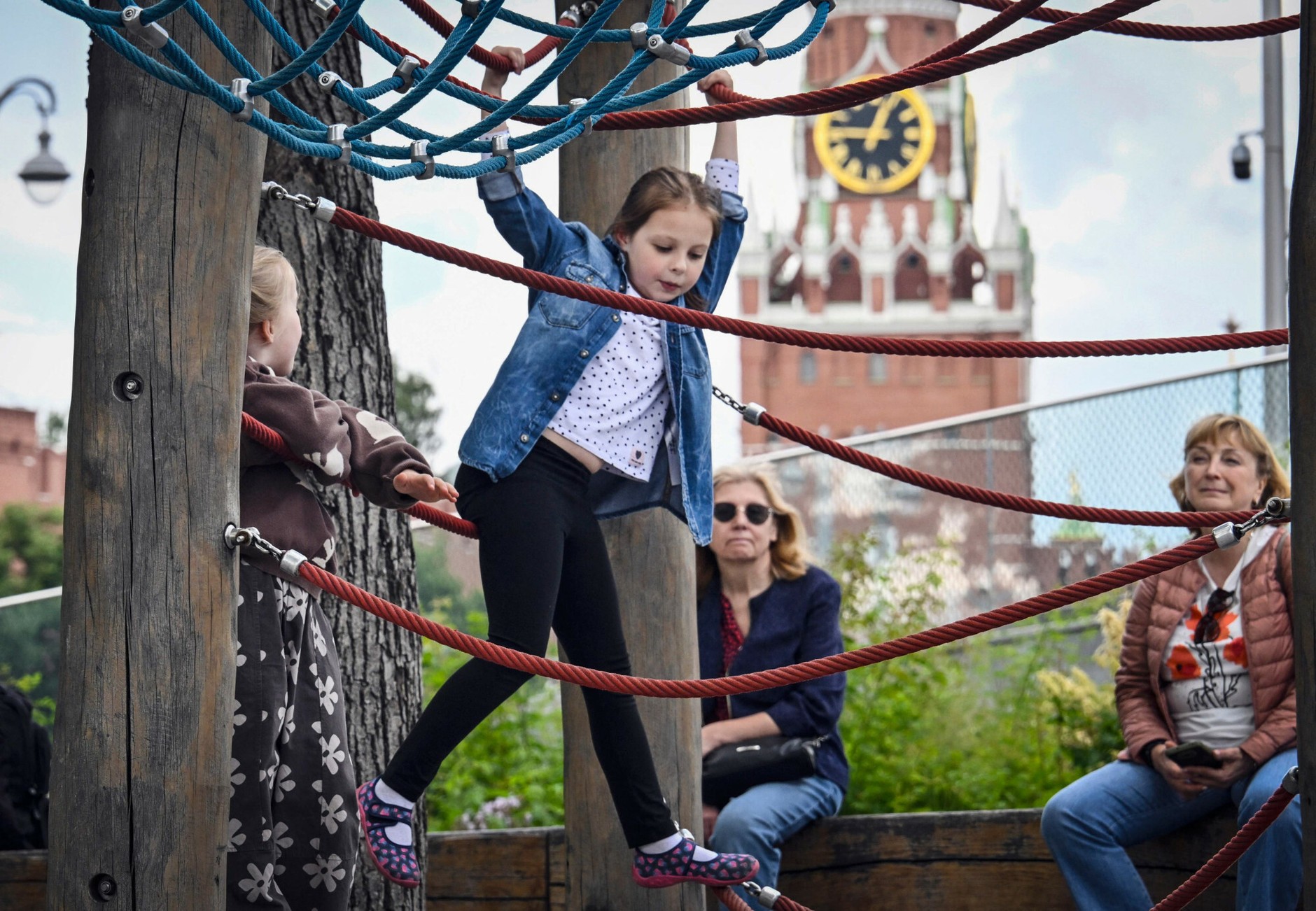
Playground in Moscow, June 2025.Alexander Nemenov / AFP
The impact of war
— Large-scale investments are really needed in… real support for familiesbetter childcare infrastructure and opportunities to combine motherhood with a professional career, says Abylkalikov.
So far, government programs mainly affect “due date” – encouraging families to have children earlier than planned – but have little effect on the total number of children a family intends to have, the sociologist adds.
Experts are divided on how the war affected birth rates.
According to Raksha, it “didn't have a particularly strong impact on birth rates,” but rather did mortality. The expert points out that although men go to the front, high salaries for military personnel may encourage families to have children, increasing household income.
However, Abylkalikov says that indirectly, “uncertainty and lack of long-term planning” caused by war and economic sanctions may cause the birth rate to decline.
— War, sanctions and underfunding will inevitably lead to degradation of the health care system and increase in social tensionswhich in the medium term will result in additional excess mortality that would not occur under normal circumstances, the expert concludes.