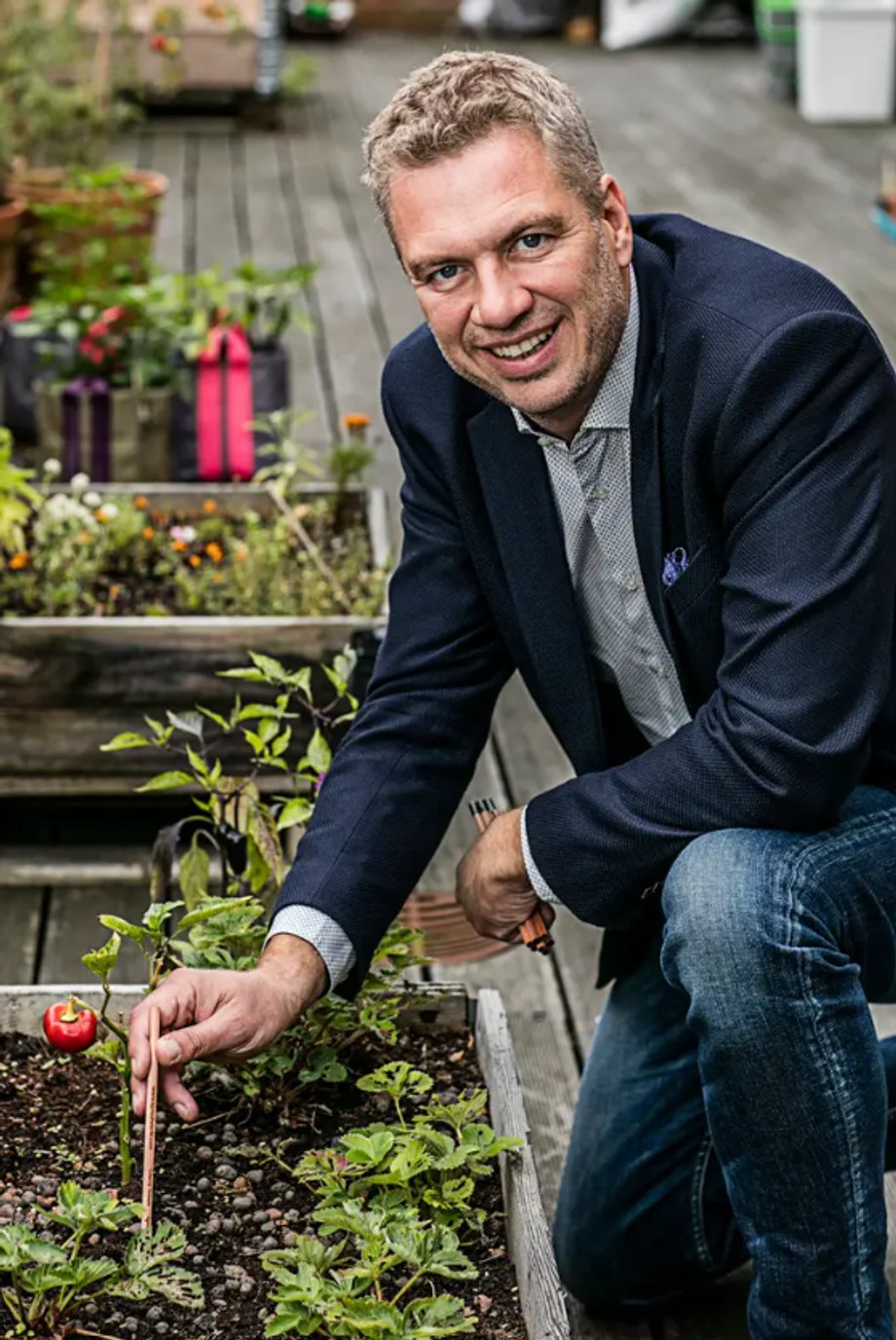
This first-person article is based on an interview with Michael Stausholm, founder and CEO of SproutWorld. It has been edited for length and clarity.
In 2013, I came across a Kickstarter campaign for a pencil that can… be planted. Three young students from the Massachusetts Institute of Technology (MIT) invented this pencil in their classes.
The idea was to use a pencil to write on, then plant it and watch herbs and vegetables grow from the seeds placed inside.
I thought it was brilliant. And in the end it turned out to be profitable.
Read also in BUSINESS INSIDER
At the time, I was advising large companies like Nike and Walmart on sustainability issues. I knew that many people had a huge problem understanding what sustainability actually was.
Yet this pencil was his perfect illustration. It was a useful object made of natural materials. It is designed with end of life in mind: when it was no longer useful, users could literally give it new life. I wanted to incorporate this pencil into my work.
I first purchased a limited license and then purchased global rights
I contacted students and licensed their intellectual property to sell the pencil in Denmark, where I live. Just a month later, I acquired the rights for all of Europe and founded my company, SproutWorld.
I was interested in the Sprout pencil as a symbol, but as soon as I started selling it, I saw its huge commercial potential. The first summer we sold 50,000. pencils. I had no idea how much space such a stock would take up. I had pencils all over the house and the neighborhood kids helped me pack them.
Michael Stausholm rejected Ikea's offer to protect the company
| Michael Stausholm (private archive)
Within a year, I contacted the MIT students again, asking if they could purchase the global rights to the pencil. They were robotics students and dreamed of building robots, not pencils. I can't reveal the details of the deal, but I was very happy with it – and so were they – which means it was fair for both parties.
Thirteen years later, I still keep in touch with them, and they are proud of how their class project has developed.
See also: A German entrepreneur about his country: this system is collapsing, it's simple mathematics
I was willing to turn down a big deal to protect the brand
I thought schools would love these pencils, but I quickly realized they wouldn't be good customers due to their limited budgets. Soon, corporations started calling, asking to have the pencils made with their own branding. This part of the business flourished. Even today, approximately 80 percent our sales go to business customers, and 20 percent — directly to consumers.
The first major global brand to contact me was Ikea. They wanted about 50 thousand. pencils for anniversary celebrations in their Italian stores. There was just one problem: They didn't want the SproutWorld logo on the pencils – just the Ikea brand.
I lived and worked in Asia, so I knew that once I gave in on branding, it would be easier for companies in China and India to create knockoffs. I wanted to cooperate with Ikea, but I had to refuse. They asked if I was sure and I said yes. I had the courage to say no to a corporate giant to protect the company's future.
Ikea came back and then we made pencils for Michelle Obama
A few months later, Ikea came back – they wanted the pencils and were willing to put our SproutWorld logo on them. This was a huge milestone for the company.
Then in 2018, an agency in New York contacted me about pencils for one of their artists. They dealt with great musicians, so I was a little disappointed when they said it was about the author. However, when we got the purchase and sale agreement, it was signed by Michelle Obama. Working with a former first lady who promotes healthy eating was a perfect fit for our brand.
We have already sold today over 85 million Sprout pencils worldwide. We even produce eyeliners. Last year, we achieved a global profit of approximately USD 1.7 million.
The symbolism of the pencil is still important to me
I am extremely pleased with the commercial success of Sprout pencils. And at the same time, the symbolism of this product still remains extremely important to me.
Sustainability is a difficult concept to understand. The pencil is the entryway to this idea: if you can choose an eco-friendly, natural pencil, what other changes can you make? Nobody can be 100 percent today. sustainable, but even if individuals and companies change 20 percent your behavior, that will make a difference.
Our motto is: “small things grow into great things”. This is what drives us as a company – inspiring global change, one pencil at a time.
The above text is a translation from American edition of Business Insider
I’m Ashley Davis as an editor, I’m committed to upholding the highest standards of integrity and accuracy in every piece we publish. My work is driven by curiosity, a passion for truth, and a belief that journalism plays a crucial role in shaping public discourse. I strive to tell stories that not only inform but also inspire action and conversation.