The SCM Judges' Questionnaire 'recorded the highest level of participation' to date”. “Only in Ireland has a higher completion rate been recorded”

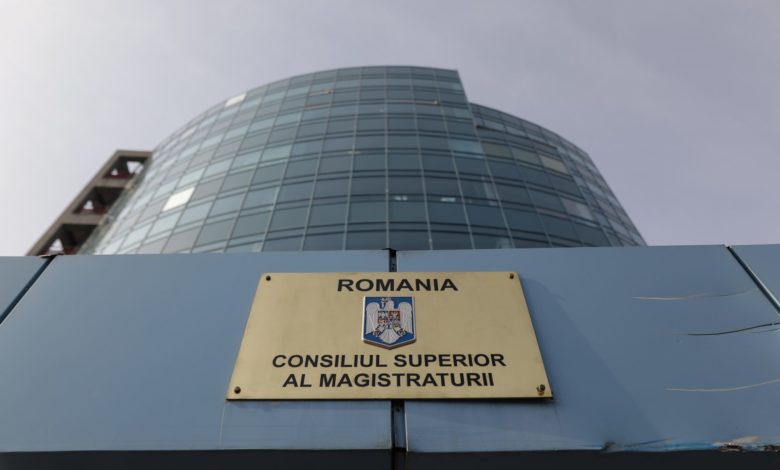
A number of 2,583 judges, representing a weight of 56.5% of the active body, responded to the questionnaire formulated by the Section of Judges of the Superior Council of Magistracy (CSM) to consult them on “current issues in the judicial system”, according to the announcement made on Monday by the institution.
The CSM says that the level of participation “gives the questionnaire a high degree of representativeness, both by reference to the absolute number of respondents and by their significant weight in the entire judicial system.”
“Representativeness is also confirmed from the point of view of jurisdiction levels, the respondent judges being evenly distributed across all jurisdiction levels, in proportions close to the distribution of judges in office by jurisdiction levels. Thus, the distribution of respondents reflects the real structure of the body of judges. The questionnaire therefore has a uniform spread across all jurisdiction levels”, notes the CSM.
According to the forum, it is the most extensive undertaking of this type so far.
“Consultation of the Council's records regarding similar initiatives carried out previously indicates that this questionnaire recorded the highest level of participation, representing the largest initiative of this type carried out to date (the largest number of respondents on the occasion of other consultations being 1028, in 2018)”, the statement also states.
The CSM claims that “only in Ireland has a higher degree of completion been recorded”
The CSM said that the “very high” level of participation is also confirmed by reporting on European practices.
“Thus, in the “ENCJ Survey among judges on the Independence of the Judiciary – 2025″ questionnaire, sent to all judges by the European Network of Judicial Councils, only in Ireland was a higher degree of completion, over 60%, given that the representativeness threshold established at European level is 20% for each state. In this consultation, in the case of Romania, approximately 1,350 judges responded, representing approximately 31% of the total number”, notes the CSM.
According to the SCM, 55.9% of judges come from judges, 24.8% of judges come from tribunals, 16.8% come from courts, and 2.5% come from the High Court of Cassation and Justice.
“Also, the responding judges come from all areas of law, 63.7% carrying out their activity exclusively in non-criminal matters, while 14.7% solve cases exclusively in criminal matters. At the same time, 21.6% of the judges judge both criminal and non-criminal cases, especially in courts organized without separate sections,” the CSM statement also states.
The CSM also mentioned that “the cumulative share of judges who resolve criminal cases, respectively those who judge exclusively in criminal matters and those who resolve cases in both matters (36.3%) give the results a high degree of representativeness under this aspect”.
The consultations launched by the CSM among judges come in the context of the Recorder's investigation about the state of justice in Romania, the phenomenon of prescriptions, but also the effects of the centralization of power at the level of “some magistrates who coexist with politicians”.
In Monday's press release, the CSM says that “the presentation of the conclusions will be made later, after the centralization of all the data collected between December 16-21, 2025 and after their analysis.”
Nicusor Dan wants a referendum among the magistrates
On Sunday, in a press statement, President Nicușor Dan announced that in January he will initiate a referendum within the body of magistrates with a single question: “Does the CSM act in the public interest or does it act in the interest of a group within the judicial system?”.
“In January, immediately after the holidays, I will initiate a referendum within the body of magistrates with a single question: Does the Superior Council of Magistracy act in the public interest or does it act in the interest of a group within the judicial system? And if the magistrates as a whole say yes, the CSM acts in the public interest, we will continue the legislative discussions, but if the majority of the magistrates say that the CSM does not represent the public interest, but the interest of the guild, then the CSM will leave immediately”, declared Nicușor Dan, at the Cotroceni Palace.
Both the judges and the prosecutors of the SCM took a position against the referendum announced by the president.
 Prosecutors from the CSM also oppose the referendum proposed by Nicușor Dan. Sharp message in which they say that they do not agree with “circumventing the Constitution”