An obscene message to Epstein sexual offender and a billion process with Wall Street Journal. What happens in the conflict between Trump and Mogul Rupert Murdoch

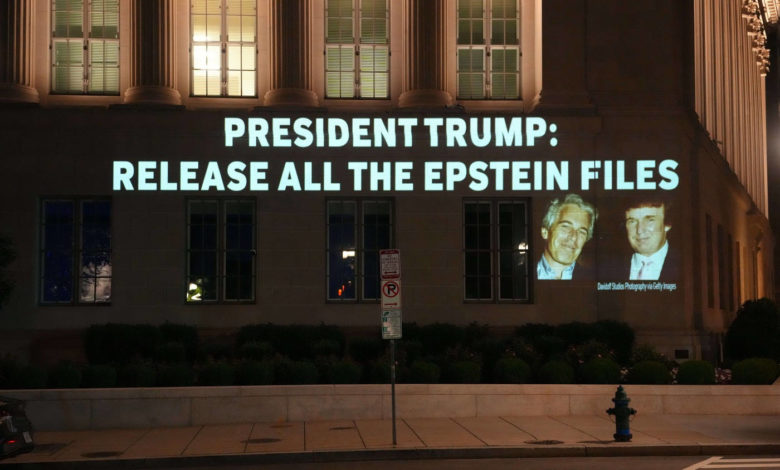
President Donald Trump sued Wall Street Journal for at least $ 10 billion, following the article published by the newspaper in which it was stated that the president's name appeared on a greeting of Jeffrey Epstein's day, the sexual offender, writes The Economist.
“I told Rupert Murdoch that it was a scam, that he should not publish this fake news,” wrote Donald Trump on July 17, after Wall Street Journal reported that in 2003, the president sent to Jeffrey Epstein, a convicted pedophile who died in prison in 2019.
“But he did it, and now I will sue him, him and his third-hand newspaper,” added the White House leader, after the article claiming that Trump's message included a drawing with sexual connotations and a reference to the secrets he and Epstein shared, according to Reuters.
The process was filed the next day, Trump requesting $ 10 billion.
The conflict between Trump and Murdoch, whose Media Empire includes Fox News, as well as Wall Street Journal, New York Post and other conservative orientation titles, is the latest example of its struggle with the press.
Also, the process marks a change in the relationship between the president and the last true media mogul, writes The Economist, who believes that Murdoch, an influential supporter of Trump, could prove to be less easily manipulated than some of his colleagues.
Trump's fight with the press
Trump's recent processes against critical media institutions were successful, although they seemed to be without a solid basis.
Earlier this month, Paramount Global paid $ 16 million to solve the president's complaint on an interview with Kamala Harris to the “60 minutes” show from CBS.
In December, Disney paid $ 15 million for a report of ABC who erroneously stated that Mr. Trump was found guilty of rape, and not sexual assault, a case that lawyers considered more complicated, but could have been won by television.
Trump alluded to these successes when he announced the process against Wall Street Journal.
The Economist notes that the legal environment has recently become more hostile to journalists in America.
Juries and some judges became more distrustful of the mainstream press-and Trump has filed his last complaint in Florida, where he can expect a relatively friendly jury.
In addition, after Trump's re -election, media institutions are afraid that, if they do not give up, they could be sanctioned by government agencies.
The agreement accepted by Paramount seemed, according to analysts, an attempt to avoid the interference of the Federal Communications Commission in the merger proposed with Skydance Media – a negative thing.
A more difficult target
Wall Street Journal seems to be a more difficult target for Trump.
The newspaper reported in detail the Epstein case, previously investigating the connections of the sex offender with businessmen like Bill Gates.
The parent company, Dow Jones, has a history of slander fights, including a decades' duel with Lee Kuan Yew, former prime minister of Singapore.
The Journal and Dow Jones are “determined to defend their journalism,” said Stuart Karle, who was a WSJ lawyer until he was purchased by Murdoch in 2007.
“I did not see anything to indicate that the commitment to defend the published articles has changed,” he said, quoted by The Economist.
The influence of the government on News Corp, the company controlled by Murdoch that ultimately holds the WSJ, also seems limited.
While Disney and Paramount seemed willing to sacrifice the reputation of ABC and CBS to protect more valuable segments of the respective companies, Wall Street Journal is a central part of the Murdoch Empire.
In the last financial year, Dow Jones was the largest contributor to News Corp profits. And the federal government has limited control over the written press.
Fox Corporation, the other company controlled by Murdoch, is based on broadcast licenses issued by the government.
How intense is the conflict
How deep is the apparent break between Trump and Murdoch remains a topic of discussion.
Some conservatives consider the article about Epstein a calculated move to break down the president.
Those with conspiracy inclinations draw attention to a meeting in June between Murdoch and JD Vance, the ambitious vice president, writes The Economist.
Steve Bannon, a Strateg in the first Trump administration, said the recent WSJ article about Epstein was “a deadly blow to President Trump, as he had the courage to oppose the Murdoch family.”
Others believe that the dispute is not as serious as it seems. “People treat this as a vendete. It's a fool,” said Claire Enders, media analyst.
She suspects that Trump's request to give up the article, apparently sent to Murdoch at a football match, was not heard or understood by the 94 -year -old businessman.
Moreover, she adds, Murdoch wants to avoid any suggestion that he would have editorial control over his companies, in the context of a complaint for slander against Fox News, a voting systems supplier.
“He does not want to be perceived as having the power to withdraw an article – and this is denied with scrupulosity, to avoid problems with smartmatics,” Enders said.
A problem for Trump
For Trump, a process against the mainstream press may seem like a way to unite their supporters, which are divided on how he managed the Epstein business.
His case has generated conspiracy theories, especially fueled by people near Trump and his supporters, convinced that the Government hides Epstein's links with rich and powerful people in the US.
But Trump himself was friends with Epstein, and some voices claimed that the president could appear in the sex offender's file-an assertion made by Elon Musk, who then wiped it from X.
New question marks have appeared this month, after the Department of Justice concluded that there is actually no evidence to support its theories about its customers.
The turn of the situation takes some of Trump's most loyal supporters, who were unhappy after the administration has returned to the promise to make Epstein's files public.
Under the increasing pressure, Trump said on Thursday that he asked the general prosecutor Pam Bondi to ask a court to publish the great jury's testimonies – but it is unclear when this will happen and if they will provide new information.
But if the case with Wall Street Journal goes on, then the process, in which each party can request documents from the other, can be uncomfortable.
“His relationship with Epstein will be investigated, his communications with Epstein and other convicted criminals,” said Stuart Karle, former WSJ lawyer.
This could lead to more disclosures – and more unpleasant titles, writes The Economist.