New rules on the labor market. These are the competencies companies are looking for


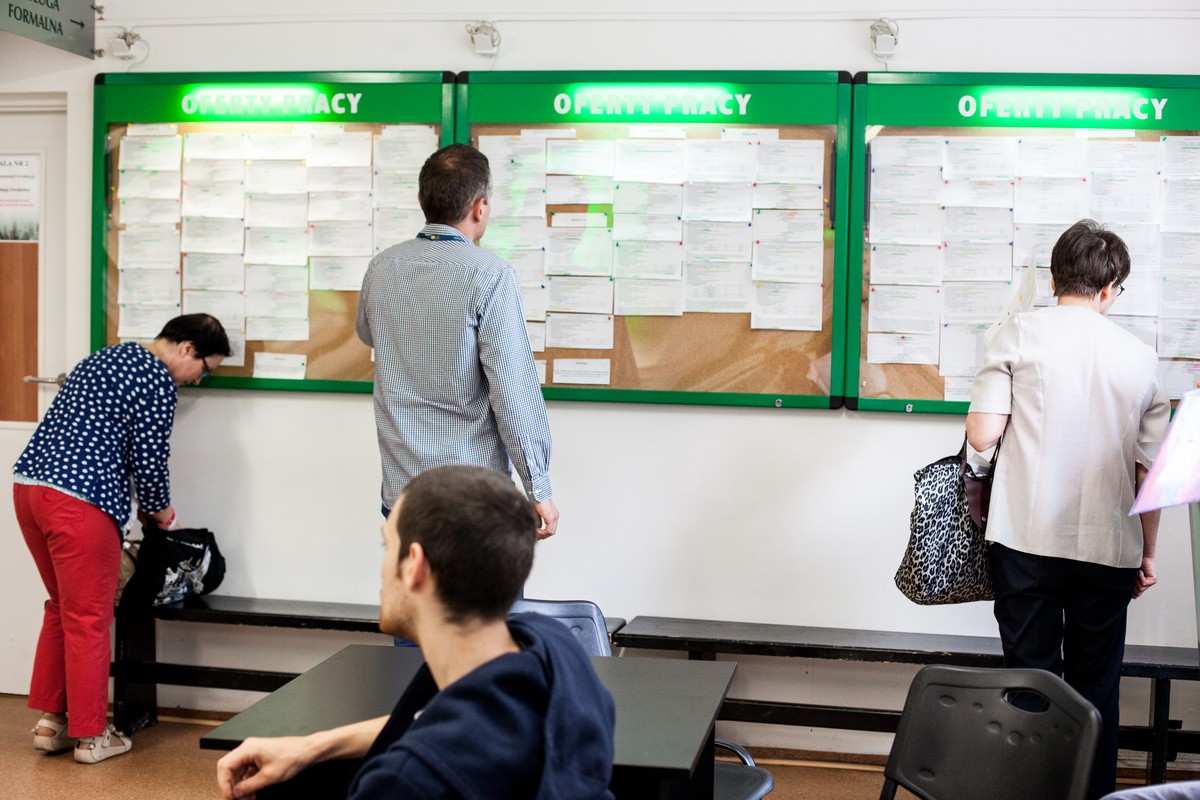
— This year has been one of the most difficult for employees since the pandemic – says Anna Gniadek, labor market expert. — People live in constant uncertainty: whether they will be fired, whether their competences still matter, whether AI will take their jobs.
The frustration is deepened by the increasingly frequent freezing of recruitment, even at advanced stages. — Candidates reach the third stage and suddenly receive information that the recruitment is being moved to the third quarter. I have clients for whom the company has postponed recruitment to June next year. Nobody will wait half a year for a job – says the expert.
In addition, there is recruitment automation. Instead of talking to a recruiter, there are online tests, bots and CV filtering algorithms. For many people, this is a frustrating experience because it is difficult to assess whether the lack of response means a real lack of matching or just an automatic decision by the system.
In such circumstances, the mere list of positions on your CV is no longer sufficient. Anna Gniadek indicates four competencies that may actually determine the recruitment result in 2026.
Read also: The number of scarce professions is decreasing, but there is still a shortage of specialists
1) Working with data and data storytelling
One of the competencies that employers are increasingly looking for outside the technology industries is the ability to work with data. It's not only about using tools, but above all about drawing conclusions and translating them into an understandable narrative.
— Even basic knowledge of data analysis and data storytelling tools becomes a competitive advantage, regardless of the industry. Telling stories based on data is a universal competence today – it is useful in sales, marketing, HR, administration and project management – emphasizes Anna Gniadek.
2) Basics of project management
The second key competence is understanding design logic. Fewer and fewer companies build work around rigid scope of responsibilities – instead, they think in terms of tasks, stages and goals to be achieved within a specific time.
— Many candidates lack general business knowledge. I think it should be a subject at school. The candidate must understand what a project is in a small and large organization, in a startup or in an office. Planning, settling people, schedules, specific roles – these are the basics of project management – says the expert. He adds that many candidates already work in projects, even if they do not formally act as a project manager. The problem is that he cannot name this experience and present it during recruitment.
Read also: Mistakes during a job interview: how to avoid the most common mistakes
3) Mental toughness and adaptability
Mental resistance to change and the ability to adapt are no longer “soft” additions to your CV. In 2026, they will become a condition for functioning on the labor market. Restructuring, changing the scope of responsibilities, transferring employees between teams and completely redesigning roles are everyday occurrences in many organizations today.
The expert points out that companies are increasingly checking not only the technical competences, but also the candidate's reaction to change. What matters is the readiness to learn new tools, take on other tasks and redefine one's professional role.
People who treat change not as a failure, but as an opportunity to use their competences elsewhere, return to the market faster after dismissal and endure long recruitment processes better.
Read also: We know who is conquering the IT industry today. These specialists make a fortune
4) Lifelong learning skills
“Lifelong learning” looks good in company strategies and employee declarations, but much worse in practice. — During consultations, I always ask: what new thing have you learned in the last year? It's shocking, but there are people who haven't learned a single new thing for a year. None, says the expert directly.
Meanwhile, the pace of technological change means that continuous learning is no longer a choice but a necessity. “Microlearning” is becoming more and more important — short forms of learning, single skills, regular experimentation with new tools. It's not about further diplomas or multi-month courses, but about systematically supplementing competences that can be immediately used at work.
Knowledge of AI tools is today as basic as English was in the past
Artificial intelligence clearly divides the market into those who know how to use it and those who treat it as a curiosity. According to McKinsey analyses, employees who use AI tools achieve many times higher productivity than people who do not use them.
Anna Gniadek emphasizes that it is crucial to learn to delegate simple, repetitive tasks and consciously use the tools that are already available today.
— Now that we have several generations on the market at the same time, those who will use AI, understand automation and work with data are ready for quick promotions and higher pay. And all the rest will lag behind them for a long time, he warns.
One exercise before changing jobs
In the maze of demands, it's easy to lose sight of your own strengths. That's why the expert suggests a simple exercise that can change the candidate's perspective. — Ask three people close to you what competences they value most in you. Family, friends or colleagues pay attention to something completely different than we do – advises.
The information collected in this way can be translated into a specific narrative in your CV and during recruitment interviews. They also help us better adapt to roles that actually suit our predispositions, instead of applying “broadly” and without a clearly defined direction.
We need to change our thinking about work
Finally, Anna Gniadek draws attention to the change of perspective. Thinking about a career as a stable, linear path in one organization is no longer valid. Today, the labor market works differently: roles are designed for specific needs, companies buy competences for a specific period of time, and changing jobs and career directions are no longer an exception.
What matters is the ability to smoothly transition between roles, projects and cooperation models. In the reality of 2026, the ability to find one's way in this changing market logic becomes one of the key professional resources.