Belgium played va banque and won. This is how Bart De Wever defeated the EU machine. The fight behind closed doors continued until the last moment


The plan to use frozen Russian assets to finance a loan, which for a long time was the only option considered, lay in ruins. De Wever, a Flemish nationalist whose career was based on the desire to break up his country, lasted more than two months. Still on Thursday afternoon many EU governments believed he would step down.
However, this did not happen.
“He basically achieved everything he wanted,” one EU diplomat said after the summit on Friday morning.
Based on interviews with 23 EU officials, diplomats and politicians, almost all of whom remained anonymous to detail the events of recent weeks, here is the story of how he achieved it.
A new populist front
It all started on a quiet October night. It was the last meeting between EU leaders who had initially hoped to reach an agreement to take the unprecedented step of using Russian assets to provide financial support to Ukraine. The EU has become accustomed to leaders such as Hungarian Prime Minister Viktor Orban constantly giving it headaches, but suddenly the 54-year-old De Wever became the next to break ranks.
As leaders left that meeting embarrassed and empty-handed after promising Volodymyr Zelensky that they were ready to send billions of euros to Kiev, they swore they needed only two months to convince the Belgian. Instead, as time passed, more and more leaders sided with him. A populist front began to form.
After almost daily meetings between EU ambassadors, dozens of phone calls, diplomatic trips from Berlin to Brussels and in the face of Russia's brutal attack on Ukraine's energy infrastructure and civilian targets, the two rival camps were still heading in opposite directions on Thursday morning, the day of the summit.
— Is Belgium alone? Is Belgium isolated? “I can't predict what will happen,” De Wever told Belgian MPs before making the short trip to the EU district in his capital. He knew that wasn't the case.
First group of countries – then led by Belgium with the support of Italy, Bulgaria and Malta — opposed the use of Russia's assets for fear of reprisals.
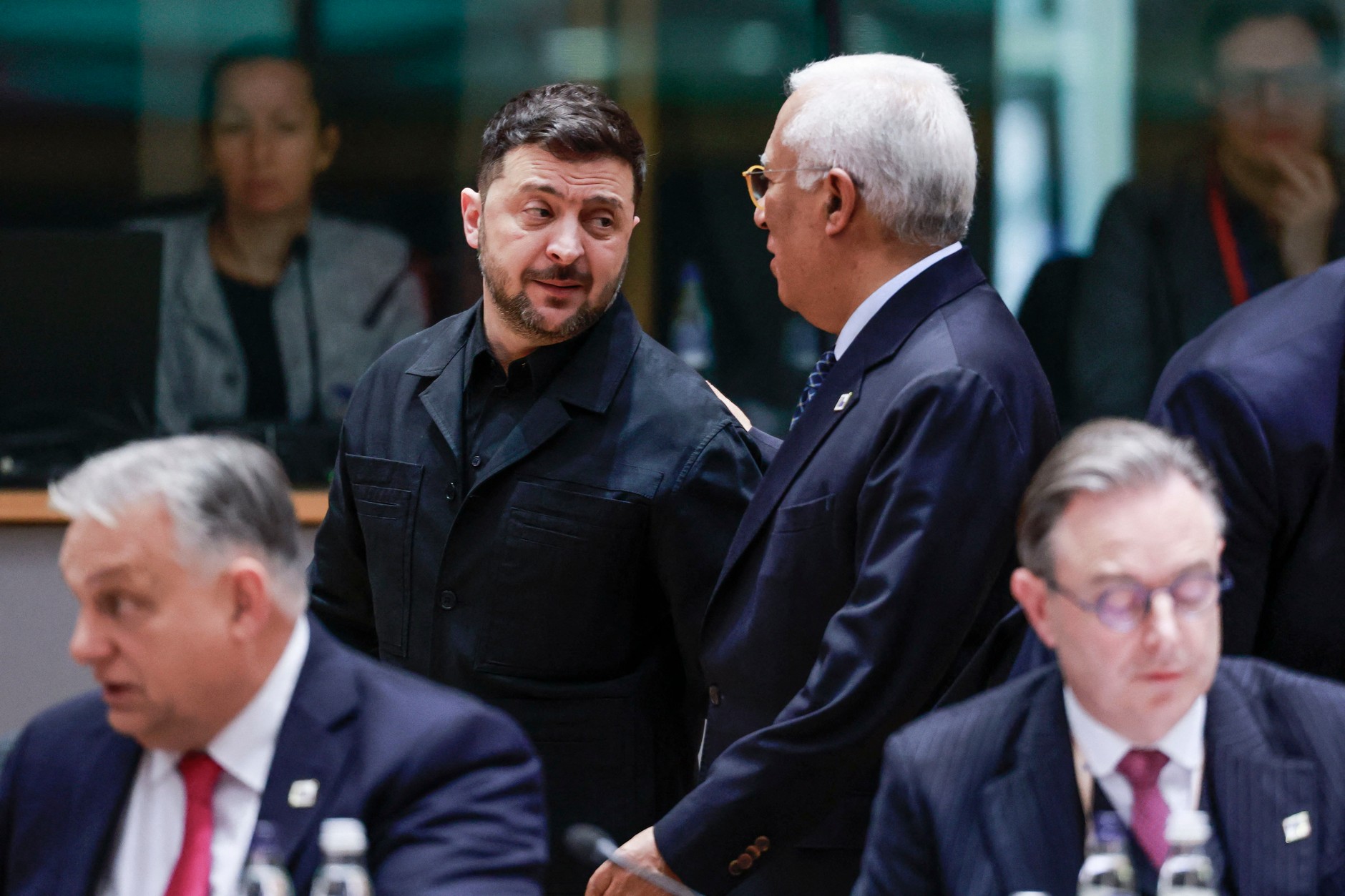
Ukrainian President Volodymyr Zelensky talks with European Council President Antonio Costa during the EU summit in Brussels, December 18, 2025.STEPHANIE LECOCQ / POOL / AFP / AFP
Instead, she wanted the EU to borrow money collectively. The fact that this idea was unacceptable to the German Chancellor Friedrich Merz and the Russia-friendly Orban, and yet this is what happened, shows the scale of De Wever's victory.
As he told reporters after the summit, countries close to Russia wanted to punish Vladimir Putin and recognized the attempt to use frozen Russian assets.emotionally satisfying.” However, he added, “politics is not an emotional activity” and “rationalism prevailed.”
The carrot and stick method
De Wever was rewarded for his October tenacity with unprecedented popularity at home and adulation from influential EU politicians. Continuing to resist the pressure, it only increased its popularity.
In early December, a man who had spent his entire political career discrediting the French-speaking regions of Belgium received several minutes of ovation after giving a lecture to a French-speaking audience.
67 percent Belgians polled in the week before the summit said they supported his opposition to the plan to freeze Russian assets.
Earlier this month, German Chancellor Friedrich Merz and European Commission President Ursula von der Leyen invited De Wever to dinner in Brussels, doing everything in their power to persuade him to withdraw his opposition.
However, their plan using the carrot method did not work. Some diplomats so they proposed using the stick method.
The article continues below the video
A week ago, EU officials suggested that if Belgium did not join talks on frozen assets, it would be excluded from the EU's decision-making process, like Hungary, which has abandoned the rule of law.
Latvian Prime Minister Evika Siliņa told POLITICO on Tuesday that she “does not want Belgium to become another Hungary.” However, this warning had no effect on De Wever.
The threat that the EU would bypass Belgium and force through an agreement on frozen assets using the so-called qualified majority voting.
Less than 24 hours before the start of the summit, the Belgian ambassador told his colleagues in closed talks: “we are going back.” However, most European leaders came to this important meeting still expecting it to be implemented. It was still plan A.
Failure was not an option
Assembling in the maze of corridors of the European Council headquarters, the 27 EU leaders decided to abandon plans to discuss Ukraine's financing at the beginning of the meeting and opted to leave the issue until the end to buy time to convince De Wever.
The real game was played behind the sceneswhere EU leaders conferred discreetly with their counterparts.
While other leaders debated key issues such as enlargement and the EU's next multi-annual budget, the Belgian prime minister and other key players, including Italian Prime Minister Giorgia Meloni and German Chancellor Friedrich Merz, slipped out of the room. Merz met with Meloni to try to convince her.
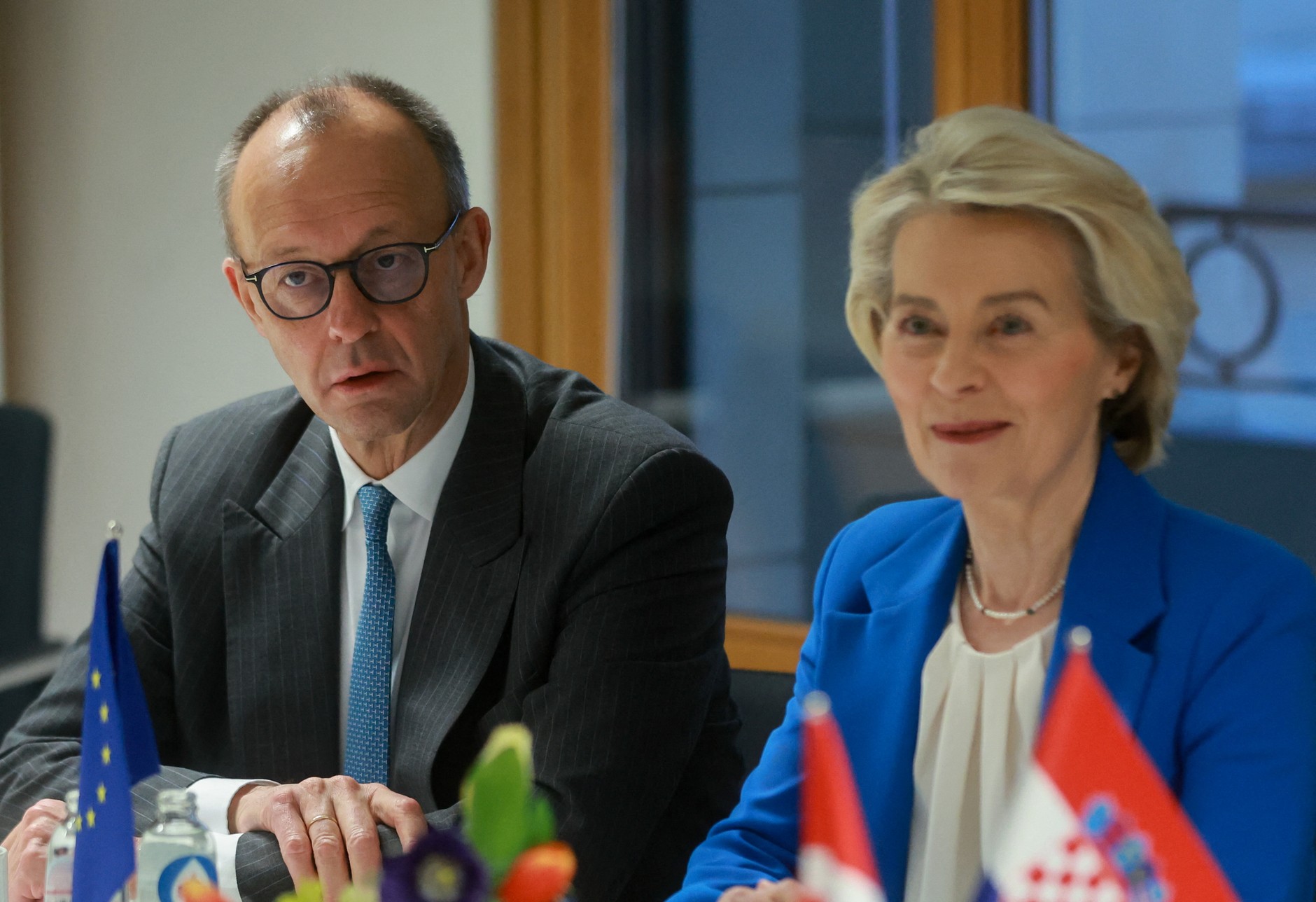
German Chancellor Friedrich Merz and European Commission President Ursula von der Leyen before the EU summit in Brussels, December 18, 2025.Olivier HOSLET / POOL / AFP / AFP
The price De Wever demanded for supporting the asset plan was unlimited financial guarantees from other member states in the amount of EUR 210 billion (PLN 884 billion) in the event that Russia files a lawsuit or takes other retaliatory actions.
However, the idea of giving Belgium a blank check had no chance of success because the countries were afraid of unlimited financial responsibility.
After four hours of talks, there was a real prospect of no agreement.
The idea of using Russian assets to provide a loan fell through shortly after a two-page legal document responding to Belgium's concerns was circulated among leaders. For many leaders, the document raised too many questions and went too far. Meloni quickly started looking for loopholes in it. French President Emmanuel Macron and then Luxembourg Prime Minister Luc Frieden joined the discussion.
The plan failed.
As time passed, as leaders wanted to leave Brussels for the Christmas break, and Ukraine waited impatiently for concrete decisions, talks focused on plan B European Commission on financing Ukraine: joint borrowing.
In fact this idea had been floating around for a few days now. Von der Leyen opened the door to Eurobonds on Wednesday morning during a speech to the European Parliament. — I have proposed two different options for the upcoming European Council, one based on assets and the other on EU loans, she said.
The question was how the EU could get Hungary, which had ruled out Eurobonds, to lift its veto. Commission officials seemed confident that they had found a way.
In exchange for Orban's support, the Commission released Hungarian taxpayers from the obligation to pay for Ukraine's defense.
Orbán, Czech Prime Minister Andrej Babis and Slovak Prime Minister Robert Fico – the three Eurosceptic EU leaders – gathered for a private meeting on the sidelines of the summit before the leaders sat down for dinner. Eventually, they all obtained exemptions from the common debt program.
What united the remaining 24 EU leaders was the agreement that failure at the December summit was not an option. Without money from the EU, Ukraine will go bankrupt next year.
Zelensky, who flew to Brussels on Thursday morning to focus leaders' attention on the task ahead, told reporters that if they fail to reach an agreement, Ukraine will have to drastically reduce expenses. This would mean fewer weapons and drones and more victims of Russian attacks.
Ultimately, a compromise agreement means – as is often the case with EU decisions – that virtually any leader can present it as a victory.
But no one like the Prime Minister of Belgium.
The bad news for him is that it will not be quickly forgotten in EU power circles. — Bart De Wever cannot count on any favors from the Commission in the near future, said an EU diplomat. “And he'll probably need them.”