How is the EU's decision to abandon “100% electric” from 2035 translated. Romanian manufacturers: “It's a breath of fresh air for the industry”

The news from Brussels on Tuesday that the European Commission has abandoned the measure by which car manufacturers would have been obliged to switch completely to electric vehicles by 2035, in favor of a 90% threshold, generated a wave of reactions. Beyond the press headlines announcing the rescue of the thermal engine, Dan Vardie, president of the Association of Automobile Manufacturers and Importers (APIA), deciphers for “Adevărul” the real impact of this measure on factories in Romania and warns of a possible price paradox.
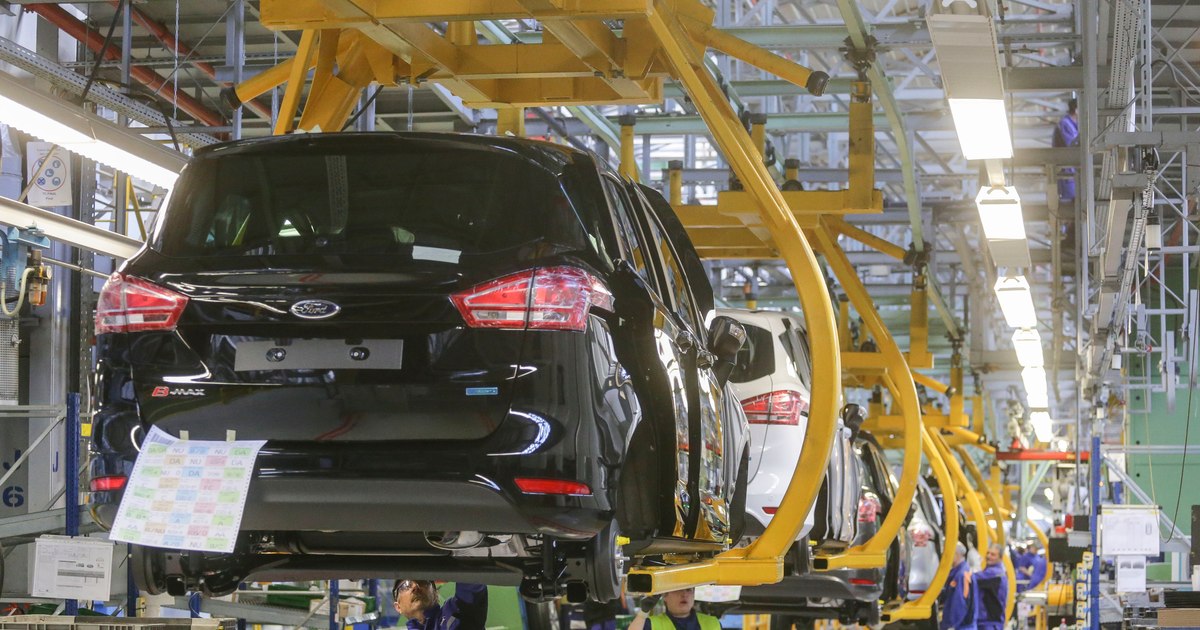
The Ford factory in Craiova. PHOTO: Inquam Photos
For the APIA leader, the step back made by the European executive does not represent an abandonment of the green strategy, but a vital recalibration in the face of economic reality. The industry needed time, not a change in final destination.
“For the industry, yes, it's a breath of fresh air. It doesn't change direction. Electrification remains the clear objective, but it gives additional time for investment to adjust, demand to mature and infrastructure to develop,” explains Dan Vardie.
The president of APIA emphasizes that the main stake of this flexibility is the economic stability of large producers, who risked drastic sanctions. This measure avoids “industry shocks and the risk of fines for non-compliance”, giving companies the necessary respite to adapt their strategies without destabilizing the workforce.
What does the decision mean for factories in Romania
Romania, a country where the automotive industry has a massive share in GDP and is strongly connected to the decisions of groups in France and Germany, benefits directly from this legislative relaxation.
“The decision of the European Commission is relevant for the entire automotive industrial ecosystem, therefore implicitly also for the one in Romania. A more flexible transition reduces the pressure on the production chains, on the workforce and on the investments made in conventional and hybrid technologies”reported Dan Vardie.
Local producers thus get the chance of a gradual transition in the product mix. They will be able to adapt their portfolios in the medium and long term without the imminent pressure of a total ban, which could have led to layoffs or capacity closures.
“A calculated flexibility at the portfolio level”
Dan Vardie wants to clear up a possible confusion among the general public: the permission to sell combustion cars after 2035 does not apply anyway. It is not about total freedom, but about a strict math of emissions.
“If we look strictly technically, we are talking about an adjustment of the objective for 2035: a 100% reduction in CO₂ emissions at fleet level is no longer imposed, but 90%. This means that manufacturers can continue to have a limited percentage of vehicles with thermal or hybrid engines, as long as the fleet, as a whole, respects the target. It is not a derogation «per model», but a calculated flexibility at portfolio level”. details the specialist.
The conventional car could become more expensive than the electric car
One of the most interesting points touched on by the APIA president's analysis concerns the pocket of the end customer. Although thermal engines remain on the market, there is a risk that their price will increase significantly, precisely because of the new rigors.
“It's a possible scenario in certain segments. As heat engines become more sophisticated to meet emissions standards and allow for these compensation mechanisms, production costs may increase.”warns Vardie.
In contrast, electrical technology is becoming increasingly affordable. Thus, we could witness a historic reversal of the price poles.
“The price differences between electric and thermal can be significantly reduced or even reversed,” he explains, noting that the market will be the final arbiter, depending on the cost of raw materials and supply chains.