The Hollywood story of the Romanian teacher who faced the Soviet colossus alone. “Climbed all the steps of hell”


The historical decision of Ukraine to eliminate the “protection” for the Moldovan language is explained by the political scientist Dorin Popescu. The expert praises the contribution of Nicolae Gârșcan, one of those who fought for this in the past.

The Soviets occupied Romania and wrested Bessarabia and Bucovina in 1944. FOTPO: Wikipedia
The Verkhovna Rada of Ukraine adopted the draft law 14120 on the introduction of amendments to certain laws in connection with the upgrading of the official translation of the European Charter of Regional or Minority Languages. The draft law was voted on in early December by 265 deputies and sent to the President of Ukraine for promulgation.
Why is Ukraine's decision important?
Through this law, Ukraine de facto updates the list of languages that benefit from protection based on the European Charter of Regional or Minority Languages, says political scientist Dorin Popescu. He also explains that the law aims to harmonize Ukrainian legislation with the updated official translation of the Charter and clarify the languages to which the protection mechanisms apply.
In an emotional post on Facebook, Popescu praises Nicolae Gârșcan, whom he says “kept alive the temple of the Romanian language when everyone else extinguished it”.
“I welcome the decision of the Ukrainian authorities to remove the “Moldovan language” from the list of protected languages and thus recognize the correct name, “Romanian language”, for the entire Romanian community in Ukraine, including that part of it that continues to self-identify, erroneously, as “Moldovan””writes Popescu, recalling the decision of the Supreme Rada of Ukraine.
For Romania, the law is important because it removes the “Moldovan language” from the list of protected languages and thus recognizes the correct name, “Romanian language”, for the entire Romanian community in Ukraine, including that part of it that continues to self-identify, erroneously, as “Moldovan”.
“According to the explanatory note to the draft law of Ukraine “Concerning the amendments made to certain laws of Ukraine in connection with the updating of the official translation of the European Charter of regional or minority languages”, “it is proposed to remove the Moldovan language from the list of languages to which Ukraine undertakes to apply the provisions of the Charter in connection with the recognition of the Romanian language as the state language of the Republic of Moldova (on March 22, 2023, the Law on the recognition of the language entered into force in the Republic of Moldova Romanian as the state language, according to which the terms «Moldovan language», «state language» and «official language» in the Moldovan legislation were changed to the term «Romanian language»)”adds Popescu.
The hero who single-handedly faced the Soviets in Moscow and Kyiv
Furthermore, he also explains why he insists on some aspects that, at first glance, at least, may seem rather technical. And here he also praises the contribution and work of the hero Nicolae Gârșcan, completely unknown in Romania.
“Because we finally have the opportunity to understand the exceptional value of the efforts of political leaders and simple people from the Republic of Moldova, Romania and Ukraine, to dismantle the ideological lie regarding the existence of a so-called “Moldovan language”. Responsible political leaders from the Republic of Moldova brought the Romanian language back home, across the Prut, definitively in 2023, and their effort is now producing legal effects in Ukraine as well. But those who really bore the brunt against the Soviet mechanism and post-Soviet people who cultivated the “Moldovan language” lie. One of them was Nicolae Gârșcan, a teacher from the north of Chernivtsi, Ukraine. He fought against an entire repressive system for the truth“, he adds.
Dorin Popescu also has a special, deeply emotional message for the hero who dedicated his life to the struggle of the Romanians.
“You, Nicolae Gârșcan, watch from the sky how entire countries are now daring to walk the path you then walked alone. And others like you, also alone. You kept alive the temple of the Romanian language when everyone else extinguished it. You; and others like you; few; and alone. Now you are no longer alone, Nicolae! And the “crazy” turn out to be the others, those who tried to bring you to your knees and (though many and mighty) they did not succeedt”, Popescu also wrote.
Portrait of a hero
Next, he sketches the portrait of the hero about whom he wrote extensively in “Glasul Bucovina”, a publication edited by the Romanian Cultural Institute.
“Nicolae Gârșcan was a modest Romanian teacher from Coșuleni/Mămăliga, a beautiful Romanian town in the north of Bessarabia, located in the east of the Chernivtsi region, on the current border between Ukraine and the Republic of Moldova, at the crossing point of the Mămăliga (Ukraine) – Criva (Republic of Moldova) border. He lived the nightmare of the USSR in the Ukrainian Soviet Socialist Republic, in the first decades of the Soviet experiment. He made resistance against the USSR his life project. He rebelled against the introduction of the Cyrillic alphabet in school, during the harshest years of the sovietization of the Romanian community in the territories included in the ultimate texts of the USSR Government from 1940. He insisted that his nationality be mentioned in his identity document, despite the sad local tradition in the former Noua Suliță district, which, unlike the rest of the Chernivtsi region, in the ideological to the Moldavian communists, he had already imposed the local narrative of the Moldavian people and the Moldavian nationality. Thus, Nicolae Gârșcan became the only Romanian from Coșuleni, or among the few… His life story breathed under the paradigmatic sign of the beliefs assumed at the limit of the tragic“, says Popescu.
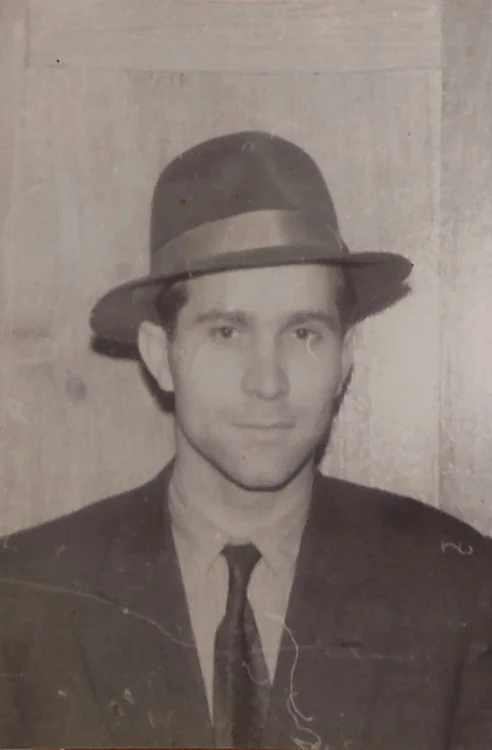
Nicolae Gârscan. PHOTO: Facebook / Dorin Popescu
Moreover, according to his words, the hero's story is worthy of a worldwide box office. Neither the threats nor the torture he was subjected to by the Soviet occupiers made him give up.
“A story worthy of a novel and of big cinema screenings, of world box office, with ingredients of absolute cinematic drama. His life was spent in terms of an impossible struggle with the Soviet system, which he recognized neither legitimacy nor supremacy. Between its borders – crosses and beliefs; a life with an entire Soviet system of repression that crushes him, with a resistance proven unlimited in the crossroads of death, with wide detentions in the dark east of Russia, with criminal cases filed against him for publicly denying his beliefs, with false diagnoses of alienation given by the communist satraps, with long hospitalizations and mandatory detentions in psychiatric units, with pressure and lies of the system aimed at the prostitutes and denigrates the name in the community, with denials and prisons, with public trials against the system, pursuits and surveillance as in the great Hollywood films, forbidden correspondence with the Romanian brothers in the diaspora, paintings of heroes forbidden within the walls of the house, inhumane experiments in the prisons of hell, a suspicious death by “accidental” poisoning in the native forest, etc. Against Nicolae Gârșcan, a humble Romanian country teacher from Coșuleni/Mămăliga, the Bolshevik/Soviet system instrumentalized its most odious means of torture. Popescu also points out.
Tortured but not defeated
The Soviets tortured him, but ended up being defeated by Nicolae Gârșcan, decades later. The successors of the Soviets in Moscow, Kiev or Chisinau can only note their own failure.
“Against the Bolshevik/Soviet system, resisting all its means of torture, pressure, intimidation and blackmail, Nicolae Gârșcan, a humble Romanian country teacher from Coșuleni/Mămăliga, raised a temple stronger than the deaths sent before him daily by the communist torturers. With a strength given by his huge faith in Romania, faith cultivated in the family and through readings, the country teacher Nicolae Gârșcan fought against the entire Soviet regime, with its ferocious mentality and tools, with its servants and opportunists, with the permanent torture, with the guilty silences of others, with its painful denial by an ideologically and mentally captive community, etc. In 2023, Nicolae Gârșcan once again defeated the Soviet regime, as well as its successors from Moscow, Kiev or Chişinău: in November 2023, The Government of Ukraine adopted a decision regarding the use of the concept of “Romanian language” instead of “Moldovan language” throughout the territory of Ukraine, and in December 2024 the Kiev executive approved a draft law proposing to replace the “Moldovan” language with the Romanian language in the international list proposed by Ukraine in the European Charter of Regional or Minority Languages (the list of languages protected on the territory of Ukraine)”.
highlights the political scientist.
Nicolae Gârșcan dared when many other Romanians collaborated with the Soviets to oppose. And he did it openly. A visionary, he firmly asserted that the “Moldovan” language was an invention of the Soviets in Moscow and Kiev who then juggled Bukovina.
“Half a century before these decisions, he, Nicolae Gârșcan, knew; he knew that the “Moldovan” language was an invention: he knew that the truth would triumph; badea Nicolae fought with an entire system, all his life, for this truth. And he defeated this diabolical system even from the grave. Nicolae Gârșcan climbed all the steps of hell without his temple ever extinguishing its light, without his steps to slip on the steps,” is the emotional message written by Dorin Popescu.