Legislative shield for NATO. The US Congress defies Trump's rhetoric and prohibits the reduction of US troops in Europe


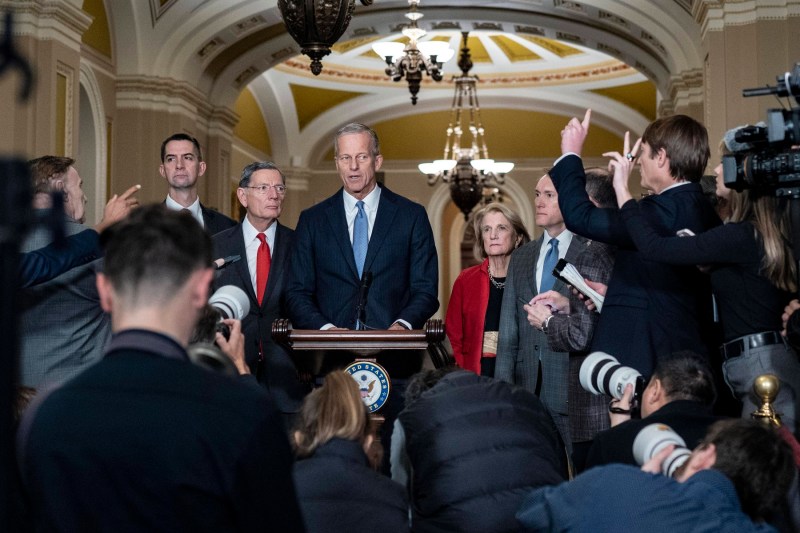
United States Senate Republican Majority Leader John Thune speaks to the media at the US Capitol in Washington, DC on December 16, 2025. PHOTO: Andrew Thomas – CNP / imago stock and people / Profimedia
US lawmakers passed broader defense policy legislation on Wednesday, a measure that signals strong bipartisan support for Europe in the US Congress and a vehement rejection of President Donald Trump's increasingly hostile attitude towards NATO and America's closest allies, writes AFP.
The comfortable vote in the Senate (77 to 20) sends the annual $900 billion National Defense Authorization Act (NDAA) bill to the White House, ending one of the few customs left in Congress of cross-party cooperation, even as foreign policy divisions widen elsewhere in Washington.
“We ask a lot of those brave Americans who serve in uniform. And they give a lot,” Senate Republican Majority Leader John Thune said before the vote.
“And I'm proud that this year's National Defense Authorization Act will help ensure they have what they need to keep America safe in a dangerous world,” Tune added.
The move by the upper house of the US Congress follows the passage of the bill by the House of Representatives last week and comes amid unease in European capitals about Trump's rhetoric, especially after the recent White House national security strategy described Europe as over-regulated, culturally adrift and insufficiently committed to its own defense.
Trump's national security strategy has questioned the strategic value of the European continent and has openly taken up themes supported by far-right parties, fueling fears of a deepening transatlantic rift, notes France Presse.
In contrast, the NDAA reflects the determination of US lawmakers to firmly anchor the United States to Europe.
The law restricts the reduction of US troops in Europe below 76,000 troops
The bill prohibits the number of US troops on the European continent from falling below 76,000 troops for more than 45 days and restricts the withdrawal of major military equipment, effectively preventing the Trump administration from carrying out a rapid drawdown.
The bill also increases resources for front-line NATO states, particularly those in the Baltic region, strengthening the alliance's northeastern flank.
The measure authorizes about $8 billion more than the administration requested, a signal of Congress' firmness on defense priorities.
Beyond Europe, the NDAA provides $400 million in security assistance to Ukraine, intended to maintain a minimum level of support even amid broader funding debates, and imposes new limits on any reduction in the 28,500 US troops stationed in South Korea.
As always, the NDAA drew criticism from many quarters — from conservative critics of aid to Ukraine to experts who warned that the aviation provisions reduce critical air safety requirements for military aircraft operating in Washington's restricted airspace.
But none of these criticisms have succeeded in derailing this package, which has long been considered must-pass legislation.