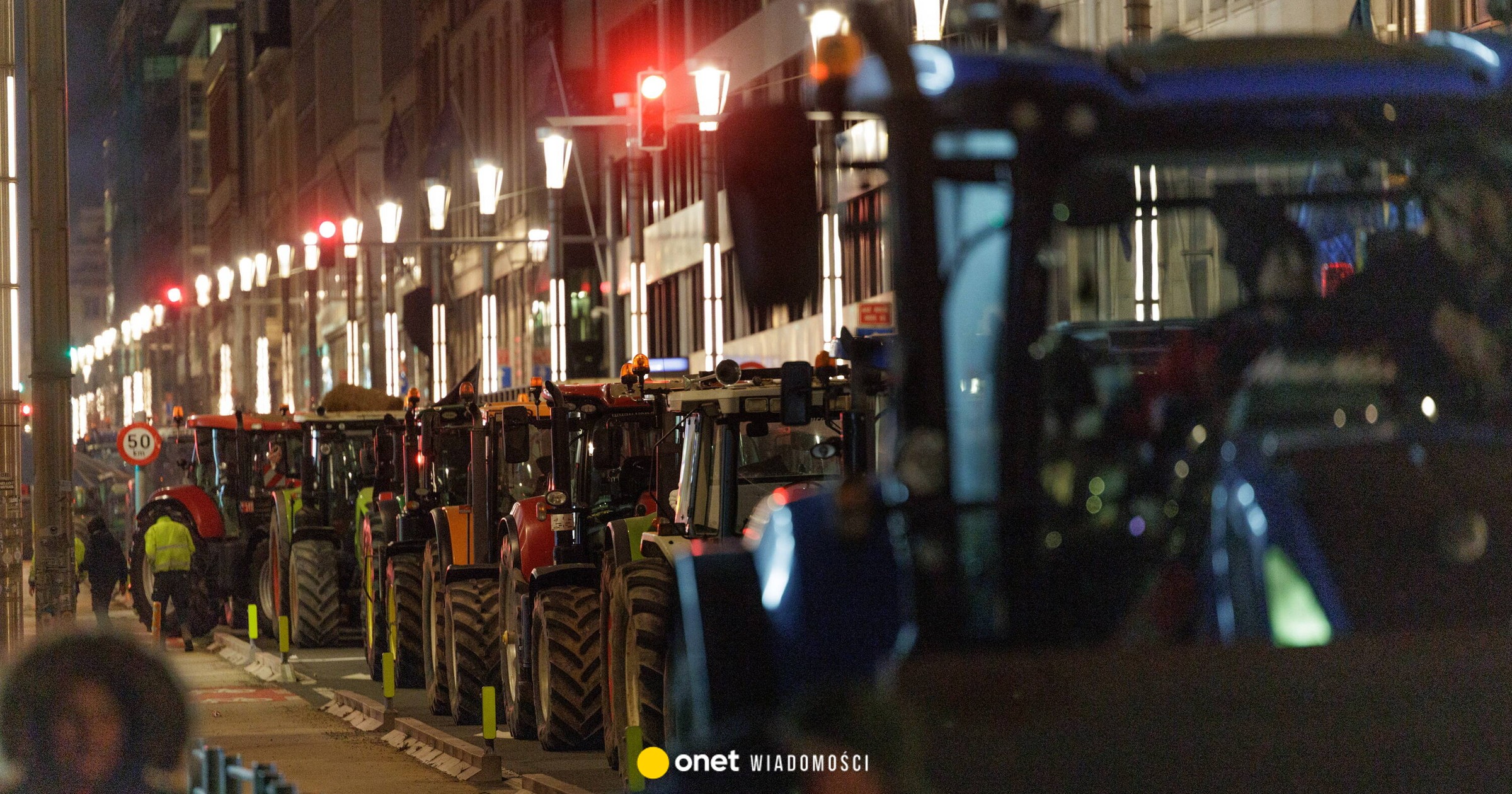
“We told everyone to stay calm,” said Peter Meedendorp, head of the European group of young farmers CEJA. – But as for the group from northern France – they are more radical – we can't predict what they will do.
EU Commissioner for Agriculture Christophe Hansen admits that the causes of the protest cannot be easily explained.
Some farmers come because of trade. Others in connection with the next EU budget. Still others in connection with animal diseases or ecological regulations.
“It's hard to say whether they're coming for one reason or the other,” Hansen told POLITICO. — There are several reasons for this, and they vary depending on where the farmers come from.
This helps explain why farmers have re-emerged in Brussels, despite the European Commission saying they havemade every effort to meet their requests. Brussels says it is making efforts ranging from protecting farm subsidies in the next EU budget to changing pesticide rules and slowing down trade deals. Farmers say this is still not enough.
Below we present the main allegations that sparked Thursday's demonstration and assess both the EU's response and the level of farmers' anger.
Budget concerns
Plea: Farmers fear that their share of the EU budget will be cut to fund other priorities.
EU response: Maintaining approximately EUR 300 billion (PLN 1 trillion, 264 billion) of EU payments to farmers after 2027.
Assessing the political response [w skali od 1 do 5, przy czym 5 oznacza zdecydowaną reakcję polityczną, lub szczyt gniewu rolników]: : 3
Anger rating: 5
As Brussels prepares for a brutal fight over the next EU budget, agriculture has largely escaped cuts. While other policy areas face trade-offs, agriculture has received rare protection.
Hansen secured long-term guarantees of direct payments to farmers and set new targets to keep rural areas viable, just months after presenting the proposals. Officials note that no other industry enjoys such treatment.
The article continues below the video
It wasn't easy. Commission budget officials viewed agriculture as one of the few areas that was large enough to help finance other, more strategic priorities. Hansen drew the line. However, farmers claim that after decades of operation of the common agricultural policy, guarantees on paper do not determine what their share in the EU budget will look like when negotiations begin in earnest.
Trade tensions
Plea: Free trade agreements are flooding the EU market with unfair foreign competition.
EU response: Refusal to accept a trade deal with Mercosur until legal safeguards are signed – which could delay the entire deal.
Political response rating: 4
Anger rating: 5
The Commission is committed to signing an agreement with the Mercosur countries by the end of the year that will facilitate the introduction of limited quantities of beef, poultry and other agricultural products into the Union. This is causing outrage among farmers in major producing countries such as France and Poland.
The EU is in the process of finalizing “backstop measures” to protect these sectors, which could be triggered if prices or import volumes change dramatically as a result of the deal – but farmers are not convinced.
“It's a cumulative effect,” said Francie Gorman, president of the Irish Farmers' Association, who is driving his tractor from Dublin to Brussels. — Every time a trade agreement is concluded, it seems that agriculture becomes a bargaining chip and farmers are sold out.
Indeed, farmers' demands go beyond stopping the Mercosur deal. They want other trading partners to be forced to meet EU production standards to be able to export their products to the bloc, and are calling for “sustainable” imports from Ukraine to avoid undermining EU producers.
Environmental regulations
Plea: EU regulations make life difficult for European farmers, especially compared to external competition.
EU response: Reducing environmental regulations and new rules making pesticides easier to access in Europe and harder to use abroad.
Political response rating: 4
Anger rating: 2
No one can say that the Commission is not trying to convince farmers about pesticides. Over the past week, bills were announced that would introduce unlimited authorizations for many pesticides and give farmers an extra year to phase out toxic substances.
“I appreciate that they are taking the necessary steps,” Meedendorp said, acknowledging that on some issues the Commission is doing everything it can to satisfy farming groups. However, “being satisfied with one thing… doesn't mean we don't have other problems.”
A number of trade proposals, in particular a plan that would essentially force farmers in third countries to stop using pesticides banned in the EU, also aim to equalizing opportunities for European farmers.
These proposals are also welcome, although farmers are skeptical that border controls will actually stop the import of, for example, Brazilian sugar beets grown with neonicotinoids [syntetycznych środków owadobójczych].
They also argue that the fertilizer border price adjustment mechanism, due to come into force on January 1, should be postponed due to its “drastic impact” on fertilizer prices.
Other Commission actions have been unsuccessful. The agricultural lobby Copa-Cogeca has rejected a recent bill to simplify environmental regulations as “cosmetic changes”.
Domestic complaints
Plea: In France, for example, cows are slaughtered to stop the spread of the disease.
EU response: Paris responds to lumpy skin disease by taking an even tougher stance against Mercosur.
Assessment of the political response: 1
Anger rating: 4
French farmers are among Mercosur's most ardent opponents. However, like most of the participants in the tractor column, they are very angry with their capital.
Paris is fighting the spread of lumpy skin disease, a cattle plague that is spreading rapidly and causing major production losses, by ordering the systematic slaughter of infected herds.
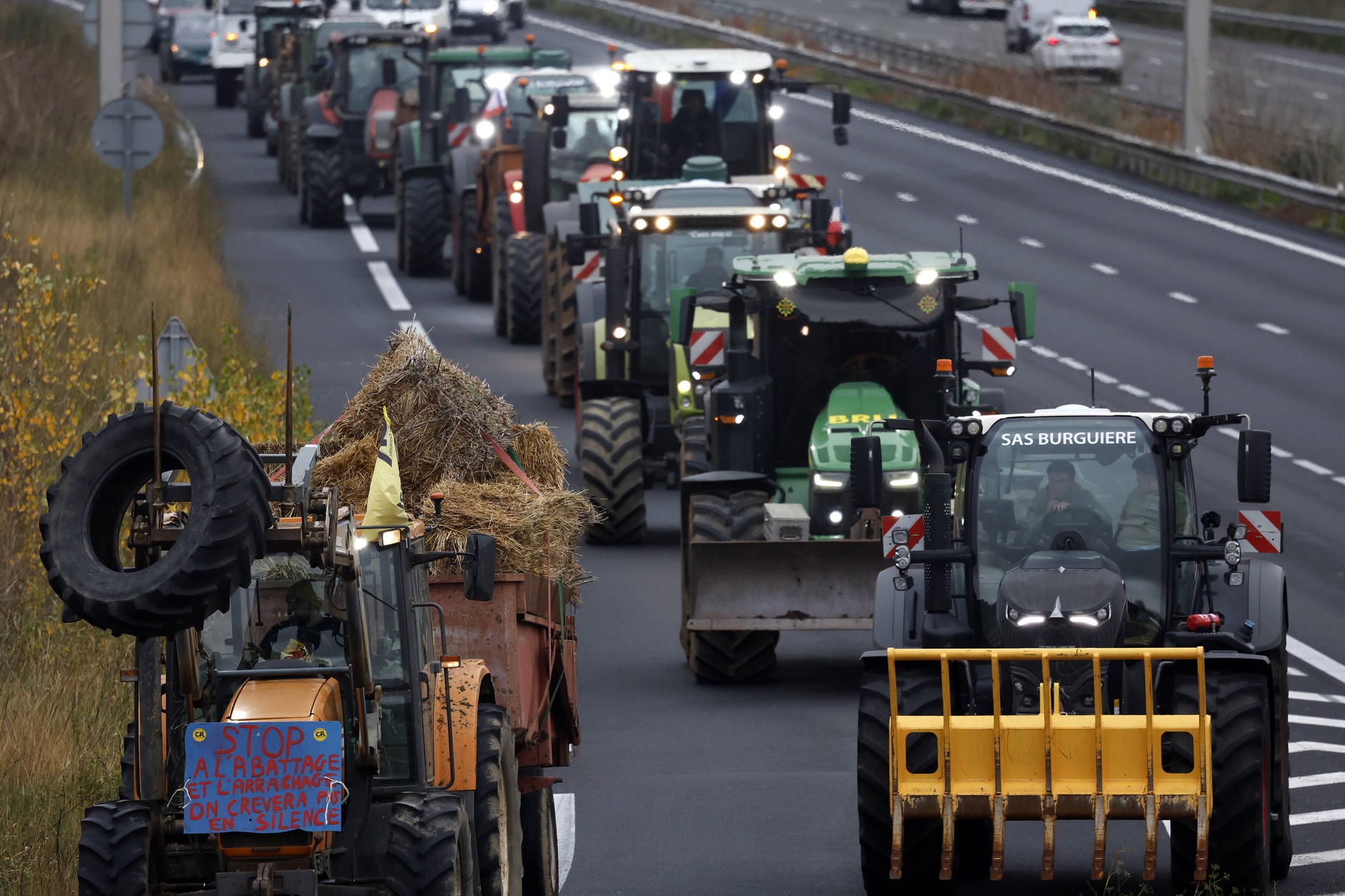
A banner with the words “Stop the slaughter, we will die in silence” placed on a tractor during a farmers' protest on the A9 highway in Beziers, France, December 16, 2025.GUILLAUME HORCAJUELO / PAP
In opposition to this protocol, several French farmers – who argue that only infected animals should be slaughtered, not entire herds – have again started blocking highways with their tractors to attract public attention. The movement is driven by the radical Coordination Rurale, the country's second largest agricultural organization, often associated with the far right. The largest organization, FNSEA, also warned that protests would become “much more serious” if a trade deal with Mercosur was signed.
Fearing a prolonged impasse with a trade group that enjoys wide public sympathy, the government is trying to show that it is working tirelessly to bring the situation under control. In addition to pushing to postpone the signing of the deal with Mercosur, Prime Minister Sebastien Lecornu is holding daily meetings to tackle the lumpy skin disease epidemic and has made the rapid delivery of vaccines to farms across France a priority.
General dissatisfaction
Plea: Farmers have a hard life and the EU makes it even worse
EU response: Compassion, promises of simplification and minor corrections.
Political response rating: 2
Anger rating: 5
For many farmers, Thursday's demonstration is not really about one regulation or one trade agreement. It applies to everything.
It's about 14-hour days, seven days a week. About animals that don't care whether it's a weekend or a holiday. About paperwork done late at night, after milking, written in a language that seems to come from another planet. For orders to “diversify” or “innovate” at a barely achievable break-even point.
It's about isolation. About the depopulation of the village. About neighbors retiring whom no one will replace. It's about mental health issues that Brussels rarely talks about – and difficulties that farmers say few outsiders understand.
It's also about money. Farmers are the recipients of prices on world markets over which they have no control, oppressed by the purchasing power of supermarkets, volatile commodity prices and rising costs of fuel, fertilizers and feed. When prices skyrocket, profits rarely reach farms. When they fall, farmers suffer losses.
Then animal diseases appear. Forced slaughter. Blaming the climate. And the feeling that decisions shaping livelihoods are being made far away, by people who have never set foot in a barn. This anger turns into resentment.
This is the only complaint that Brussels cannot resolve through regulation. And that's why, even when the Commission steps down, farmers keep coming back.
I’m Ashley Davis as an editor, I’m committed to upholding the highest standards of integrity and accuracy in every piece we publish. My work is driven by curiosity, a passion for truth, and a belief that journalism plays a crucial role in shaping public discourse. I strive to tell stories that not only inform but also inspire action and conversation.