Under the pressure of Trump, the National Institute of Health announced in February that by over $ 4 billion. (approx. PLN 15 billion, counting at the current exchange rate) will reduce the amount he pays to universities to cover administrative costs and maintain facilities related to research grants.
Among the entities that have the most to lose, regardless of whether Trump manages to limit the fee or compromise, there are giants of the academic world – large research universities, such as Harvard, Johns Hopkins and Yale, which have long been reimbursing indirect costs of over 60 percent. the value of the basic research subsidy.
Large research institutions have one of the highest rates, partly because they have expensive and most modern research equipment and are in areas with high media costs.
The desire to conclude an agreement by universities shows that they do not think that they could stop Trump forever. Universities know that the cuts will seriously strain their budgets, slow down the search for groundbreaking discoveries in the field of health and science, and will allow you to catch up by foreign competitors.
The desire to reconcile from the university appears even despite the fact that the universities managed to block Trump's plan in court and obtained the support of key republican legislators.
The federal government has long financed administration and infrastructure of universities. Meanwhile, the Trump administration accuses universities of using these funds as funds for the implementation of progressive goals, such as diversity, equality and integration. One of the president's main goals is Harvard University.
Continued article under video material
Universities deny that they used this money in this way, but they hope that they will be able to relieve Trump's mood, proposing the unification of the government to cover their indirect costs. Currently, these fees are negotiated separately with each institution and may differ significantly. Trump claims that they are too high, indicating lower rates paid by private foundations when granting research grants.
“From the very beginning, the members of the Congress clearly let us know that if we do not do something, someone else would do it,” said Politico Kelvin Droegemeier, professor at the Illinois University at Urban-Champaign, who heads the coalition of universities and research institutes. “They said that continuing the current model is not an option. We understood it so that we can help in making changes or wait until they occur.”
Some leading democrats on the Capitol and party activists throughout the country press universities to remain adamant to Trump.
Universities in dot
Meanwhile, the university coalition continues to talk.
– It is really important that everyone understands it. You can't fight with empty hands, “said Toby Smith, a leading lobbyist of the American Universities Association, during a recent meeting at the Town Hall devoted to financing indirect research costs.
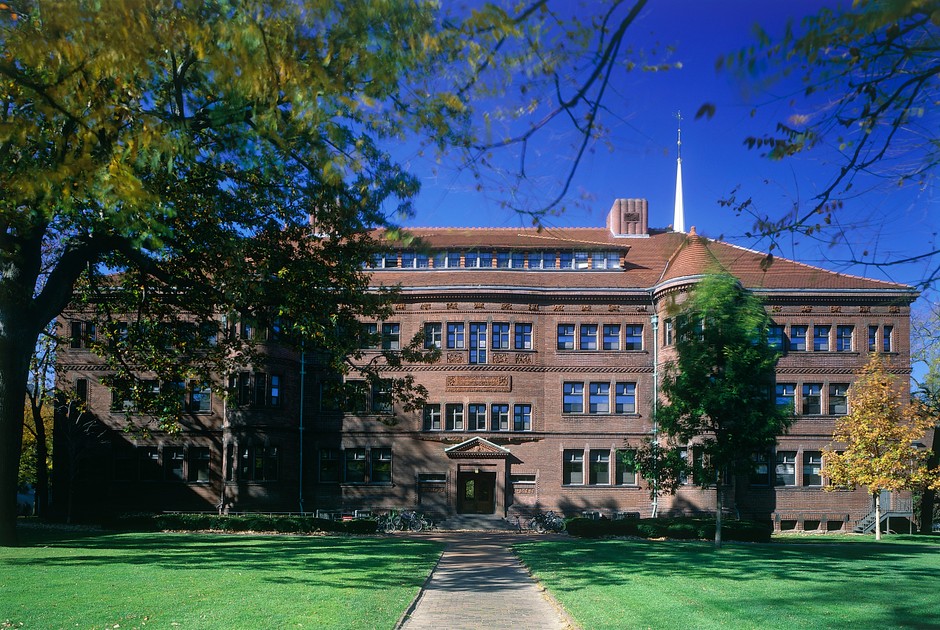
Hala Sever, Harvard University building (illustrative photos)Will Pryce/Construction Photography/Avalon/Getty Images/Getty Images
Earlier, Trump limited the opportunity to study foreign students. This week, Trump tried a new tactics, trying to receive indirect financing for the best universities. The debate on how much the government should pay for indirect costs has been going on for decades.
Both former President Bill Clinton and Barack Obama suggested reducing administrative and university infrastructure, but to no avail. The Coalition of Universities does not promise to reduce costs yet. Soon, however, universities may be forced to make more concessions.
I’m Ashley Davis as an editor, I’m committed to upholding the highest standards of integrity and accuracy in every piece we publish. My work is driven by curiosity, a passion for truth, and a belief that journalism plays a crucial role in shaping public discourse. I strive to tell stories that not only inform but also inspire action and conversation.