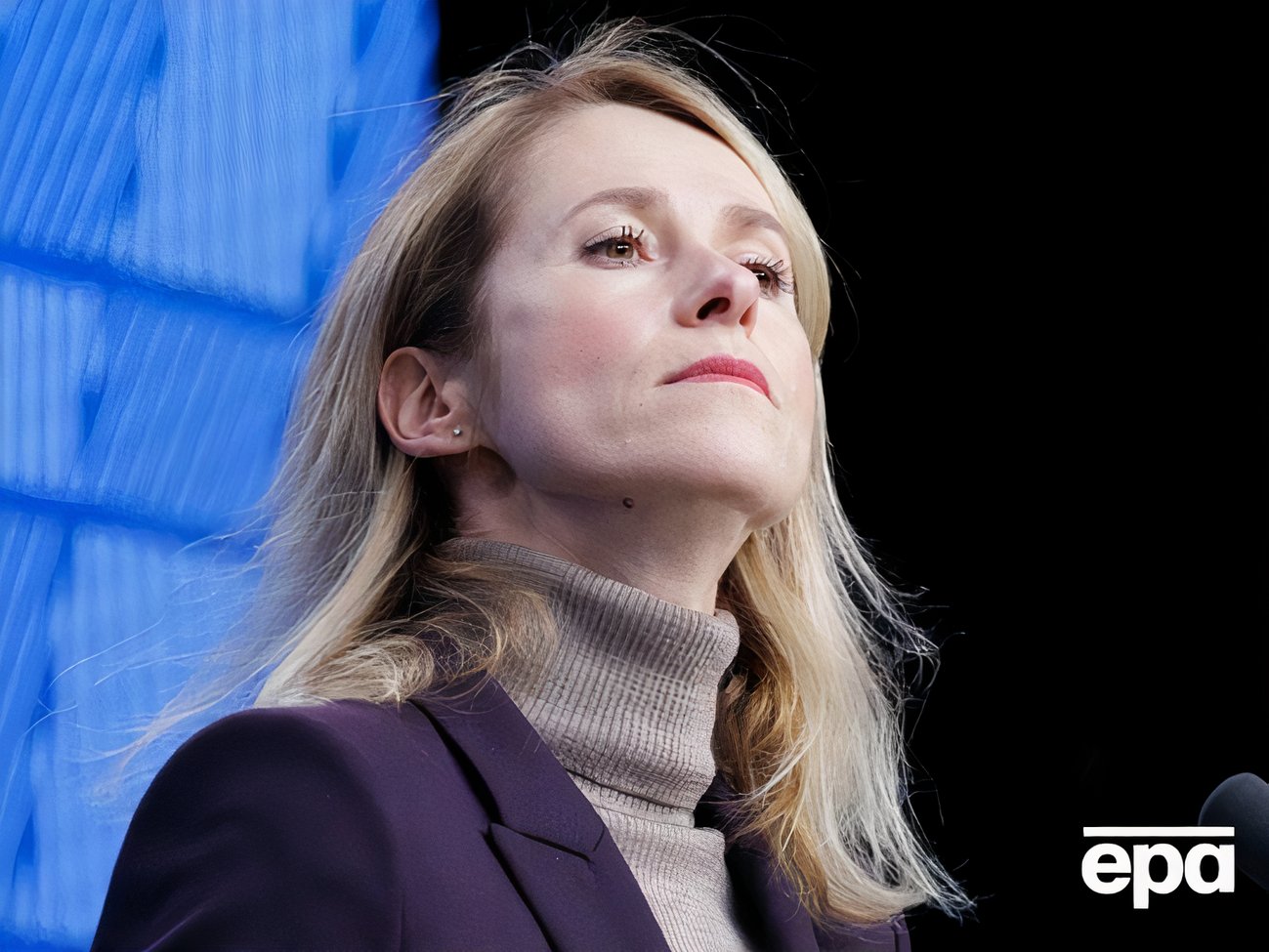
It is quoted by the European External Action Service.
As Kallas said, Ukrainian Foreign Minister Andrei Sibiga explained at the meeting the “difficult position” of Kyiv, as well as how open they are to peace negotiations and “agree to everything to have peace” in order to “illustrate that Russia does not want this peace.”
According to the EU's chief diplomat, Sibiga did not go into detail about Ukraine's possible renunciation of NATO membership.
“But, of course, we know that NATO is enshrined in their Constitution. Therefore, if they agree to this, then first we need – all member states and all countries, Americans – to give them very, very strong, tangible security guarantees, not only on paper, but really tangible ones, for example, how many troops are on the ground, how many capabilities. Because this is the only thing that really protects them,” Kallas emphasized.
In her opinion, this “must go side by side with extremely strong security guarantees.”
“But, in the end, it’s up to Ukrainians to decide what they are willing to sacrifice for the sake of peace and for the Ukrainian people,” Kallas said.
As the head of EU diplomacy stated, in order to have a stable, long-term peace in Europe, concessions from the Russian Federation are needed.
“Pressure on Russia is our policy. We clearly see that they are not in the best position,” Kallas concluded.
The European politician made the statement amid negotiations on a “peace plan” for resolving the Russian-Ukrainian war, which have been taking place in Berlin in recent days.
Context
Before the meeting in Berlin, the Ukrainian and US delegations had already held seven rounds of negotiations on a “peace plan” for resolving the Russian-Ukrainian war. In parallel, the American side is discussing this issue with the Russian Federation.
On December 10, US President Donald Trump had a “tense” telephone conversation with the leaders of France, Germany and Great Britain, calling on them to put pressure on Ukrainian President Vladimir Zelensky to agree to the terms of the “peace plan,” WSJ reported. Same day Ukraine handed over to the American side a framework document for a “peace plan” consisting of 20 main points, the president said. According to the NYT, Ukraine is in the US response to the “peace plan” rejected the refusal of the territories of Donbass and entry into NATO.
Negotiations between the delegations of Ukraine and the United States took place in Berlin December 14th and 15th. After the first meeting, Trump's special envoy Steve Witkoff reported that the negotiations “Significant progress has been made.” December 15 Secretary of the National Security and Defense Council, member of the Ukrainian negotiating group Rustem Umerov expressed hope that by the evening it will be possible to “reach an agreement that will bring us closer to peace.”
AFP reported that Ukraine at this meeting sought a ceasefire without territorial concessions, and, according to Reuters, Zelensky offered to abandon Ukraine's accession to NATO in exchange for security guarantees.
On the evening of December 15 in Berlin, the leaders of several European countries gathered for a meeting on Ukraine, they were joined by Vitkoff and Trump's son-in-law Jared Kushner. The American President had a conversation with them.