Dr. Victor Constantin Ștefănescu, MedLife: “Patients who 30 years ago were considered inoperable, today benefit from real chances of being treated”

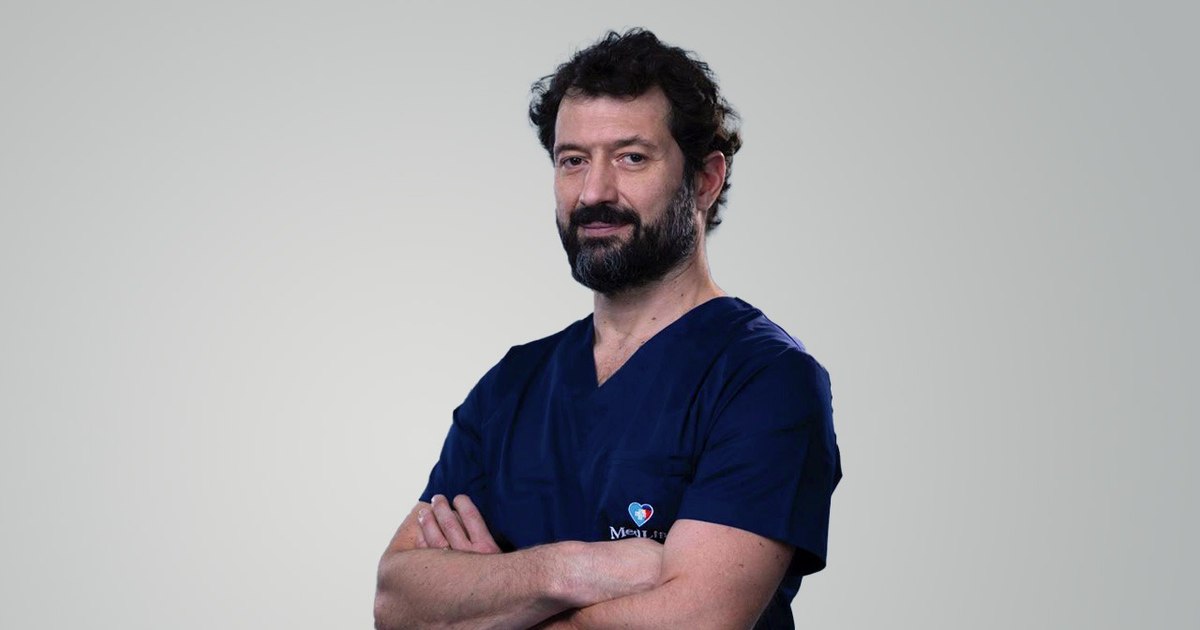
Colorectal cancer accounts for approximately 10% of all cancer cases worldwide, according to World Health Organization statistics. In 2020, more than 1.9 million new cases of colorectal cancer and more than 930,000 deaths were estimated worldwide, making it the second leading cause of cancer death. “About half of my patients are diagnosed with colorectal cancer,” said Dr. Victor Constantin Ștefănescu, primary general surgery doctor, with experience in robotic surgery.
Colorectal cancer strikes earlier and earlier
“Every week we have at least one case of this type”testified Dr. Victor Constantin Ștefănescu. Although the number of people undergoing screening has increased in recent years, Romania remains among the countries where colon cancer is often discovered late. “Some family physicians and gastroenterologists have begun to recommend screening tests, as has long been done in Europe. This is very important, because we can discover tumors in the precancerous stage, when they are still benign polyps. They can be resected endoscopically, without surgery and without other complementary treatments” explained the surgeon.
But not all patients arrive on time. “Not infrequently we discover tumors in an advanced stage, metastatic to the liver. But even for these, sometimes we can do things: if the metastases are not very numerous and favorably located, the patient can be operated on both the liver and the colon. For others, neoadjuvant chemotherapy can lead to tumor regression and can subsequently make them operable,” said Dr. Victor Constantin Ștefănescu.
The robot that sees more than the human eye
Dr. Ștefănescu talks about robotic surgery with the precision of an engineer and the empathy of a doctor who knows what it means to restore hope. Patients whose disease is localized only at the level of the colon and rectum definitely lend themselves to robotic surgery.
“For them, robotic surgery is an excellent option. The visualization is up to ten times better than in laparoscopy, the movements are extremely precise, without tremors. All this means less bleeding and a better quality of oncology surgery“, the doctor emphasized. And the benefits for the patient do not stop there: “Post-operative pain is greatly reduced, precisely because we no longer make large incisions. And the risk of complications, such as hernias, decreases significantly. A one-centimeter trocar hole is incomparably safer than a 30-centimeter cut.“
Minimally invasive surgery has a particular impact especially in elderly patients. “We have patients over 80 years old, with other associated diseases, who have had surgery. The important thing is that they recover quickly, get out of bed early, eat normally. Minimally invasive surgery gives them exactly that – a quick return to their previous life.”
Liver metastases, solved robotically
Research shows that robotic intervention for colorectal cancer liver metastases is feasible and with promising oncological outcomes in specialized centers. According to a study of 59 patients with liver metastases from colorectal cancer, robotic intervention had a complete resection rate of 92% and 3-year survival of 66%.
“Referring to patients with liver metastases, some of the patients are candidates for robotic surgery. Here, a lot depends on the location of the metastases, their number, their size”, pointed out Dr. Ștefănescu. But each case must be evaluated rigorously. “Patients are carefully evaluated, without tipping the scales one way or the other. We don't want to force the indication for robotic surgery when it doesn't exist. But the positive message is clear: patients who 20-30 years ago were considered inoperable, today can have a solution. They can achieve long-term survival through multidisciplinary treatments – oncological, radiological and surgical.”
Cancer also strikes at the age of 23 and at the age of 80
Although the typical image of a colorectal cancer patient is that of a patient over 60 years old, the doctor has had shocking cases.
“The youngest patient we operated on was 23 years old. In such situations, we immediately think of possible genetic determinism. Colorectal cancer can be sporadic, unrelated to genetics, but it can also be hereditary. If there are several cases in a family, it is mandatory to think about genetic testing,” drew the doctor's attention, emphasizing the importance of specialist consultation: “There are genetic doctors who can accurately identify mutations. If a genetic syndrome is confirmed, the other family members must also be tested, because the risk does not stop with one patient. Sometimes these syndromes also involve other types of cancer, so it is vital to know in advance. Unfortunately, Romania still does not have a solid database for tracking family cases. We do not have the necessary infrastructure. But we know that we must pay more attention to those families and do screening earlier”warned the surgeon, who also delivered a hopeful message to colorectal cancer patients. “Whether it's a 23-year-old or an 80-year-old patient, modern surgery allows us to give them a real chance. And every robotically operated patient is, in fact, a story of how medicine and technology can go hand in hand – for life.”
Sources:
https://www.iarc.who.int/fr/news-events/global-burden-of-colorectal-cancer-in-2020-and-2040-incidence-and-mortality-estimates-from-globocan/
https://pubmed.ncbi.nlm.nih.gov/32152824/
https://pubmed.ncbi.nlm.nih.gov/30851888/