Just before Christmas, many malls and retail parks are bursting at the seams, although the annual visitor numbers are not so obvious. One thing remains certain: stationary retail is coming back into favor – but not in the form we remember a decade ago. Data from this year's IMPACTS 2025 Savills report shows that retail globally is experiencing a “second youth”. Facilities that are able to quickly adapt the tenant mix, management models and experience offerings are beginning to win the fight for customers.
Read also: How much truth is there in the AI bubble? The revenue gap is becoming terrifying
The market, after two decades of resilience tests – from the financial crisis, through the pandemic, to inflationary pressures – has learned one lesson: The winner will be the one who can combine sales channels and create an offer focused on everyday needs.
As Wioleta Wojtczak, Head of Research at Savills Polska, explains in an interview with us, The Polish retail market fits into global trends, but retains its specificity – especially in the growing role of retail parks. Today, malls focus on expanding their catering and service offer and active management, and parks are gaining market share thanks to their proximity and convenience.
Polish retail mosaic. Stationary stores are changing their role
In Poland, the changes are exceptionally dynamic. As Wioleta Wojtczak from Savills emphasizes, The domestic market is distinguished by the growth rate of retail sales and the development of convenience formats. Investors are returning to trade, seeing the growing potential of smaller towns and stable demand for local services.
Pre-Christmas customer movements only confirm this thesis. Consumers shop deliberately and quickly, often combining visits to malls with online shopping. Shopping canons have changed not only after the pandemic, but also under the influence of rising costs of living and pressure for more conscious budget management.
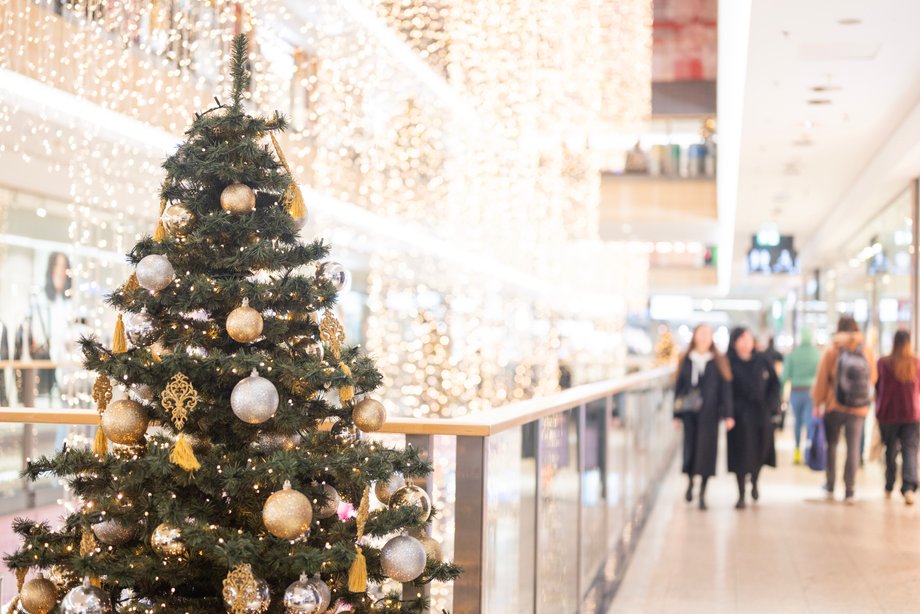
Shopping malls fight for customers' attention
|
Sheviakova Kateryna / Getty Images
See also: The president of the state giant dismissed. We know who will replace him
Retail parks win every day. Growth that hasn't been seen for years
That's it Retail parks have become the biggest beneficiary of Poles' purchasing changes. The “open” format, with free parking, a simple layout and access to stores without having to go through shopping malls, perfectly meets the expectations of consumers looking for speed and convenience.
Elżbieta Majdan, Associate Director Property & Asset Management Retail at Savills Polska, notes: – Retail parks turned out to be the most resistant to crises and responded most quickly to changing preferences. Today they combine everyday trade with services and entertainment. In smaller cities we observe huge demand and high investment dynamics.
JLL data only confirms this:
- 72 percent new supply from the last 5 years are parks and convenience centers.
- In the years 2020–2025 On average, 465,000 were donated. square meters of parks per year — a level comparable to the gallery's record years from a dozen or so years ago.
- In towns with a population of less than 50 thousand 200,000 inhabitants have already been created. sq m of new parks and convenience centers in 2025 alone.
This is what happens suburbanization of large citiesespecially the Warsaw agglomeration, where the expanding boundaries of residential development are driving the development of trade on the outskirts.
Galleries fight for attention. The decline in traffic does not mean the end of an era
Data from Proxi.cloud and UCE Research show that in the first three quarters of this year. gallery visits decreased by:
- 6.8 percent y/y in the number of customers,
- 14.2 percent y/y in the number of visits,
- 4 percent y/y in average stay.
The greatest disadvantages were recorded in the voivodeship. Świętokrzyskie (decrease in customers by 10.4%) and Podkarpackie (-8.8%). The smallest – in the Masovian Voivodeship (-4.6%).
However, this does not mean a market collapse. Mateusz Chołuj, co-author of the report from Proxi.cloud, emphasizes: – Consumers do not give up on shopping malls, but visit them deliberately and less frequently. This is the result of cost pressure and better purchasing planning. Less traffic does not necessarily mean lower turnover.
In turn, Mateusz Nowak from Proxi.cloud adds: – Galleries have to compete for attention: gastronomy, entertainment and offline-digital integration. It's not a crisis – it's an evolution.
The “middle” galleries have the biggest problems — from 40 to 60 thousand m, which neither offer the scale of top facilities nor provide proximity like smaller centers. It is this format that requires the fastest repositioning today.
Land prices and changing urban planning. Why investors move to smaller cities
JLL's “GROUND LOOK” report shows the growing stratification of land prices:
- small towns: PLN 400–1,000/sq m GLA,
- outskirts of large cities: PLN 1,500–2,000/sq m GLA,
- centers of the largest cities: up to PLN 5,000/sq m GLA.
It's no wonder that developers go where the costs allow for faster profitability. Land in smaller cities is cheaper, and at the same time often devoid of any modern retail offer.
As Tomasz Lewandowski, Director of the Land and Medium-Format Investments Department at JLL, comments: there are still white commercial spots on the map of Poland, especially in towns with fewer than 50,000 inhabitants. inhabitants. This is where a retail park is often the first modern service offer in the area.
Developers are also becoming more and more bold in their use mixed-use projectscreating new commercial and residential spaces instead of old galleries. Examples from Warsaw – the liquidation of Galeria Bemowo or the Nowa Praga project – show that the urban market is entering the stage of “second circulation”, in which commercial functions are replaced by residential ones.
E-commerce 2025: the end of the revolution, the beginning of maturity
The online market is also changing faster than forecasts suggested. Łukasz Łukasiewicz, Operations Manager at SwipBox Polska, describes 2025 as the moment of “stabilization of technology and growing customer awareness”.
The key trends are:
- fast deliveries (1-2 days as standard),
- increase in collections at vending machines and points,
- the growing role of ecology,
- more advanced personalization of offers,
- full omnichannel integration.
Parcel machines – as the expert emphasizes – have become the “silent foundation” of online shopping, especially in smaller cities and on the outskirts of agglomerations.
Simultaneously the industry faces higher operating costs and greater regulatory pressurewhich forces companies to better manage their finances and be more transparent with customers.
Chinese platforms drive… the Polish market. Results from 22.5 thousand orders speak clearly
New report “Purchased 2025”, based on 22.5 thousand real transactions of users of the When U Buy application, shows an interesting paradox: Temu, Shein and Aliexpress users also buy more on Allegro, Zalando and Polish online stores.
The average user expense in the study group is:
- PLN 4,156 per year,
- 27 purchases,
- average basket: PLN 153.
The trend is clear: the most active customers are diversifying their purchases, rather than moving entirely to China. This means that the local market still has great potential.
– We want to show how Poles really buy – not in declarations, but on receipts – emphasizes Ewa Kraińska, owner of When U Buy.
Quo vadis, retail? Channel integration and flexibility determine the future
Today, the common denominator for galleries, parks and e-commerce is one thing: omnichannel is no longer a strategy, but a necessity.
This is why:
- galleries invest in digital and loyalty,
- parks develop their offer of services and catering,
- e-commerce builds networks of vending machines and collection points,
- and investors transfer capital to places where consumers visit more often and willingly.
Stationary retail will not disappear — but it will have a different function: more service-oriented, more experiential and much more integrated with online.
Retail is entering the stage of “conscious choices”
Against the background of the pre-Christmas rush, it is clearly visible that Poles look for convenience, speed and meaning in every visit – both in the gallery and in the e-store. Retail parks grow thanks to everyday life, malls build their advantage through experiences, and e-commerce matures and stabilizes operating models.
The retail market is not so much returning to its former form is moving into a completely new stage. And its strength is that it can be local, digital and flexible at the same time.