Nicușor Dan wants an automatic system to combat disinformation. Expert: “Denial is no longer enough, people's ability to discern has been affected”


In 6 months, Romania will be able to automatically identify and combat disinformation, declared President Nicușor Dan. Disinformation expert Ciprian Cucu claims that in order to have an effect, a complex system of measures is needed that concerns the entire society, and the effects will be seen in 2-3 years.

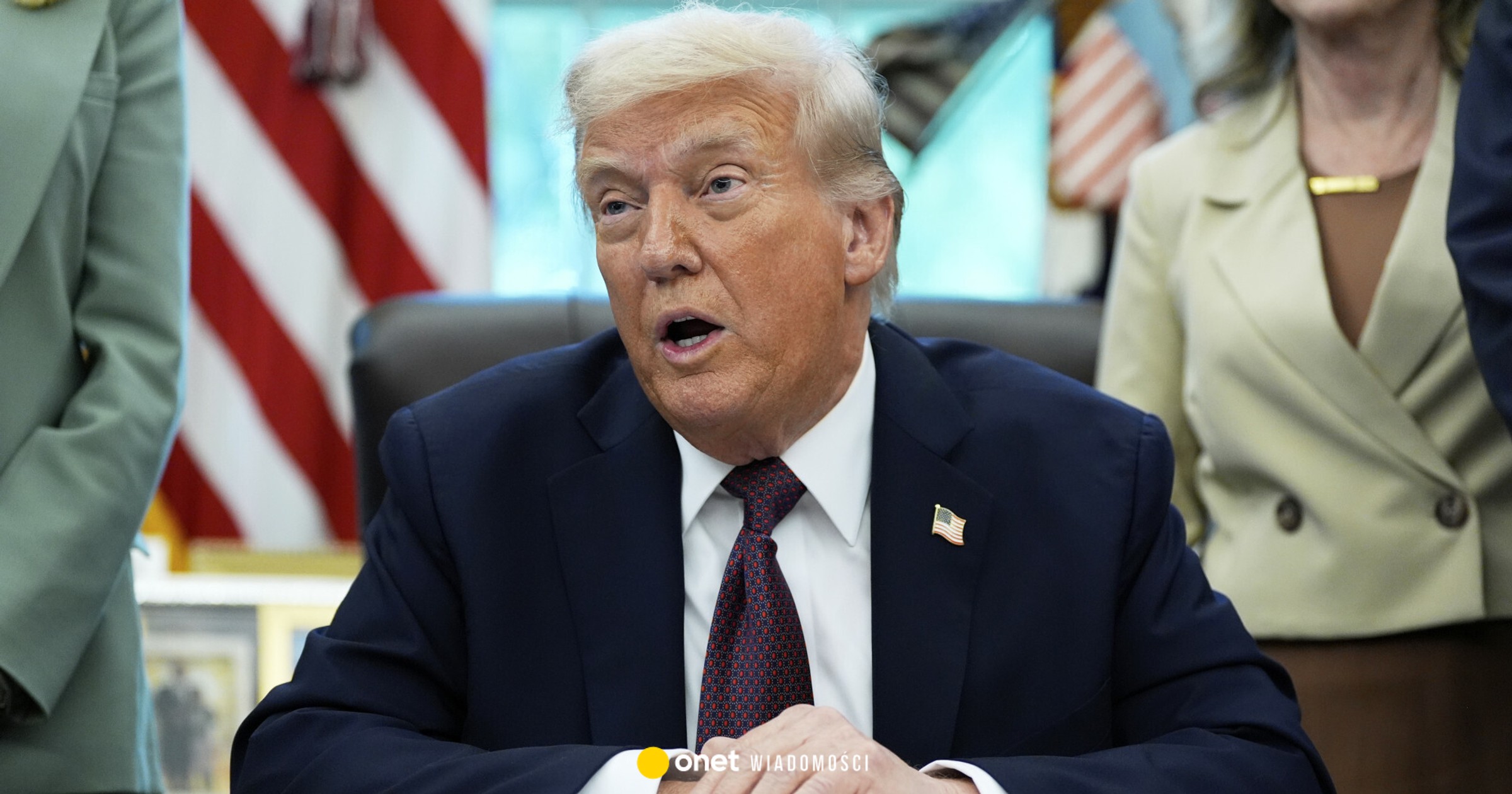
Nicușor Dan declared that Romania will have a system to combat disinformation PHOTO: Video capture
Romania continues to face a major vulnerability in the face of manipulation and disinformation campaigns, states President Nicușor Dan in an interview for the French press.
He points out that the state currently lacks the necessary tools to respond quickly and effectively to online propaganda, but promises significant improvements over the next six months.
“We have no real policy to defend against these disinformation and manipulation campaigns. For example, recently there was false information circulating that I had signed the order to incorporate 200,000 people into the military. But our institutions are not currently able to automatically detect a false information spread across multiple sites that would reach, say, 500,000 people, and respond accordingly“, he told Le Monde.
However, Nicușor Dan claims that things are about to change: “I think we'll be able to do that in the next six months.”
While admitting the lack of equipment and procedures, the president draws attention to a deeper difficulty: the low level of dit is citizens' trust in institutions, a factor that encourages the spread of misinformation. “But there is a very strong dissatisfaction with institutions in Romania, people are frustrated by corruption, which makes them more receptive to this type of misinformation”explained Nicușor Dan.
Expert: “you can do this matter in two weeks minimum”
“Adevărul” discussed with the expert in combating disinformation Ciprian Cucu, a teacher at the Western University of Timișoara, about how feasible an automatic system for detecting fake news is and how it can change the informational ecosystem in Romania for the better.
For the disinformation expert, an automated fake news detection system is largely achievable. He explains why a fully automated system is unlikely and what an effective disinformation mechanism actually entails
Ciprian Cucu says that monitoring information and identifying fake ones is not, in itself, a difficult technical problem: “I, for example, do some monitoring on social media and I don't need who knows what complicated systems. I have expertise, I know where to look, I have access to data thanks to the Digital Service Act issued by the European Commission. Thus the platforms are obliged to give access to data for research, I don't know exactly how the government can receive that data, but I suspect it is not very complicated.“
He adds that, at least in the basic version, institutions could implement a mechanism quickly: “You can do this matter minimally… in two weeks, you don't even need six months.” Platforms like TikTok or Meta allow researchers to track the spread patterns of some content: “You can easily track who people are, what type of content they share. Of course, if you want something more extensive, and you want to track them also on the X platform, which blocked the researchers' access to the data, because that's why they were fined, if you want to look on other platforms, on other sites, you need something more complex.”
Integration, automation, with people behind
But experts have warned for years that fully automating the detection of fake news is unlikely. Ciprian Cucu confirms: “Probably the president's idea is to integrate the data into a system that would do an automation … a flagging system, an automatic flagging of fake news based on some criteria.”
The researcher claims that even such systems are not very complicated to implement specifying that “they have to be given to people who know what to do with them and what to extract. Automation cannot be complete.”
“By the time you have the information, it's already a bit late. The effects of debunking, dismantling fake news, are very limited and the process should be done immediately, he explained.
Cucu gives the example of the Inforadar platform, which has been publishing denials for several years, including the recurring narrative of an alleged military mobilization: “And it dismantles and reappears. And dismantles and reappears.”
“People have settled into patterns. They don't react to data anymore”
The big challenge, he says, is what you do after you've identified the false information.
“I agree with some of the things the president says, that is, for example, with the fact that it is not enough to know what these false narratives are and say to dismantle them. Because people believe what they believe and there is a lot to talk about the reasons why they came to believe what they believe. It is partly the weakness of the Romanian state, which is corrupt and has other cans tied to the tail, as the president also says and others have also said, but more there are other problems”he points out.
Thus, the specialized literature speaks of “cognitive hacking”. “I mean, everything from those pages with AI-made carrot sculptures to the promotion of nostalgia for the communist era and all the anti-European, anti-Western campaigns, they all have this idea of affecting people's discernment”explains the specialist.
For the expert, the problem is no longer just the flow of information, but the way the public receives it: “People have already entered into some patterns since the pandemic. Now this pedal has been pressed a lot, which existed before, but everything has been amplified very much and now when a topic appears, people sit in some predefined patterns and immediately choose to go in one direction or another, regardless of who tells them that things are not that way”.
In all models of combating disinformation it is shown that simple denial is no longer enough. It is needed “a complex and coherent system, from debunking and prebunking to educational measures and collaboration with civil society and supporting independent media. There is a whole-of-society approach.”
A national center for strategic communication
Ciprian Cucu says that he has been campaigning for many years for the establishment of a national center for strategic communication — a model that has already been adopted by other states, such as the Republic of Moldova:
“That center must understand the meta-narratives, the big ideas”he states. “Dfor example, this story with “we are going to war, there is a general mobilization. I have published 20 debunks on this topic in three years, and it keeps coming back.”
Such a center would develop positive, permanent narratives to fill the information gaps exploited by disinformation networks: “We must have the ability to generate clear messages about Romania's relationship with the war in Ukraine so that false narratives collide with existing stories.”
Education, legislation, media and platforms: a package of measures
Fighting disinformation cannot be limited to technology. “We need serious training programs for civil servants on disinformation, like Sweden and Finland have,” points out Cucu. Legislation must also be designed to protect democracy: “Let's not end up imposing censorship or creating tools that extremists can use if they come to power.”
Regarding networks of influencers who falsely present themselves as journalists, the expert makes it clear: “They must be destructured. The Romanian state can make official reports to send to the platforms. Down with the accounts, and that's it.”
CNA and ANCOM, which have done something before, says Cucu, must improve their performances. Regarding the communication of the institutions, the expert gives the example of the Russian drones that arrived in Romania: “we see that they are reacting more or less coherently, but there is no communication plan, there is no coordination”.
Cucu believes that it must be taken seriously by the authorities and the preparation of criminal files if we are talking about the crime of disinformation that endangers the security of the state: “We can also have criminal cases, we don't have to start arresting left and right, but the strength of this method that encompasses the whole society lies in the fact that all these measures support each other.”
An effective system cannot be built through isolated measures, warns Cucu: “If we do a little bit here, a little bit there, it won't be felt. It'll be a drop in the ocean and they'll say they're censoring the government.”
Conversely, if strategic communication, education, research support, account suspensions and investigations are implemented simultaneously: “Then we can see significant improvements over 2-3 years. Not instant, but clearly visible.”