Czech Republic opposes EU aid plan for Ukraine financed by frozen Russian assets. The future prime minister: “We will not give money”


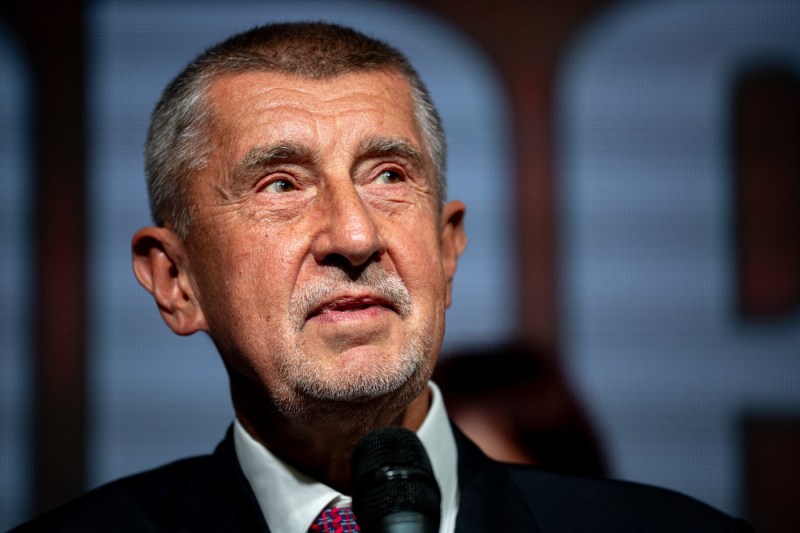
Andrej Babiš holds a press conference at ANO headquarters after polling stations close in Prague, Czech Republic, on October 4, 2025. Credit line: AA/ABACA / Abaca Press / Profimedia
The Czech Republic will not provide any guarantee for helping Ukraine through a loan financed from the Russian assets frozen in the EU, but which will be guaranteed by the member states, said the future Czech Prime Minister Andrej Babis on Saturday, who asked the European Commission to find other financial solutions for Ukraine, reports Reuters, according to Agerpres.
“We will not give guarantees for anything and we will not give money,” Andrej Babis, whose right-wing nationalist party ANO (Action of Disaffected Citizens) won legislative elections in October and formed a majority with two other Eurosceptic parties, said in a video message on social media, due to be inaugurated on Monday.
The European Commission and the EU states supporting Ukraine in the war with Russia passed an obstacle on Friday in offering a “reparation loan” to Ukraine financed from Russian assets frozen following sanctions, after a qualified majority vote was imposed in the EU Council, instead of unanimity, for a decision to extend indefinitely the freezing of these assets, this subterfuge being used to neutralize the opposition of Hungary and Slovakia.
However, four other member states, Belgium, Bulgaria, Malta and Italy, while agreeing to extend the freeze on Russian assets indefinitely, warned that the decision to use those assets for a loan to Ukraine rests with European leaders, who will meet at a summit on December 18-19.
Having secured an indefinite freeze on some 210 billion euros of the Russian Central Bank's financial assets, the European Commission and Ukraine's European allies now have to convince Belgium to accept the loan to Ukraine financed by these Russian assets. The custodian of most of these funds, Belgium fears the financial and legal repercussions of their confiscation and demands that all Russian assets frozen in the EU be included in the loan to Ukraine, as well as concrete financial guarantees from the other EU member states before agreeing to such an operation.
The European Commission's plan is to offer Ukraine a “reparation loan” of 90 billion euros from these funds, in a first stage for next year, an amount that could increase to 165 billion euros, money that Kiev will repay only after Moscow pays it “war reparations”, and until then the Russian assets from which the loan is paid are replaced by bonds guaranteed by the EU states, to ensure that the risk default on the loan is shared between these states.
But as it is difficult to assume that Russia, at least under President Vladimir Putin, will ever agree to pay Ukraine “war reparations”, the proposed initiative actually involves confiscating Russian assets, even though the European Commission claims otherwise. Russia accuses it of “theft” and threatens retaliation, having already announced that it is suing the Belgian financial company Euroclear, which manages the funds.