The first case of leprosy confirmed in Romania after more than 40 years. Three other cases, under evaluation / What the Minister of Health says about the risk of spreading the disease


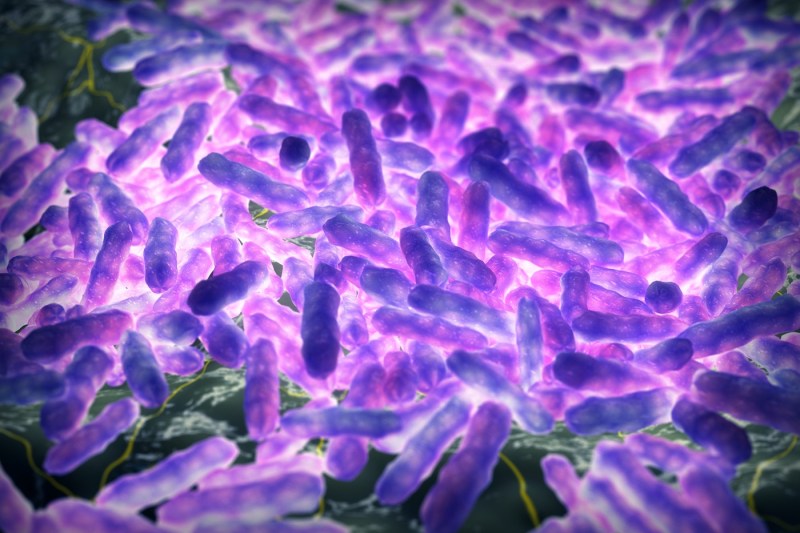
Mycobacterium leprae, the bacterium that causes leprosy Photo: NOBEASTSOFIERCE / Sciencephoto / Profimedia
The Ministry of Health announced that a case of leprosy, also known as Hansen's disease, was confirmed in Cluj-Napoca on Thursday, and tests are still being carried out in the case of three other people. It is about four women who work as masseuses in a salon, being originally from Asia. This is the first case of leprosy diagnosed in Romania since 1981.
According to the Ministry of Health, the first two patients, who initially went to the Emergency County Clinical Hospital in Cluj on November 26, are aged 21 and 25 and come from Indonesia.
Following investigations, one case of leprosy was confirmed, and three others are under “clinical and epidemiological monitoring.”
DSP Cluj ordered several specific measures in such cases: disinfection with ozone in all used spaces; checking locker rooms and individual storage spaces; intensifying sanitization procedures with approved biocides; scheduling employees for a medical check-up in Occupational Medicine; the extension of the epidemiological investigation, and the salon will be closed until the investigation is completed.
“Given the slow development of the bacterium Mycobacterium leprae, the source of the infection is difficult to identify. After the start of treatment, the risk of spreading disappears,” states the Ministry of Health.
Health Minister: The risk to the general population remains low
The Minister of Health, Alexandru Rogobete, wrote on Facebook that he requested international assistance from the World Health Organization and the European Center for the Prevention and Control of Communicable Diseases (ECDC).
“The risk for the general population remains low, and the situation is managed with maximum responsibility (…) In Romania, the last case of leprosy (Hansen's disease) was diagnosed in 1981. At European level, cases are sporadic, mostly in people coming from endemic areas in Asia, Africa or Latin America,” says Rogobete.
What is leprosy and how contagious it is
According to the Ministry of Health, the risk of transmission of the disease decreases to disappearance once treatment is started. The ministry states that leprosy has a slow evolution and low contagiousness, transmission requiring prolonged exposure to the pathogen.
The disease is not transmitted by:
• handshake,
• hug,
• journeys in public transport,
• short proximity,
• use of common spaces.
Leprosy is an infectious disease caused by the bacterium Mycobacterium leprae, characterized by serious damage to the skin, peripheral nerves, arms, legs, eyes, and the thin tissue lining the inside of the nose.
According to World Health Organization (WHO) statistics, approximately 200,000 cases of leprosy are reported worldwide each year. Most cases are recorded in Africa, Asia and Brazil.