Braze, who recently returned from Ukraine where she visited Kiev and Chernihiv, just 70 km from the front line, said the mood in the country remained “iron.”
“They are not going to surrender, give up or give up their country or their identity to Russia,” she told an audience at the Hudson Institute in Washington on Monday. In her opinion, the question now remains whether Europe is ready to match this determination.
Braze argued that Europe's weakness is not a lack of potential, but a lack of self-confidence.
We are rich, we are strong, we are many
– she said, dismissing doubts about whether European governments can achieve the level of 3.5 or even 5%. GDP for defense. Latvia already spends 5% on this purpose.
The real problem, she said, is political indecision. “It's not about talks, but about actions,” she emphasized. In her view, meeting NATO's regional defense plans — not discussing them — should be the cornerstone.
Latvia is not waiting: purchases of HIMARS systems, expansion of the armed forces structure, rapid modernization of mobility, cyberspace protection and strengthening of critical infrastructure are underway.
And it's not just about money. Conscription into the army has been reinstated and the number of applicants exceeds the number of places. Reservists train twice a year. Schools teach the basics of defense. Young people sign up for special programs to learn how to use weapons and survive.
-It costs money. But people know what to do if something happens, said the minister.
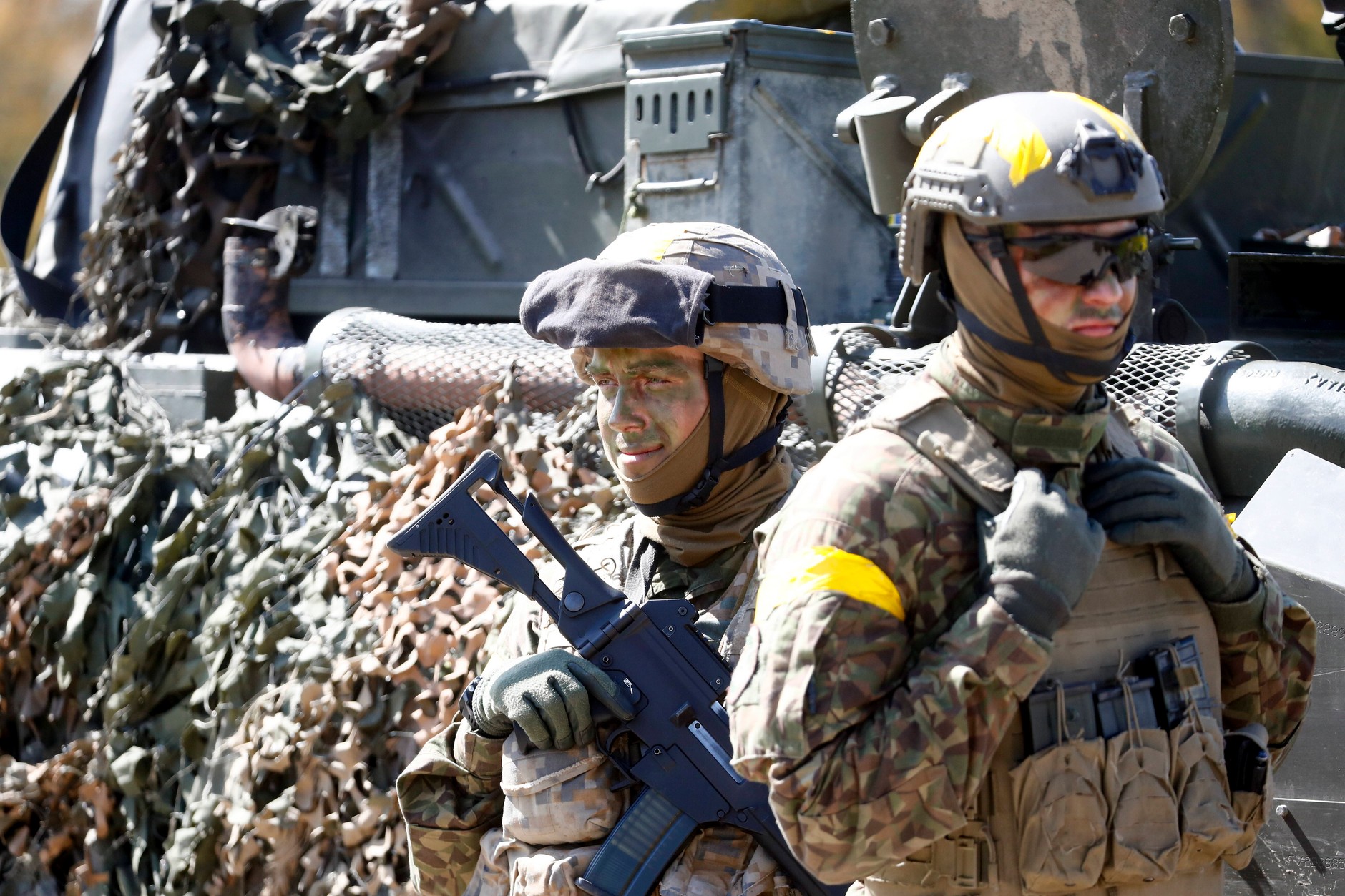
Latvian soldiers take part in military exercises, May 10, 2025.TOMS KALNINS / PAP
This is Braze's eighth visit to the United States since December last year. Asked about how relations between the two countries have changed, she reached back to history: the United States' failure to recognize the Soviet occupation “literally served as the basis” for restoring independence to Latvia.
In her opinion, the partnership is currently “strong and smooth”, especially in the field of military cooperation. She also praised the compromise on the National Defense Authorization Act (NDAA) published on Sunday, December 7, as “very beneficial for the Baltic states.”
“Russia wants what it cannot achieve on the battlefield”
Regarding the Ukrainian-Russian negotiations in Miami, Braze stated clearly:
Ukraine wants peace. Ceasefire talks have been ongoing since March. But Russia wants to achieve through peace negotiations what it cannot achieve on the battlefield.
She referred to data according to which Russia took less than 1 percent this year. additional territory of Ukraine and incurred “over 280 thousand” human losses, and since the beginning of the invasion, almost 1.2 million people have been killed or seriously injured. She added that Russia's economy was “devouring itself.”
When asked about the most difficult issues in the negotiations – territory and security guarantees – she did not want to reveal details. — The substance of the matter must remain confidential. This is what it takes to be successful, she added.
In connection with the debate in Washington on the future deployment of forces in Europe, Braze said directly: the Baltic countries want more American soldiers.
— Deterrence works – she emphasized, adding that American forces are not trapped in barracks – the Latvian Selonia training ground currently enables brigade-level maneuvers, drone integration and battlefield learning imported directly from Ukraine.
Riga's strong message
As Latvia prepares to take up a seat on the UN Security Council in January – and the presidency in November – Braze said Riga will use this platform to draw attention to Russia's war crimesmaritime threats and global operations of the Kremlin's shadow fleet.
“We will continue to work very hard to achieve lasting peace in Ukraine,” she said. — This is not only in the interest of Latvia, but also of Europe and other regions.
Braze has now come to Washington to warn that it is not the will of Ukraine that is the variable in this war, but the resilience of the West.
Her message is clear: the real question is not whether Ukraine will survive. The question is whether Europe – and the West more broadly – will be able to keep up.
I’m Ashley Davis as an editor, I’m committed to upholding the highest standards of integrity and accuracy in every piece we publish. My work is driven by curiosity, a passion for truth, and a belief that journalism plays a crucial role in shaping public discourse. I strive to tell stories that not only inform but also inspire action and conversation.