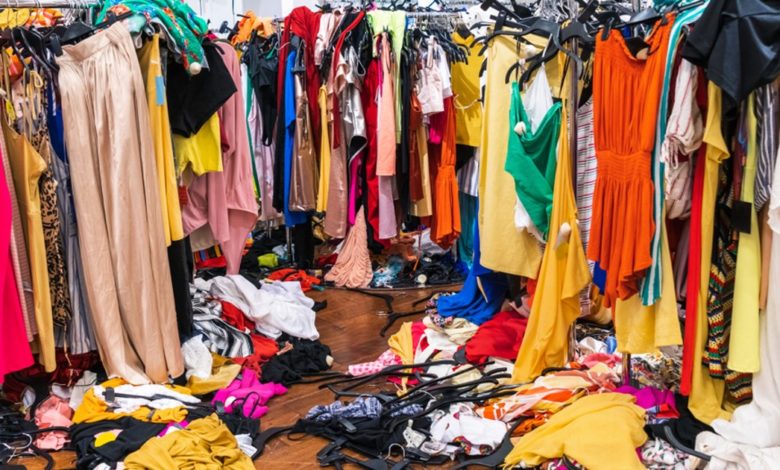
Under the pretext of an advantageous offer, fast fashion reductions feed impulsive consumption, which empties our wallet. Among the most visible and aggressive types of discounts are those in the fast fashion area, an industry that relies on quantity and speed to stimulate frequent purchases. In the chase after “bargains”, we get to buy more than we need, with a direct impact on the personal budget.
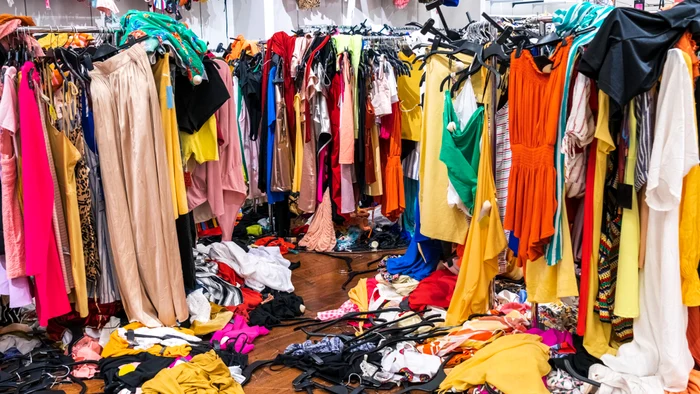
The industry that costs more than you think
Europeans buy and throw more clothes, footwear and textiles than ever, putting increasing pressure on the climate and environment, shows the latest report of the European Environment Agency (AEM). Only in 2022, a European citizen purchased, on average, 19 kilograms of textile articles, the equivalent of a full troller per year. According to AEM, a clear transition is needed: from fast fashion to a circular economy, based on durable, reusable and recyclable textiles.
Textiles are the fifth most polluting category of consumption in European households, the AEM reveals, with a direct impact on emissions, resources and waste. Much of this ecological pressure comes from the rapid consumption model imposed by fast fashion: frequent launches, low prices and recurrent promotions that stimulate compulsive purchases and a shorter life of the purchased products, the specialists say.
Behind a low price are often hidden impulsive decisions, long -term losses and a considerable environment. Beyond the instinct of a “Catch the offer”it is essential to recognize the psychological traps that empty our account and to understand how a well thought out discount can really work, for both customers and businesses, they support, in Unison, the specialists. “The discounts often cost us more than we think. And I am not referring to only money, but also to the time, space and resources wasted with products that bring neither real value, no long-term joy. Many of the shopping we do” because they were on discount “, from fast fashion clothes on the Temu, Shein or Trendyol, to the Gadget, or to be a real guarantee. A “cheap” dress can be more expensive than a quality one if you wear it once and then throw it “says Doina Vîlceanu, Marketing Director, Contentspeed & Early Adopter de ecommerce.
“Fast fashion, as a phenomenon, has a huge social and ecological cost”
The same opinion seems to be Andrei Tarnovski, strategist marketing at Tarnovski Branding Studio. “Cheap products, even in the situation when they are durable, can have a low reliability: it often breaks, it creates frustration and negatively affects the consumer experience. So, reliability is a parameter often overlooked, but at least as important as durability and price per use. A gesture of status, but sometimes a rational and efficient decision both economically and functionally ”he explains.
Fast fashion, as a phenomenon, also has a huge social and ecological cost. Only in 2022, the EU countries generated almost 7 million tons of textile waste, ie 16 kilograms per capita, the AEM report shows. “Over 92 million tonnes of textile waste are generated annually globally, and the fashion industry is responsible for about 10% of CO₂ emissions, more than aviation and maritime transport. In the pursuit of low prices, we pay for the health of the planet and, in the long term, with our own pocket.”adds Doina Vîlceanu.
“Most of these clothes are made of synthetic textile fibers, obtained from oil”
What is happening in recent years in the fashion industry is an effect of market conquest by online platforms for sale, says Mihai Tanase, communication specialist map of recycling, a program of the future association plus awareness of the importance of separate collection and promotion of reduction, reuse and recycling. “These global companies, which deliver their products by courier, have managed to reach impressive sales through low prices, thousands of new models launched daily, but also aggressive marketing campaigns, especially on social networks and online. The hidden cost of these cheap clothing is the poor quality: only a few clothes are used. Synthetic, obtained from oil, and the share of plastic wires used in the textile industry is constantly growing ”he confesses.
Mihai Tanase believes that it is very difficult to fight with these ultra-faastfashion businesses, “who have become colosse with impressive promotion budgets”.
“The response to the trend of clothing impulse shopping, this frugal supra-consumption of clothing and footwear, which in the best case are worn a few times to be thrown, is the awareness of the danger that textiles represent for the environment. Most of the time, these articles have a quality too poor to be used, or to be used to be recycled.”adds the representative of the recycling map.
Consumption, emotional adjustment mechanism
Discount periods repetitively activate a predictable emotional pattern. Large discounts are not only an invitation to buy, but a direct trigger for what we call psychology in psychology (Fomo), believes Ioana Sabina Bota, psychologist. “We do not buy because we need it, but because we do not want to miss the opportunity. The promotion becomes justification, and the product, whether we need it or not, is just the pretext. For many people, this behavior is almost automated. The seasonal discounts are perceived as immediate” rewards “, which come after a long period of work, stress or financial restrictions. At that time, the buyer no longer thinks in terms of value or utility, but of liberation and emotional comfort. Unfortunately, the result is visible: clothes that remain with the label, unused gadgets, expired cosmetics. The statistics are clear: 40% of Romanians admit that they bought products that they have never used ”says the specialist.
Compulsive consumption often masks unadlyd emotional needs. “For example, the need for control, validation, comfort, safety. The” great “reduction seems to legitimize the purchase, but in reality it is a self -illusion. When the price becomes the central criterion of the decision, do we lose sight of the essential question: do I really need this? Is it really useful to me? Or even simpler: would I have bought it at a full price? ”recommends the psychologist.
In his opinion, a healthy alternative is the cultivation of conscious purchase. “More precisely, let's get used to getting out of the impulse, immediate satisfaction of a need and training our self -control. I advise people to leave the product in the basket for 24 hours before pressing” buy “. In many cases, the need disappears. Equally important is to choose ethically: to buy from local producers, to opt for quality instead of quantity, to be careful about durability. It is not only a responsible financial gesture, but also a form of mental hygiene. Discount periods, such as the summer season, often become an emotional discharge space. We do not buy clothes, we buy states: the feeling of control, the impression of change, the validation that 'we also have'. Filling the cabinet is not about the wardrobe, it is about the goals inside which we try to cover with objects ”explains Ioana Sabina Bota.
“Cheap things can cost us expensive”
In other words, behind the enthusiasm of catching a “bargain”, there is often a need for compensation for the days when we felt less important, tired, invisible. “Thus, the purchase becomes an act of self -assessment, …” I deserve something beautiful “. Unfortunately, objects do not take place of processed emotions, and that is why the feeling of satisfaction disappears rapidly, being replaced by guilt or disappointment ”considers the specialist.
In fact, she says that, from a psychological point of view, a mechanism called “Loop dopamine” works: anticipation of reduction, tracking, click on “Add to Cart”. “They all generate a state of neurological excitation, similar to a small won bet. But once the order arrived, the object loses its charm, because the emotion was related to obtaining, not to use. The solution is not to eliminate the pleasure of shopping, but to regain it. Let's choose consciously, seek quality, utility and ask ourselves: What do I really want to feel when I buy it? If the answer is to feel seen, appreciated, in control, then we have to work with something other than the closet”, Concludes Ioana Sabina Bota.