How to do your hair like an authentic Romanian. Traditional Romanian combs and braids and Neaoș conditioner for shiny hair

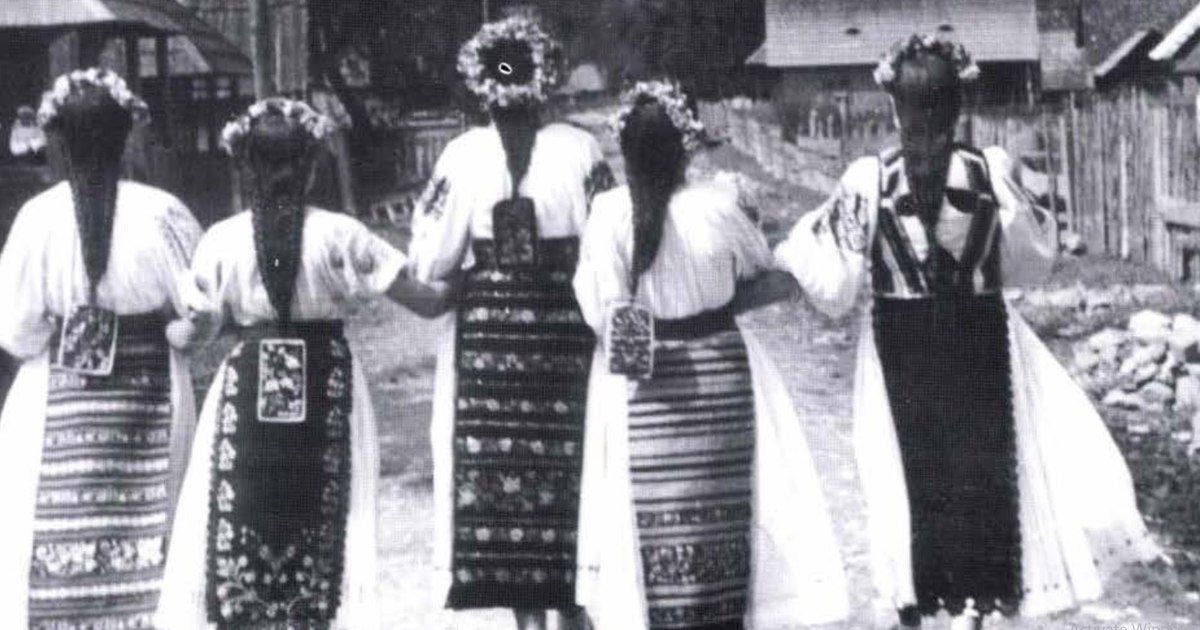
Coquetry among women was also present in the world of the traditional Romanian village. We would be surprised how varied the braids and hairstyles of Romanian women in the past could be. Not to mention the fact that each of these had a special significance.
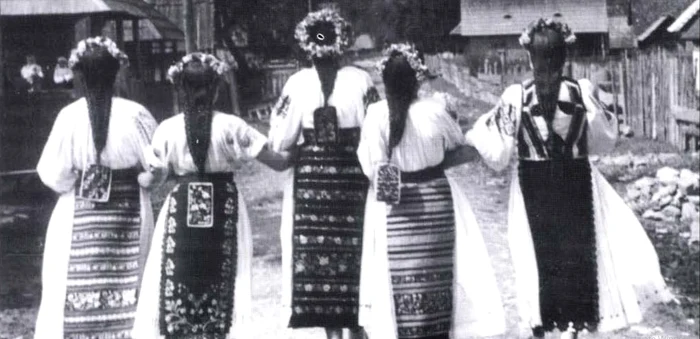
Romanian peasants PHOTO Romanian folk costume/Maria Bâtcă
In the world of the Romanian village, nothing was accidental. Neither the gestures, nor the posture, nor the hairstyle. They all had a special symbolism and followed a well-established ritual for centuries. Romanians from the village world had a special tradition of braids and hand-made combs. Housewives' daughters or wives had a wealth of hairstyles more than today. Except there was no hair dye and no short hair. Instead they knew how to braid and beautify their hair adornment in a multitude of ways. Obviously, each hairstyle was specific to an event or moment in her life, they were not worn by chance.
Big girl or married? The hairstyle gives the answer
The main differentiation was between big girls and married women. The most spectacular braids could be seen on big, marriageable girls. It was also understandable, they had to impress their future partner. In many parts of the country it was the last time in his life when the other lads could see his hair in all its glory. And that's because after the wedding, in public, he had to appear only with his head covered. The hairstyles of big girls, young ladies, ready to marry, differed depending on the ethnographic area. For example, in the Brașov area, just by combing her hair, the girl signaled to the boys that she had her dowry ready and that she was ready for marriage.
“In Şcheii Brașovului, if the girl had her dowry ready, she went out to the game with a single tail left loose on her back decorated with a conchium (bridal flower) and dressed in silk clothes. If she was not ready with the dowry, she went out to the game combed with two tails, tied on her head with a ribbon, decorated with a hairpin or a rose, being dressed in androc and free of charge “, specified Maria Bâtcă in “Romanian folk costume”.
In Bistrita Năsăud, young ladies carefully combed and plaited their hair, attaching different ornaments. “In the Şant commune of Bistrita-Năsăud county, the big girl combed her hair with a parting in the middle, her hair being braided in two tails joined at the nape of the neck in a single tail in which a long spot (ribbon) was braided”stated Maria Bâtcă in the previously mentioned work.
The girls from the Năsăud area had a special hairstyle. They used to make “peacocks” in their hair.
That is, circles were made of black feathers, in the middle of which multicolored beads were sewn. The “peacocks” were placed near the ears and tied behind with a colored ribbon. From that ribbon there were five or six others that hung on the back.
In the Vrancea area, girls combed their hair with a parting in the middle, with their hair braided into two tails, called necks. The tails were then brought to the nape of the neck and intertwined, obtaining an elongated bun called tendrils. The girls decorated this bun with natural flowers. At the same time, when they went out to the hora, i.e. to the celebration, the girls tied to these necks (i.e. tails) some pompoms made of colored wool that reached the middle of the shawls. There were also numerous other decorations used for braids and combs. In certain areas, also at the celebration, unmarried girls wore “pitigoi braids”, that is, a kind of ornament made of small money with holes, called pitigoi, put on a red string, attached to the tails.
At the wedding, the girl's comb became a real show, on which three or four skilled women worked for six hours. Something incredible came out with hair braids, decorative elements and ornaments. “During the days of celebration or during various ceremonies, such as that of the wedding, special attention was paid to the hairstyle, the preparation of the head becoming on this occasion, a true creation of art, organically integrated and harmonized from a decorative and chromatic point of view with all the other components of the clothing ensemble. At this age of maximum beauty, freshness and tenderness, the craftsmanship and skill with which it was woven and adorned the hair was unsurpassed, accumulating numerous aesthetic elements”stated Maria Bâtcă, in “Romanian folk costume”.
“After the wedding, the loser didn't see the sun anymore”
After the wedding, married girls were no longer allowed to go out in public with their hair exposed. But that didn't stop them from flirting. There were different ways to express one's social status without causing scandal. Obviously, especially women from wealthier families. That is, they made beautiful braids matched with all kinds of turbans, turbans or tichis, depending on the era and ethnographic area. Foreign travelers, whether diplomats or scholars, left testimonies about the way married women in the Romanian Principalities wore their hair.
“He ties a tulpan with stitches on his head and face”said Erasmus Schneider about Moldovan fashion.
“The married women cover their heads the day after the wedding with a white kerchief, brought around the chin and tied behind in two long hanging tails. The girls cover their heads with their own hair, braided into pigtails, from which they then form a bun caught in pins”Dimitrie Cantemir also wrote about the same Moldovans in “Descriptio Moldaviae”.
An Austrian traveler from the 18th century, in the Danube area, said that Romanian women wore their hair beautifully braided in tails, gathered in a bun and covered with a kind of rag. “The women's hair is braided in long tails, braided on the head, in the form of a bun, placed from the bottom up, then covered with a kind of colored turban”he specified.
For her part, the Englishwoman Lady Elisabeth Craven who arrived in Bucharest in the 19th century wrote about the way Wallachian women wore their hair. “He had a tall sable cap, pulled back over his hair, which was combed up over a sort of scroll”specify this. At the end of the 18th century, the wealthier Moldovan women, and obviously married, are described as having their hair braided in two tails, tied at the top, over which they put a kind of turban made of white rag.
Hair treatments for the Romanian women of yesteryear
The Romanian women of old took care of their hair pretty carefully, especially because it was particularly important as you can see. They washed their hair at regular intervals with water and herbs. In addition, they treated him with butter. Basically, after washing their hair, they buttered it well to make it shine and stay as smooth as possible, especially when they had to go to the hore, to make their holiday braids.