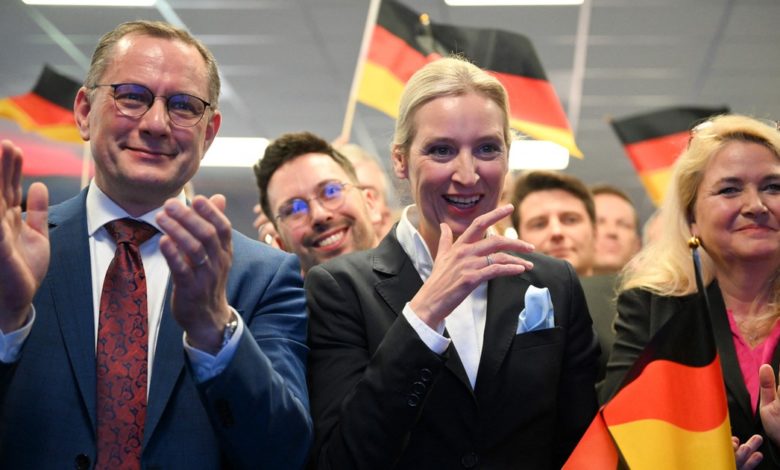
Whether orphans politicians persevere in their decision to completely turn their backs to an alternative to Germany (AfD) – a party that promotes anti -immigration and anti -EU policy – was questioned as soon as it took second place in this year's election. It was the first case in the country's post -war history, when the extreme right -wing group achieved such a great success.
Some AfD deputies behind closed doors have already started building ties with members of other groups and received clear signals that they would be able to preside on important parliamentary committees – Politico said activists of this party.
AfD won over 20 percent votes and secured 152 seats, becoming the largest opposition party in the Bundestag. This entitles her to chair several parliamentary committees. These positions have real power because the chairman of the commission manages debates, call on experts and influence the agenda.
Jens Spahn, a former health minister in the CDU, said in an interview with the daily Bild that AFD should be treated “in procedures and parliamentary processes like any other opposition party.”
Her deputies sit there in such strength because voters wanted to tell us something. We should take these voters seriously
He said.
Until now, the CDU and other mainstream parts, including the Centrolevilic SPD of the outgoing chancellor Olaf Scholz, celebrated this principle to keep the AfD at a distance. They have repeatedly blocked the possibility of performing the function of vice -chairman of the Bundestag – a position that is customary to be awarded to every parliamentary group.
Continued article under video material
Johann Wadephul, vice -chairman of the CDU/CSU parliamentary group, said that this blockade helped AfD to present itself to the public opinion as a victim. Now he says to allow the party's candidates to chair the committees, “if they did not behave incorrectly in the past.”
“AfD is not a party like any other”
Merz once, during the election campaign, cooperated with the Alice Weidel party to push his proposal to migration in the Parliament with AFD votes. This move, however, met with considerable criticism.
It seems that the CDU strategy currently lies in to allocate the extreme right more duties and antenna time in the hope that people will be discouraged by it themselves.
There is a reasonable argument that this party should be removed not by means of procedural tricks, but through a fervent, substantive debate
– Philipp Amthor, a CDU MP, considered to be the rising party star, said in an interview with the Frankfurt newspaper.
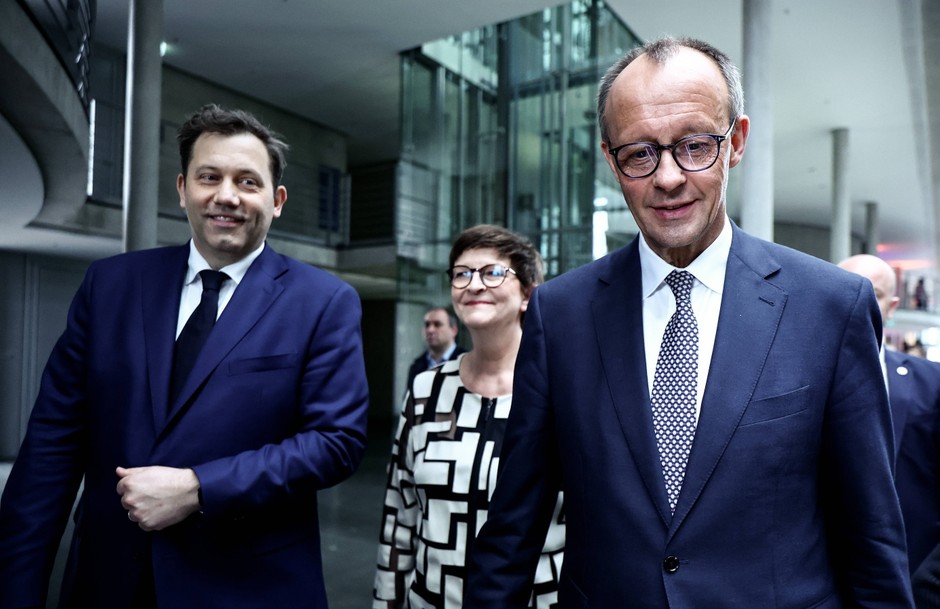
Chairman of the Christian Democratic Union (CDU) Friedrich Merz and co-chairman of the Social Democratic Party (SPD) Lars Klingbeil and Saskia Esten participate in a press conference on a joint coalition agreement, Berlin, Germany, April 9, 2025.EPA / Christoph Soeder / PAP
However, not all CDU members agree with this approach. Senior MP Roderich Kiesewetter called AfD “a threat to Germany's security”. In an interview with the sender of the RBB, he said that “for AfD members there should not be a place in the team monitoring intelligence, as well as in the Budget Trust Committee.”
SPD, which finalized the government agreement with the Merza Party last week, is already rubbing from the CDU in this matter. In an interview with the daily “Tagesspiegel”, the parliamentary secretary of SPD Katja Mast stated that “AfD is not a party like any other”. “We will protect our democratic institutions, primarily our parliament, with full determination,” she announced.
Negotiations regarding chairmanship in committees are still ongoing and will probably end after May 6, when Merz is to be sworn in as Chancellor.
I’m Ashley Davis as an editor, I’m committed to upholding the highest standards of integrity and accuracy in every piece we publish. My work is driven by curiosity, a passion for truth, and a belief that journalism plays a crucial role in shaping public discourse. I strive to tell stories that not only inform but also inspire action and conversation.