The US is ready to compromise on Nvidia's chip being better than any processor made in China. “But the Chinese state is driven by paranoia and pride”

The NVIDIA logo displayed on the screen of a smartphone, and in the background a motherboard and a GeForce video card. Illustrative image. PHOTO: Matteo Della Torre / Alamy / Profimedia
The US Commerce Department is ready to allow the export of Nvidia H200 chips to China, a source familiar with the matter told the Reuters news agency.
Nvidia shares rose 2% following the news, which was first reported by Semafor.
Allowing the shipments could signal a friendlier approach to China after US President Donald Trump and Chinese leader Xi Jinping negotiated a truce in the trade and technology war between the two countries in Busan, South Korea last month.
Trump administration officials see the move as a compromise between sending Nvidia's newest chips to China — the Blackwell processors, which Trump has refused to allow — and a ban on shipping any U.S. chips to China. US officials believe such a blanket ban would support Huawei's efforts to sell AI (artificial intelligence) chips in China, the person familiar with the matter said.
Nvidia and the Commerce Department did not immediately respond to Reuters requests for comment.
Fears that processors will strengthen China's military
China's critics in Washington worry that the sale of more advanced AI chips to Beijing could help the Asian country bolster its military, fears that initially prompted the Biden administration to impose restrictions on such exports.
The Trump administration was considering approving the sale, sources told Reuters last month.
Information about allowing shipments of the H200 chips drew sharp criticism from Sen. Elizabeth Warren, a Democrat from Massachusetts who has supported bipartisan efforts to reserve powerful U.S. AI chips for American firms.
“Following his behind-the-scenes meeting with Donald Trump and his company's donation to Trump's ballroom (the new White House ballroom, no), CEO Jensen Huang (Nvidia boss, no) got his wish to sell the most powerful AI chip we've ever sold to China,” Warren said in a statement. “This risks accelerating China's efforts to achieve technological and military dominance and undermining US economic and national security,” the senator warned.
The H200 processor, released two years ago, has a higher bandwidth memory than its predecessor, the H100, which allows it to process data faster.
According to a report published on Sunday by the independent think tank Institute for Progress, the H200 would be nearly six times more powerful than the H20, the most advanced AI semiconductor that can be legally exported to China after the Trump administration lifted a short-lived ban on those sales through 2025. Exporting the chip would allow Chinese AI labs to build AI-powered supercomputers that can achieve similar performance to top US AI supercomputers. albeit at higher costs, the report also states.
Faced with Beijing's aggressive use of export controls on rare minerals, which are essential to the production of a range of technology products, Trump this year threatened new restrictions on technology exports to China, but ultimately withdrew them in most cases.
China sees potential security risks
China's cybersecurity regulator said it had summoned Nvidia to a meeting to explain whether its AI-powered H20 chip poses hidden security risks, a charge Nvidia has denied. Chris McGuire, a technology and national security expert who worked at the US State Department until this summer, said Chinese firms would likely continue to buy H200 chips.
“China would almost certainly accept,” said McGuire, who is now a member of the Council on Foreign Relations. “It would be counterproductive not to, given that the H200 is better than any chip the Chinese can produce,” he added.
But Craig Singleton, a senior fellow at the Washington think tank Foundation for Defense of Democracies, said it remained unclear how Beijing would react to the US export approvals.
“Chinese companies want the H200, but the Chinese state is driven by paranoia and pride — paranoia about espionage and reliance on American chips and pride in promoting domestic alternatives,” Singleton said. “Washington can approve the delivery of the chips, but Beijing has to allow them in,” he pointed out.
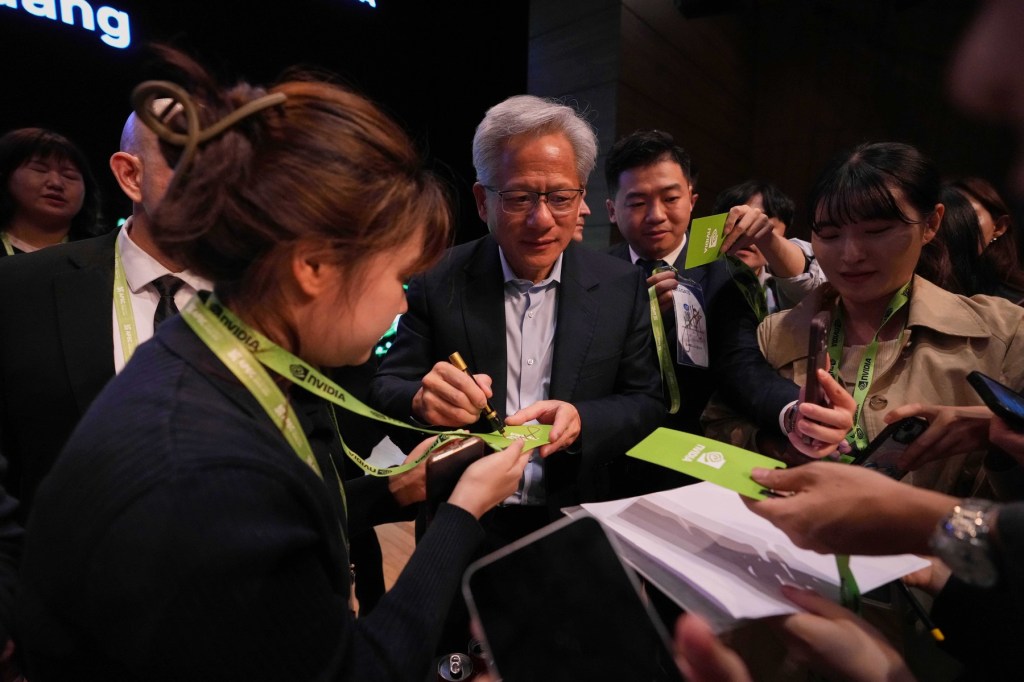 Nvidia boss warns that a hospital is built in 3 days in China, while the US needs 3 years for a data center