If one more proof was needed that a new era has begun for Europe with Donald Trump's second term, the new American security strategy provides it. She is motivated primarily by what works for America — or, in two words, “America First.” Decades of values-based U.S. leadership have given way to Trump's worldview.
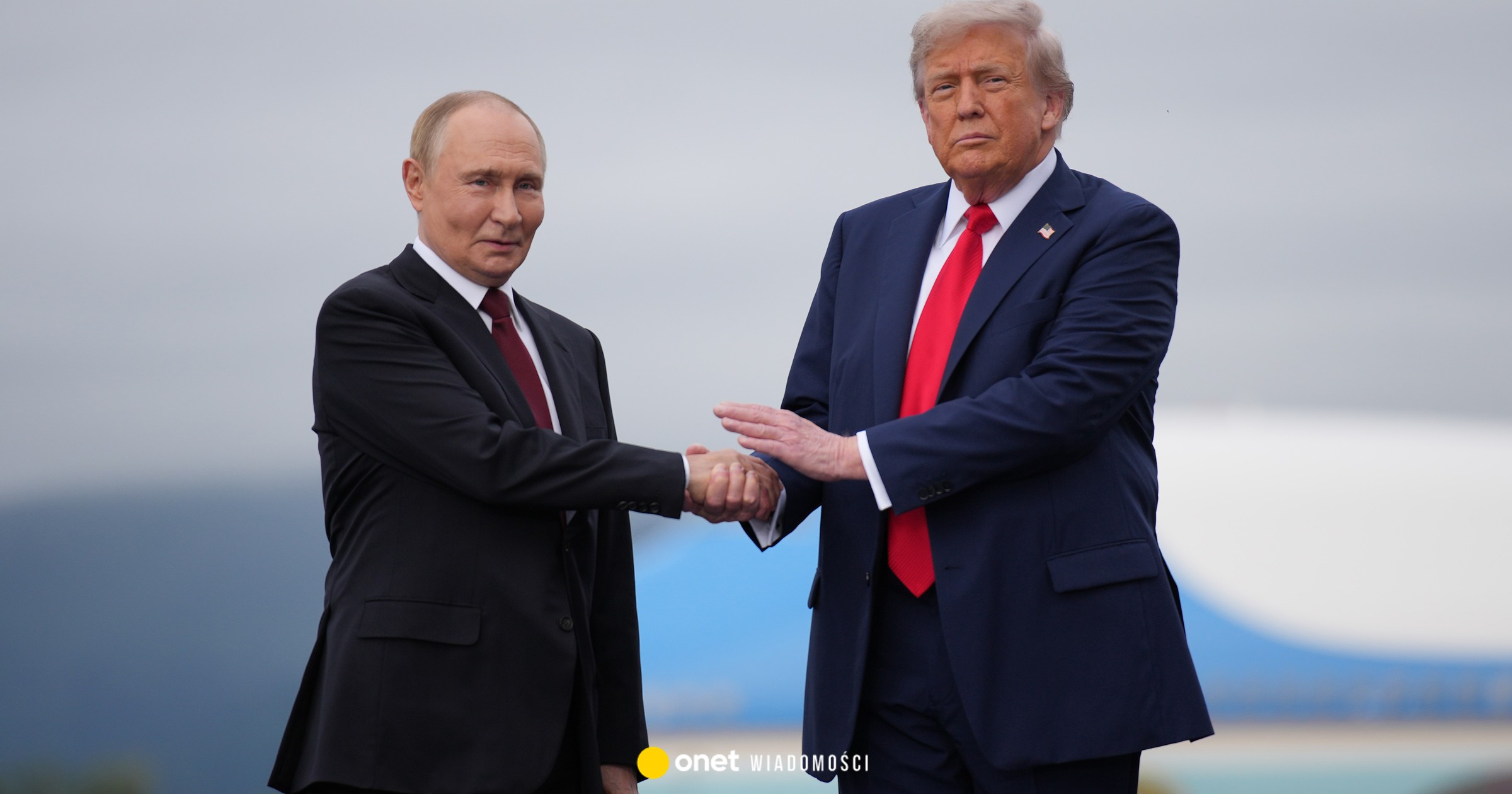
— For Moscow, this is another green light to continue its war against Ukraine – says Philip Bednarczyk, director of the German Marshall Fund in Warsaw.
— As the United States continues to withdraw from transatlantic security, Russia senses Europe's weakness and will continue to try to undermine the NATO alliance in the coming months through a combination of hybrid attacks and disinformation campaigns, the expert says.
For almost 40 years, the US administration has presented its national security strategy every year, with few exceptions. In it, Washington identifies the most important challenges to the stability of the United States. From the confrontation with the Soviet Union back then to, as described in the latest 2022 edition, “America's most important geopolitical challenge: China.”
After 1945 and during the Cold War, the United States wanted to root democracy and a liberal, world-open model of society in Europe. Now Trump is demanding a change of direction from partners on the eastern side of the North Atlantic. “The era of mass migration is over,” says one of the principles of the new American strategy.
“Throughout history, sovereign nations have prohibited uncontrolled migration and rarely granted citizenship to foreigners who also had to meet high criteria. The Western experience in recent decades confirms this proven wisdom,” the Trump administration writes.
Another postulate is “protection of fundamental rights and freedoms”, which refers primarily to freedom of speech and religion. “We will oppose elitist, anti-democratic restrictions on fundamental freedoms in Europe, in the Anglo-Saxon countries and in the rest of the democratic world, especially among our allies,” the NSS says.
In the same spirit, Europe is presented as a regional power that violates these very principles and therefore can no longer be a partner of the US as before:
The larger challenges facing Europe include actions by the European Union and other transnational institutions that undermine political freedom and sovereignty; migration policy that is changing the continent and leading to tensions; censorship of free speech and repression of political opposition; a sharp decline in the birth rate and loss of national identity and self-confidence.
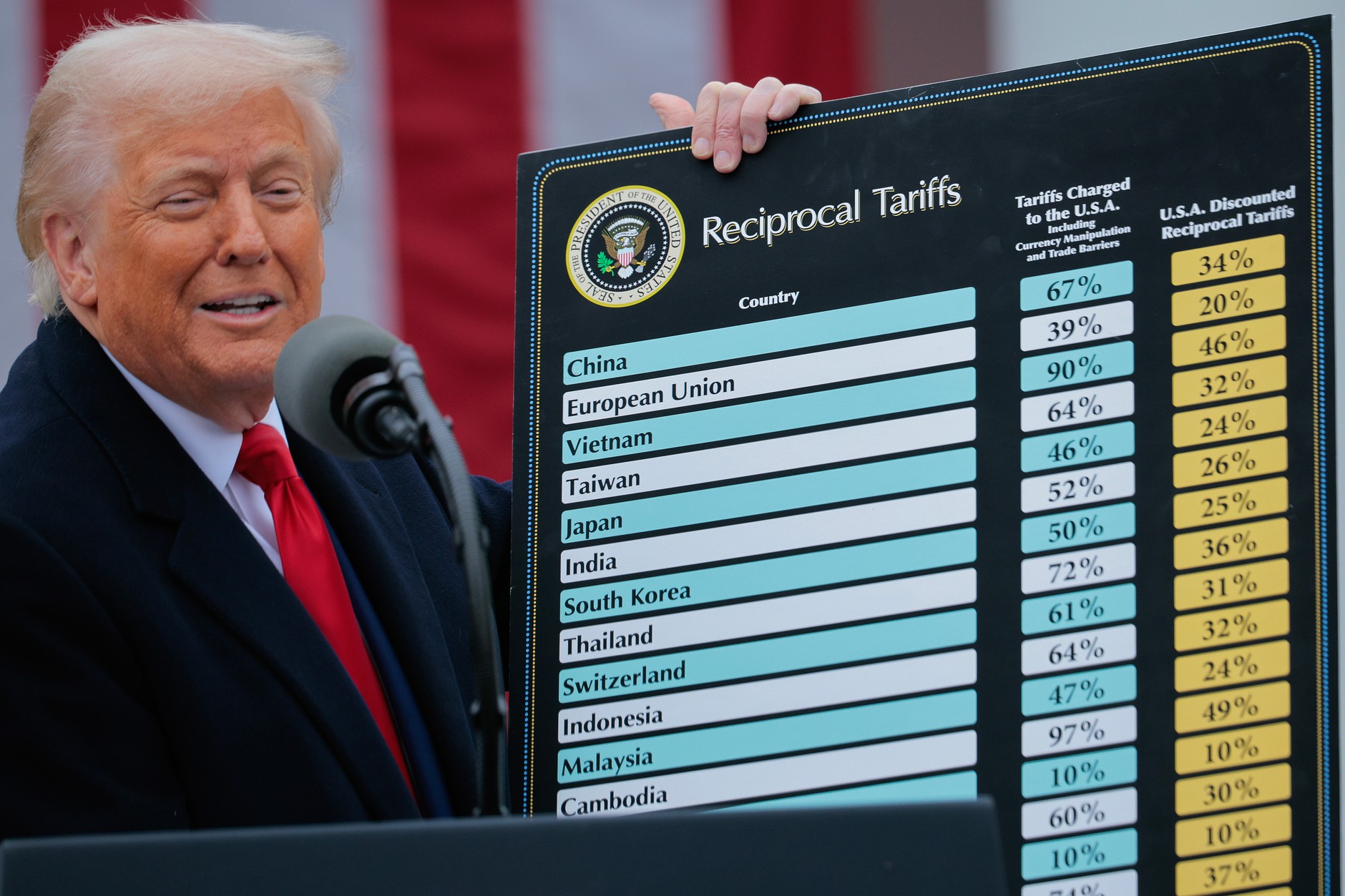
The Trump Doctrine is not an empty declaration. Already in the global trade war that it sparked in early April, part of Washington's tactic was to influence the policies of former partner countries through economic threats.
Donald Trump announces tariffs on numerous countries on 'liberation day', April 2, 2025.Chip Somodevilla / Getty Images
The US president used this tactic against Brazil, threatening it with 50 percent tariffs because the current government put his political friend Jair Bolsonaro on trial. India has also been hit with tariffs because it imports cheap oil from Russia.
“The US presidential administration does not perceive the conventional threat from Russia as a danger.”
With regard to Europe and its current security guaranteed by the US, Trump makes it clear that his government is not afraid of direct interference. America encourages “its political allies in Europe to support this revival of spirit.” According to Americans, the growing influence of patriotic European parties gives “reasons for great optimism.”
The US goal is to “help Europe correct its current course.” Some experts, however, call it a call for a change of power in Europe.
All this means a weakening of the transatlantic security partnership. — The NSS clearly shows that the US presidential administration does not view the conventional threat from Russia as a threat to the national security of the United States or Europe, says Torrey Taussig, a security expert at the US think tank Atlantic Council.
I’m Ashley Davis as an editor, I’m committed to upholding the highest standards of integrity and accuracy in every piece we publish. My work is driven by curiosity, a passion for truth, and a belief that journalism plays a crucial role in shaping public discourse. I strive to tell stories that not only inform but also inspire action and conversation.