After new talks on Ukraine, Washington admits its powerlessness. Without Russia's willingness to make concessions, a ceasefire remains a dim vision. At the same time, however, Washington is seeking rapprochement with Moscow – this is the new US security strategy.
The strategic document published by the White House seems to be of key importance for the further development of events, which for the first time comprehensively talks about the role of Europe in the global geopolitical puzzle. The conclusions for Europeans are not very optimistic.
Regarding the latest talks between Americans and Ukrainians, “both sides agreed,” as written in a statement published by Witkoff on X, “that real progress towards an agreement depends on Russia's willingness to make a serious commitment to long-term peace.”
It was the sixth meeting of this type in two weeks. On the Ukrainian side, the talks were led by Rustem Umerov, Secretary of the National Security and Defense Council, and Andriy Hnatov, Chief of the General Staff of the Armed Forces of Ukraine. The envoys confirmed that Ukraine is striving for peace.
Specifically, a “framework of security arrangements” was agreed and the necessary deterrence measures to ensure lasting peace were discussed. However, Russians will not participate in the talks scheduled for Saturday, December 6 – and without their readiness, there will be no progress towards a peace treaty.
The US wants to normalize relations with Russia
The Americans use a two-track strategy in negotiations. Like Kiev, Washington wants “an end to the war and credible steps towards a ceasefire.”
At the same time, the “key interest” of the US is “restoring strategic stability with Russia”, i.e normalization of relations with Moscow.
That's the conclusion of a new U.S. security strategy that is provoking anger east of the North Atlantic. The document presented by the Trump administration paints a bleak picture of Europe.
It describes Europe as a continent in economic decline which, due to migration, falling birth rates and a perceived loss of identity, is facing “disappearance of civilization” in the next 20 years.
According to the strategy document, ending the invasion of Ukraine would not only stabilize the situation in the war-torn country, but also European economies. Moreover, it would “prevent unintended escalation or expansion of the war.”
However, the most important conclusion for Europe is this: Donald Trump has launched a crusade to transform European politics in line with his vision.
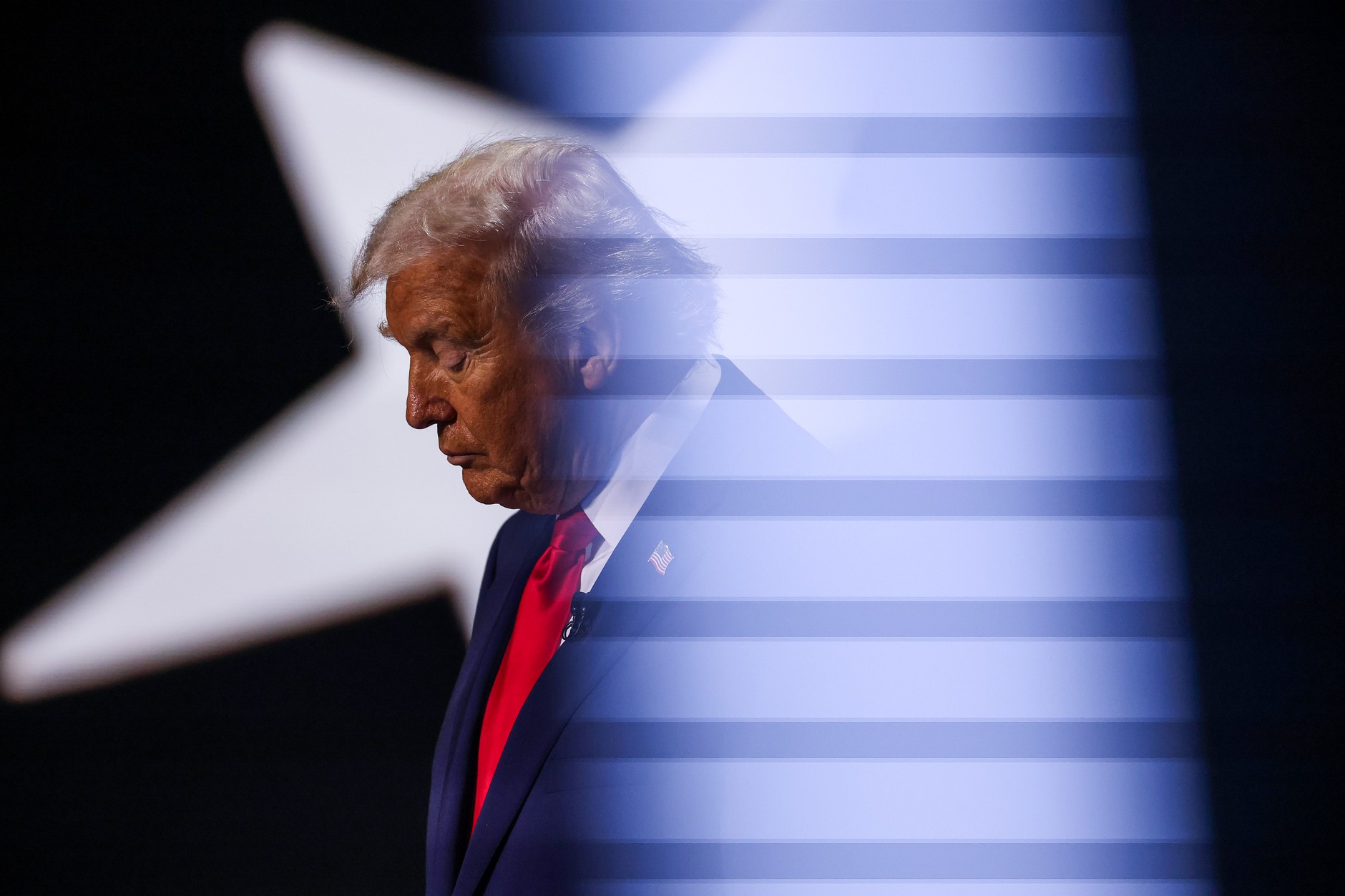
US President Donald TrumpPatrick Smith/Getty Images/Getty Images
An additional axis of the dispute was the American opposition to EU regulations regarding the digital sphere. On Friday, December 5, the European Commission imposed a financial penalty on the social networking site X owned by Elon Musk. This caused strong opposition from the Americans, in particular from US Vice President JD Vance.
Knowing Donald Trump's current tactics in contacts with Europeans, it can be assumed that the White House is already considering retaliatory measures. Americans may want to return the favor after another – and, for example, move the dispute to the area of trade or security negotiations. The dispute between the US and Europe certainly does not help joint efforts to establish peace in Ukraine.