This is how Putin's war machine works. “We send them to the front and then we pray.”

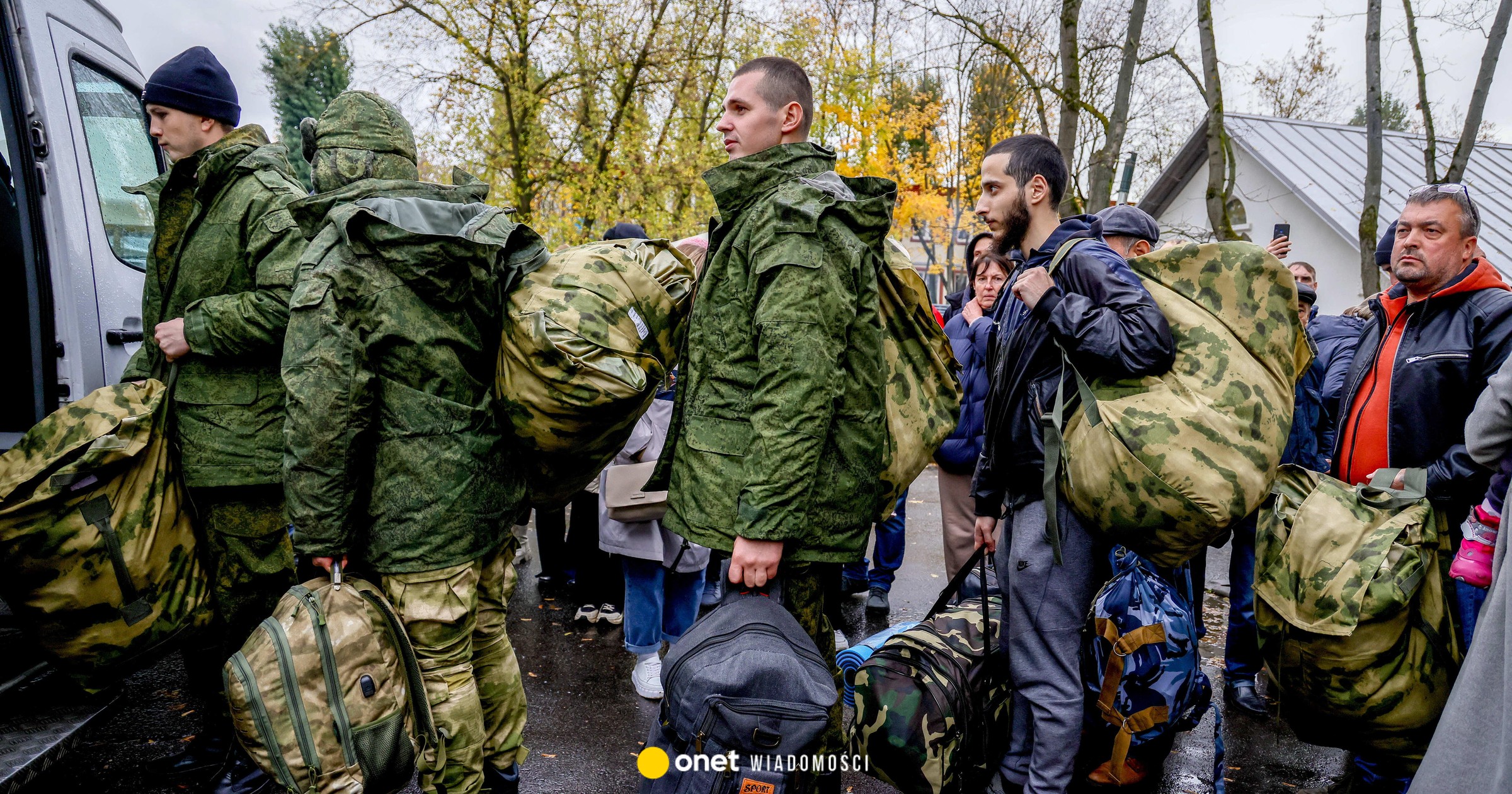
For many men in Russia, going to the front now seems like a job offer they can't refuse. On the Telegram instant messenger, alongside daily news, offers for frontline service appear – with signing bonuses of up to €42,900 [ponad 181 tys. zł]which is a fortune in a country where the average salary is well below 1,000 euros [4231 zł] monthly. The incentives go even further: debt forgiveness, free child care for military families, and guaranteed college places for their offspring. A criminal record, illness, or even HIV infection are no longer automatic reasons for exclusion from conscription.
Behind this flood of offers is a coordinated system operating in over 80 Russian regions. Under pressure from the Kremlin to supply troops [na front]they now resemble recruitment centers that compete with each other for men of military age. What started as an emergency solution has grown into quasi commercial industry headhunters [ang. dosł. łowców głów] financed from government subsidies and regional budgets. The districts outsource recruitment to recruitment agencies, which in turn outsource recruitment to independent intermediaries who advertise on the Internet, screen applicants and guide them through the military bureaucratic jungle.
Currently, any Russian citizen can work as a war broker – many of them operate independently headhunterscharging a commission for sending men to the front. “WELT AM SONNTAG” has been analyzing this type of recruitment channels throughout Russia for many months and talked to many intermediaries and recruiters.
Despite massive losses, Russia's military continues to grow — to the surprise of Western intelligence services and diplomats. They consider this development to be crucial: both for possible peace negotiations and because of the threat of further Russian expansion.
“If Putin can continue to finance huge bonuses (and death compensation) and find those needed [do walki] men,” says former CIA director David Petraeus in an interview for WELT AM SONNTAG, Russia will be able to “continue the costly, exhausting war that has characterized the conflict in Ukraine since the last major successes on both sides in the second year of the war.”
Russia's ability to maintain stable troop levels despite massive losses is one reason for Putin's current determination. Four years after the invasion began, it believes it can impose its terms on Ukraine, either diplomatically or by threatening a long war of attrition. At the end of November, he stressed to Russian journalists that the war would end only when Ukrainian troops withdraw from the territories claimed by Russia. Otherwise, he warned, Moscow will impose its conditions “by force of arms.”
Soldiers' Market
When Russia invaded Ukraine in early 2022, Olga and her husband Alexander ran a small employment agency in Moscow for construction workers, security guards and couriers. They switched to soldiers a year and a half ago. — Our daughter saw on [rosyjskim portalu ogłoszeniowym] Avito advertisement for recruiters – that's how it all started – says Olga. His profile picture is of a Russian double-headed eagle.
As the supposed lightning war turned into a war of attrition, the Kremlin also changed its method of mobilization. In September 2022, Putin announced the “partial mobilization” of 300,000 people. reservists. This was a step that caused a wave of outrage and mass emigration. At the same time, the state opened the gates of prisons: it encouraged prisoners to participate in hostilities, offering them pardon and pay.
Yeah the strategy proved effective and created a new model: less coercion, more money. To attract volunteers, the Kremlin deliberately focused on the most vulnerable members of society, using measures such as gradually increasing wages, high bonuses and the promise of social advancement. In September 2024, Putin made this strategy public and ordered the expansion of the armed forces to 1 million 500 thousand. active soldiers.
— These measures are targeted at a very specific group: socially disadvantaged people, says political scientist Ekaterina Schulmann. — Men with debts, criminal records, low education – people on the margins of society, with no prospects.
Aleksander and Olga worked for a company they found on the Avito website for several months before starting their own business. “We currently have ten recruiters working for us,” says Olga. — We help soldiers complete formalities and establish contact with local authorities. And then we pray that they come back alive and well.
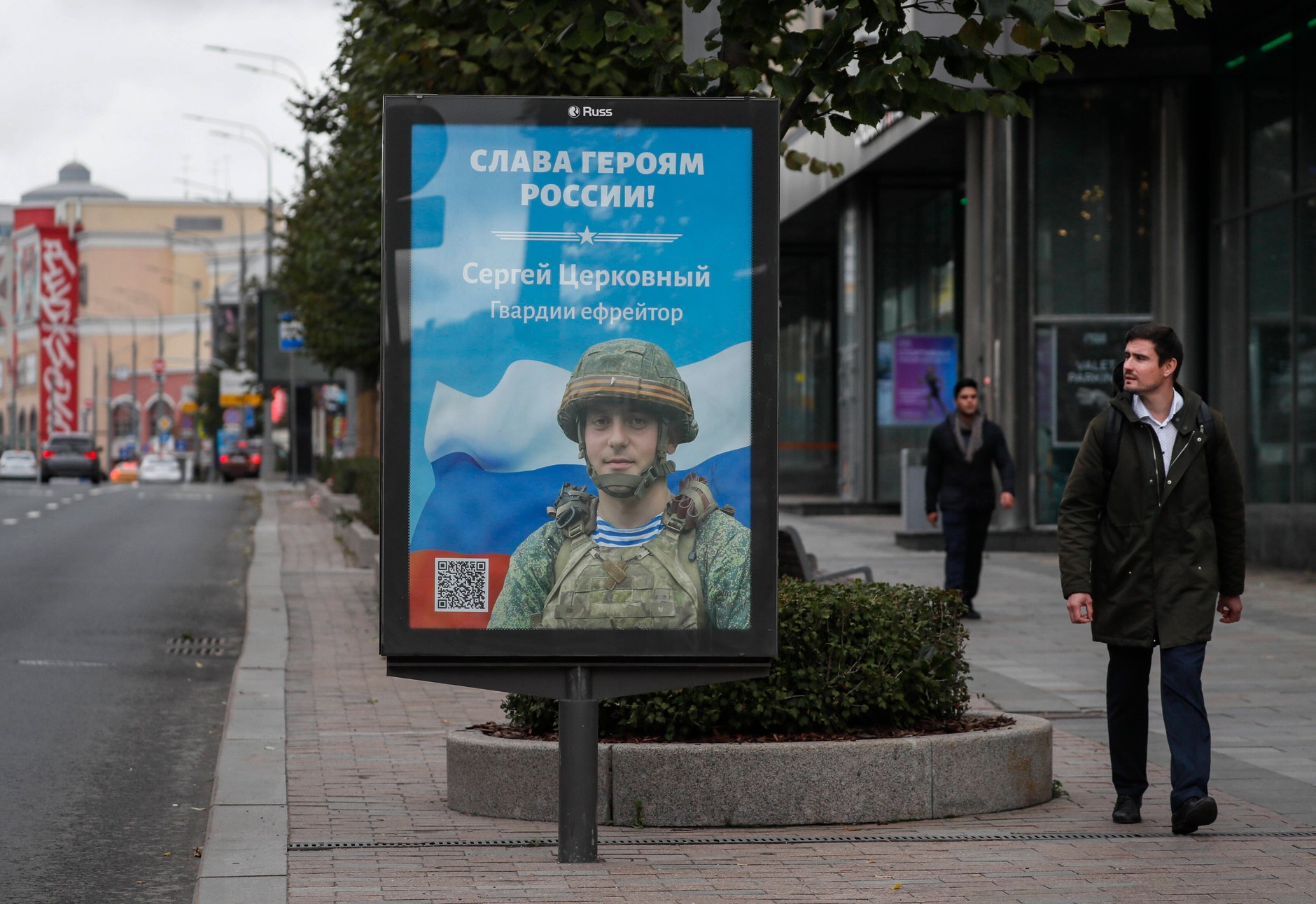
A poster of a soldier with the slogan “Glory to the heroes of Russia” in Moscow, Russia, September 26, 2022.YURI KOCHETKOV / PAP
He does not reveal how much he earns for each man he recruits. However, another recruiter confirmed to “WELT AM SONNTAG” the data published by the independent Russian media Wiorstka: according to them, commissions range from almost 1,000 to 3,000 euros [od około 4000 do ponad 12 tys. zł] for each signed contract. Many districts use reserves to maintain recruitment levels. According to research conducted by the iStories medium, only 11 districts have budgeted at least PLN 21,450,000. euro [prawie 91 mln zł] for intermediation bonuses – this is an amount comparable to expenditure on health or social affairs.
An analysis by German economist Janis Kluge, based on data from 37 Russian oblasts, shows that the average signing bonus for soldiers is approximately EUR 22,180 [prawie 94 tys. zł]including subsidies from Moscow. In Samara, the premium has temporarily increased to over €42,900 [ponad 181 tys. zł] — enough to buy a two-room apartment in this Russian region. “Such sums can completely change the life of a Russian family,” says Kluge. — The system works surprisingly well, but it is becoming more and more expensive for the Kremlin – he adds.
Bonuses have dropped recently in some districts. According to Kluge, this is a sign that they have already reached their limits and want to reduce the burden on their budgets.
“They move forward and don't care how many people they lose.”
The recruitment machine ensures that 30,000 people join the Russian armed forces every month. volunteers – enough to compensate for the losses incurred in Ukraine. The Center for Strategic and International Studies (CSIS) in Washington recently estimated, according to data from British and Ukrainian authorities, that Russia has recorded approximately one million deaths and injuries.
However, Moscow does not rely solely on volunteers. The recently signed law changes military conscription – previously organized every six months – to year-round. Experts talk about a “permanent recruitment infrastructure”.
— They are moving forward and do not care about how many people they lose, said Andriy Yermak, long-time chief of staff of Ukrainian President Volodymyr Zelensky, in an interview with our editorial office shortly before his resignation at the end of November. — We are a democracy, and Russia is an autocracy. There, human life has no value.
The lack of soldiers on the front has been an existential problem for the Ukrainian army for many months; in many places troops can barely maintain their positions. Ukrainian officers report that on some sections of the Eastern Front there are as many as seven Russians for one Ukrainian soldier.. Added to this is the fact that tens of thousands of Ukrainians deserted last year.
The numerical advantage allows Russia to capture Ukrainian territories the size of Munich every month. Kiev is trying to counteract this situation and is increasingly recruiting abroad – thousands of South Americans, but also Europeans, including Germans, are already fighting for Ukraine.
According to estimates by the German security services, Putin may actually achieve an increase in the size of his army to 1 million 500 thousand in 2026. soldiers. — Russia is mobilizing to an extent that indicates a greater military confrontation with other European countries, says CDU security expert Roderich Kiesewetter.
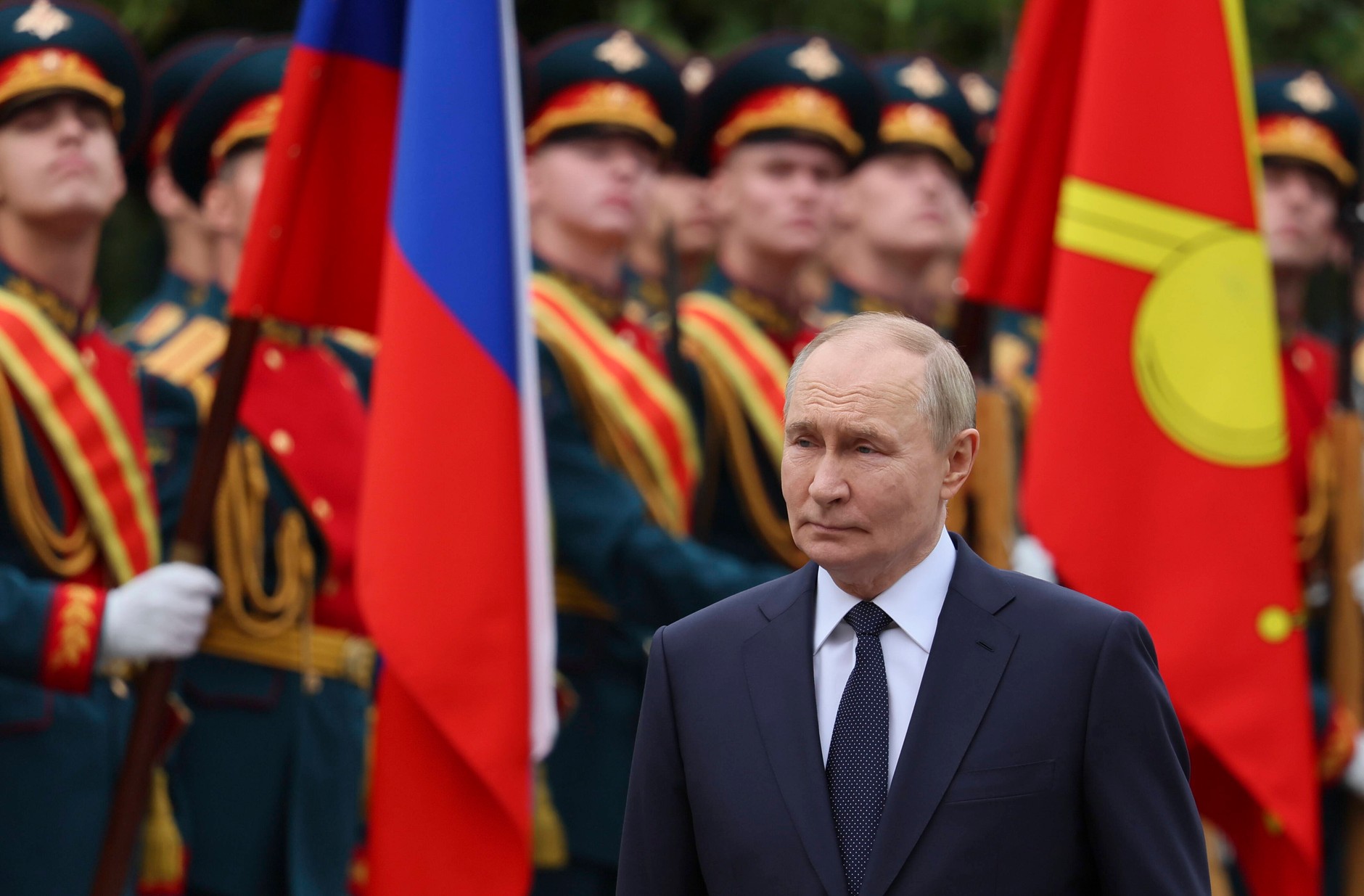
Russian President Vladimir Putin during a wreath-laying ceremony at the Monument to the Unknown Soldier at the Kremlin Wall, Moscow, Russia, June 22, 2025.YURI KOCHETKOV / PAP
A soldier by necessity
Anton did not join the Russian army in 2024 out of conviction. He did this because he found himself in a difficult financial situation. His name has been changed in this report for security reasons. The 44-year-old father of three children from the Moscow Oblast was unemployed, had large debts and was accused of fraud – therefore he had almost no chance of legal work. He constantly saw advertisements for military service with high bonuses on Telegram.
— My wife was on maternity leave, my mother was a retiree – everyone depended on me, says Anton. — During an argument, my wife said: “It would be better if you went to war.” A month and a half later he signed the contract. There was no intermediary involved. However, the contract guaranteed him approximately EUR 2,270 [9605 zł] per month and a bonus of EUR 2,110 [8900 zł] — more than ten times his previous income in the black market. Anton was transferred to Donetsk, Ukraine, where he maintains drones.
Many of his colleagues also came here due to financial difficulties. — There are no patriotic slogans here – everyone is tired. Everyone wants to go home, says Anton.
For many Russians, serving on the front has become a lottery ticket to win a better life: according to the presidential decree, soldiers are to be compensated even for injuries – 10,290 euros. [43 tys. zł] for a broken finger, 30,890 euros [130 tys. zł] for a crushed foot. Anton says that during short trips closer to the front, he was attacked several times by Ukrainian drones. One of them exploded near him. — My financial situation has improved. It sounds sad, but for me personally this contract was beneficial, he says nonetheless. The hardest thing for him is being separated from his children. “But I'd still do it again,” he says.