Sino-Russian fortress at the “end of the world”. A Ukrainian attack could destroy the global order


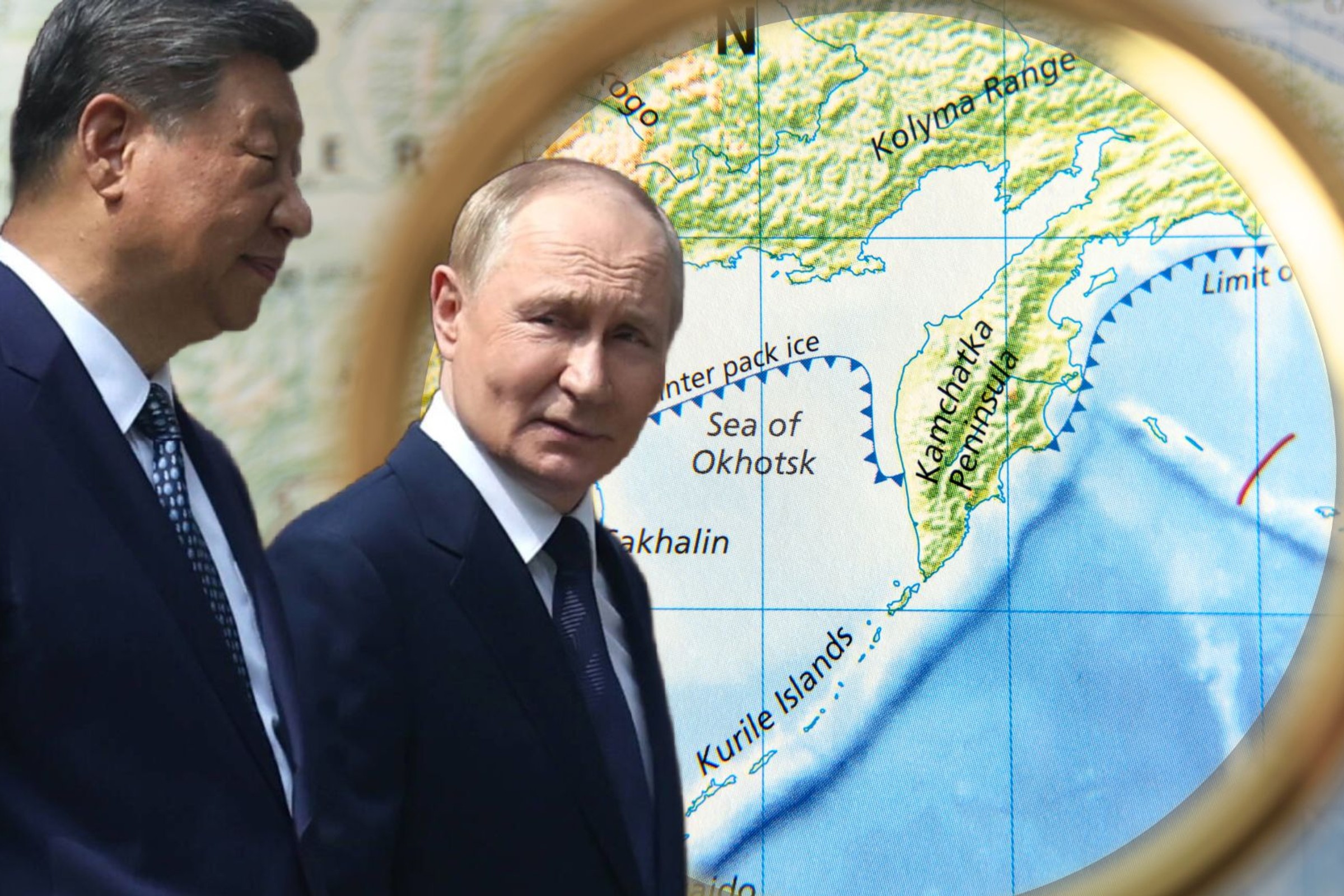
The Kuril Islands are strategically located at the gateway to the bases of the Russian Pacific Fleet. This is particularly true in Kamchatka, where the Russian Empire first established its naval presence in the Pacific. Even more important is access to the fleet headquarters in Vladivostok, located on the western shore of the Sea of Japan. Ships on patrol in the Pacific Ocean must pass through the narrow La Perouse Strait, separating Hokkaido and the Russian island of Sakhalin, before passing the Kuril Islands. Given the recent deterioration in relations between the Kremlin and Western countries, Hokkaido's military vulnerability has become obvious.
China is currently supporting Russia in its confrontation with Japan over the Kuril Islands, which have gained importance since Russia's full invasion of Ukraine in 2022. Beijing's support is related to Moscow's support for China's ambitions regarding Taiwan. Because joint Sino-Russian naval operations become a key strategy to deter Japan and South Korea from increasing support for Taiwan, Russia, with a favorable position near the northern coast of Hokkaido, gains a significant advantage. Control of the island chain not only provides Russia with key listening points, but also guarantees safer routes for its planes.
As a result, the issue of who holds the rights to the islands has become crucial.
Historical roots of the dispute
The foundation of the Russian-Japanese dispute over the Kuril Islands was laid in the 1855 Treaty of Shimoda, which granted Japan sovereignty over the four southernmost islands of the archipelago: Kunashir, Iturup, Shikotan, and the Habomai Group (known in Japanese as Kunashiri, Etorofu, Shikotan, and Habomai, respectively, and collectively called the Northern Territories). In the following decades, there were changes in the rights to Sakhalin, a large Russian island north of Japan.
Their current status was determined by Joseph Stalin's decision taken at the end of World War II. Taking advantage of Japan's defeat, he ordered the four islands to be taken by force. The Japanese inhabitants were displaced and replaced by Russian settlers. The Kuril Islands have remained under continuous Russian administration since 1945. Because this occurred after Japan surrendered to the United States, Tokyo never recognized the annexation as legal.
Due to the sensitivity of the public, no Japanese administration was able to make concessions. As a result, Japan and the Soviet Union never concluded a formal peace treaty ending World War II. The 1956 Joint Declaration normalized diplomatic relations but did not resolve the territorial dispute.
The matter is complicated by the vagueness of international law regarding territorial claims regarding the islands. The San Francisco Peace Treaty, signed in 1951, stated only that Japan renounced the “Chishima Islands,” without explicitly mentioning the four disputed islands. Japan continues to claim that the four southernmost islands are not part of the Kurils but constitute the Northern Territories. He further maintains that because the Soviet Union was not a signatory to the San Francisco Treaty, it cannot be used to justify Russia's claims to the islands.
During a meeting in Moscow in November 1998, Russian President Boris Yeltsin and Japanese Prime Minister Keizo Obuchi pledged to resolve the dispute over the islands within 14 months. In the Moscow Joint Declaration, they set a goal of finalizing a peace treaty by the end of 2000. In 1999, Yeltsin was forced to resign, and these efforts were abandoned.
During Vladimir Putin's presidency, there has been speculation about a variety of agreements, from the return of the two southernmost islands to a compromise that would grant Japan sovereignty while allowing Russia to remain responsible for administration. Beyond the fundamental issue of national sovereignty, The Kuril Islands are also crucial for access to valuable fishing grounds and deposits rare earth minerals. However, the issue of sovereignty consistently took precedence over any potential economic agreements.
The last time a compromise seemed possible was in 2018, when President Putin met with then-Japanese Prime Minister Shinzo Abe. After returning to office in 2012, Abe sought to improve relations with Moscow by building a personal relationship with Putin. By 2017, they had met 20 times. Their negotiating positions softened, and Japan expressed its willingness to accept a phased agreement that would first return the islands of Shikotan and Habomai, followed by the larger islands of Iturup and Kunashir, provided Russia recognizes Japan's sovereignty over all four islands. Ultimately, the negotiations ended in failure.
The article continues below the video
Militarization of the Kuril Islands by the Kremlin
Russia's determined opposition to any territorial concessions was increasingly linked to its ambition to regain superpower status by revitalizing its weakened armed forces. After launching a costly arms program in 2009, the Kremlin began militarizing the disputed islands. Although it took place after Russia's invasion and annexation of Crimea – and did not attract much international attention – the strategic consequences proved far-reaching.
Moscow took the first steps at the end of 2015, when Russian forces stationed on the islands received the Soviet Tor-M2U surface-to-air missile system. In 2017, the Russians deployed a Bastion anti-ship missile battalion on Iturup island and a Bal anti-ship missile battalion on Kunashir island. Following these deployments, intensive construction work began on both islands, including the construction of barracks for approximately 3,500 soldiers of the 18th Rifle Artillery Division. In December 2020, air defense capabilities were enhanced with the deployment of an S-300 missile battery to Iturup.
While Moscow claimed its actions were purely defensive and intended to protect Russian territory, Tokyo expressed concerns that P-800 Oniks supersonic missiles fired by the Bastion system could pose a threat to much of Hokkaido, allowing the interception of ships in large areas of its coastal waters.
Russia has also increased military activity on islands further north in the Kuril archipelago. In December 2021, additional Bastion launchers were installed on Matua Island, located in the central Kuriles. Moreover, on the island of Paramushir, located even further north, the Russians built a new airport and extensive barracks complexes.
Putin's regime is determined to turn the islands into a barrier that can both threaten Hokkaido and defend access to the Sea of Okhotsk. Russia's updated maritime doctrine, presented during St. Petersburg's Navy Day celebration on July 31, 2022, clearly mentions that both the Sea of Okhotsk and the Kuril Islands will be protected “by all means.”
Moscow's full-scale invasion of Ukraine increased the geopolitical importance of the islands. The war had three main side effects on the Kuril Islands dispute.
First, Ukraine officially recognized Japan's claims to the northern territories as legitimate. It did this in October 2022 through a decree that officially recognized the Kuril Islands as Japanese territory temporarily occupied by Russia. Considering that Ukraine has already carried out attacks on various targets in the Russian Far East, in particular on military bases linked to serious war crimes in Ukraine, it is quite likely that Russian military installations in the Kuril Islands could also become the target of a Ukrainian attack.
Many of the “Russians” who settled on these islands after Stalin seized the land were Ukrainians. Some observers in Japan suggest that a significant part of the current inhabitants of the southern islands are descendants of Ukrainians who were forcibly resettled there by the Soviets after 1945. Estimates from pro-Ukrainian and Japanese sources even indicate that this percentage may reach 60 percent. This connection may motivate some of them to support Ukrainian covert operations against Russian military facilities.
The second issue is that Japan has been forced to follow the lead of major Western countries in condemning Russian aggression and introducing strict sanctions. This effectively ended Abe's diplomacy of responding to the annexation of Crimea with only mild sanctions. Moscow's response to the escalation was harsh, meaning all talks on economic cooperation and a potential peace treaty were suspended indefinitely. Additionally, President Putin decided not to attend Abe's state funeral.
The deterioration of relations cast a shadow over the Russian military maneuvers Vostok-22, which took place in September this year. These maneuvers, organized every four years under the supervision of Russia's Eastern Military District, took place in the waters and coastal areas around the Sea of Okhotsk and the Sea of Japan. Because Russian military units, including Pacific Fleet marines, were heavily involved in the war in Ukraine, China's participation had political significance.
At last, most importantly, China's position on the rights to the islands has changed. Historically, official support for Japanese sovereignty was established by Chairman Mao Zedong in 1964 and has been maintained by all Chinese leaders since then.
This change was clearly highlighted at their February 2022 meeting, where President Putin and Chinese President Xi Jinping strengthened their relationship under a “no limits” friendship agreement. After the meeting, Xi said the two sides would support each other on issues of sovereignty and territorial integrity. During a press conference in January 2024, Russian Ministry of Foreign Affairs spokeswoman Maria Zakharova responded by emphasizing that “the Russian side recognizes that there is only one China, that the People's Republic of China is the only legal government representing the entire country, and Taiwan is an inseparable part of China. The Russian side is opposed to any form of independence for Taiwan.”
Scenarios
Least likely: Japan gains legal sovereignty over the Kuril Islands
The least likely scenario is for Japan to ultimately gain legal recognition of its claims of sovereignty over the disputed islands. The only way this could happen is if the Russian Federation collapses, leaving its part of the Far East isolated. Japan could then step in as the protector of the Northern Territories, which would otherwise be in serious trouble. However, gaining international recognition of sovereignty would still be unlikely given expected opposition from other regional powers.
Quite likely: Russia collapses, China steps in as defender of its assets
A slightly more likely scenario is the collapse of the Russian Federation, which leaves China with a difficult choice on how to best protect its interests. In addition to ensuring constant access to energy and other raw materials, China may decide to strengthen its military position towards Japan by acting as a defender of Russian military installations in the Kuril Islands, including the northern territories.
Most likely: Russia collapses economically and becomes a vassal of China
The most likely scenario is that, in the face of ongoing economic decline caused by the war in Ukraine, Russia gradually becomes a vassal under China's control. Beijing could then adopt a stronger stance on Taiwan while tacitly encouraging Russia to take more assertive actions in the Kuril Islands and near Hokkaido. As a result, Japan will need to reassess the robustness of its security guarantees from the United States.