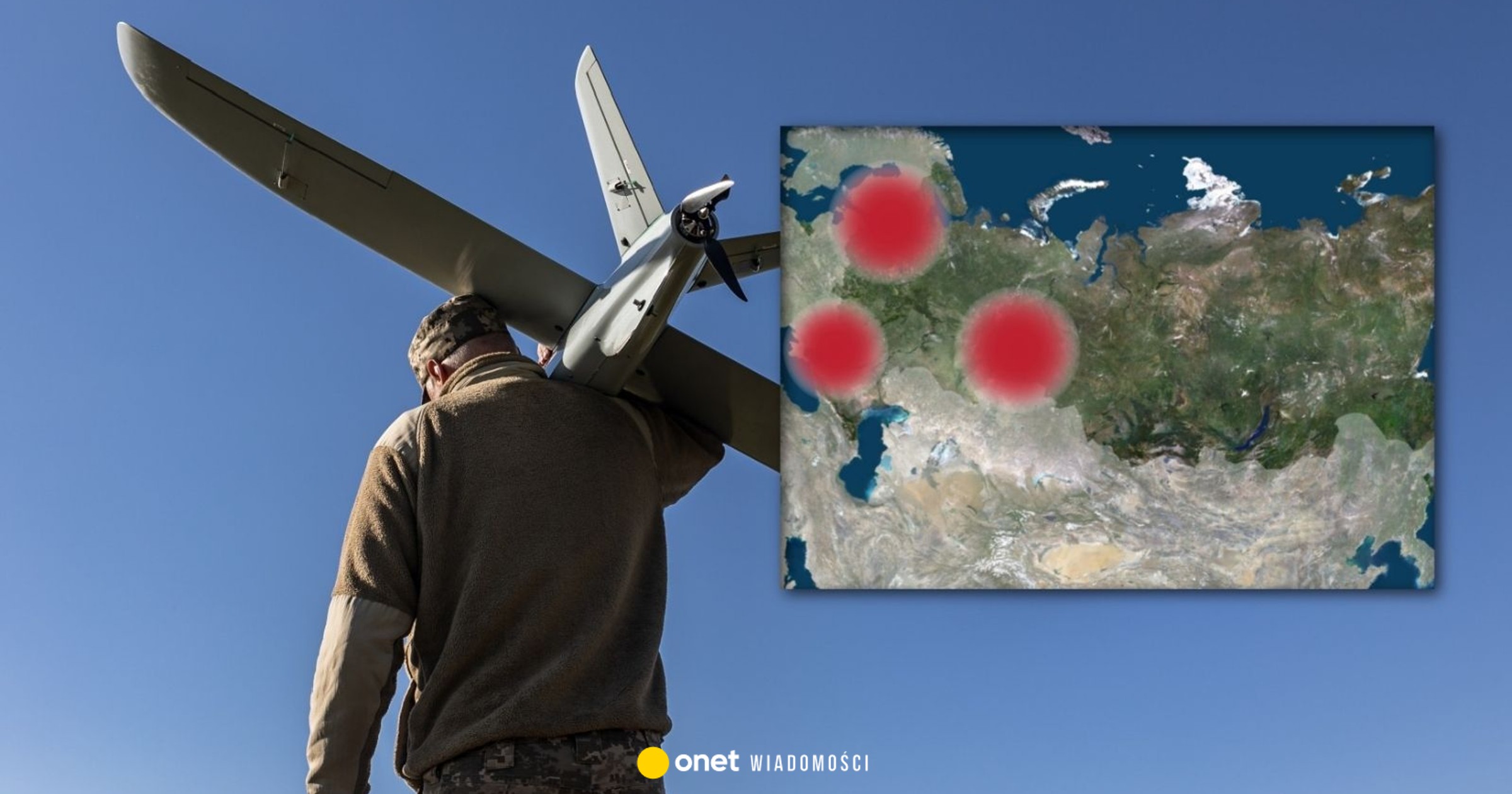
Chinese artificial intelligence is flooding the world. Beijing is playing the US in its backyard


It would be an understatement to say that Marc Andreessen and Ben Horowitz know what's going on in Silicon Valley. For over 10 years, the two have been among the most well-known – and above all, most successful – investors on the US startup scene. They early invested in companies such as Facebook, Twitter (now X) and Airbnb.
Through their company Andreessen Horowitz (A16Z), they have made billions from young Internet companies. They are still looking for the next brilliant idea, the future company worth billions, maybe even trillions. It is obvious that startups applying for A16Z money are betting on artificial intelligence (AI). The only question is: which one?
It is in Silicon Valley, the heart of the California technology industry, that startup founders no longer choose only between American AI models, such as ChatGPT from OpenAI, Gemini from Google or Claude from Anthropic. “I would say there is an 80% chance they will use the Chinese model,” Martin Casado, a partner at A16Z, told the Economist in August this year. They choose open models from Beijing or Hangzhou because they can be customized more quickly — and cost less.
What at first glance looks like simple competition is actually a huge geopolitical and economic problem for the United States: China began producing artificial intelligence as a cheap mass commodity, thus undermining America's technological advantage. Thanks to dumping prices, the People's Republic of China is introducing its artificial intelligence to Western markets.
This is not primarily about private users who write their CVs with the help of ChatuGPT or ask Gemini about new recipes. Beijing wants to become a leader among corporate clients, companies that can build businesses worth billions thanks to artificial intelligence.
In this way, the market for artificial intelligence models risks a repeat of what the Chinese have already achieved with steel, solar cells and electric car batteries: first by flooding the market with state-subsidized cheap products, thereby destroying Western competition and building quasi monopolies to ultimately, to deliberately exploit the West's dependence.
China is also being extremely strategic when it comes to artificial intelligence. While Washington tries to rein in Beijing with export bans on Nvidia's cutting-edge AI chips, Chinese tech companies are flooding the world with open, high-end models at bargain prices.
They have long had more to offer than just DeepSeek, China's most famous artificial intelligence model: Qwen belongs to the huge Alibaba group, and the Beijing Moonshot AI start-up has just published the Kimi K2 model. Western companies have to pay just one-tenth of what OpenAI, Google or Microsoft demand to use Chinese AI.
At the same time, huge data centers are being built in Asian countries neighboring China, thanks to which companies such as Alibaba are avoiding the chip embargo. Not only does this threaten U.S. technological superiority — China's dumping of artificial intelligence makes it even less likely that billions of dollars in data center investments by U.S. tech companies will ever be recouped. In early November, Nvidia CEO Jensen Huang warned that China could win the race for AI supremacy: “China is only nanoseconds behind America.”
The free model wins
Eric Schmidt, the longtime former CEO of Google, also believes that China is on its way to winning the fight for global dominance in the field of artificial intelligence. The geopolitical problem is that Chinese models open source [otwarte] are free, unlike models from American competitors. “As a result, the vast majority of governments and countries that do not have the financial resources of the West will end up using Chinese models as the standard, not because they are better, but because they are free,” Schmidt says on the “Moonshots” podcast.

Relativity Space president and former Google CEO Eric Schmidt during a business forum at the Kaseya Center, U.S., November 6, 2025.CRISTOBAL HERRERA-ULASHKEVICH / PAP
Google would then be defeated by its own weapons: In the fight for supremacy in the smartphone market, the internet search engine company offered its open source Android operating system as a cheap and therefore accessible to the masses alternative to Apple's iOS, thereby capturing a large share of the market. “This approach of developing cheaper, faster and more efficient models will ultimately prevail in the global competition between China and the United States in artificial intelligence,” predicts Alice Han, a China expert at consulting firm Greenmantle, on the “China Decode” podcast.
The U.S. response to China's advances in artificial intelligence is to try to secure an advantage, at least in chips: Nvidia's most advanced AI semiconductors are to be reserved exclusively for American companies. To offset this unfavorable situation, the Chinese government has launched a program to support the construction of data centers using chips from Chinese companies Huawei and Cambricon.
But with manufacturers unable to access ASML's state-of-the-art chipmaking machinery due to another embargo, Chinese supercomputers consume significantly more energy than U.S. competition. In response, China is also subsidizing the energy consumption of domestic data centers and covering half of electricity costs.
However, this alone cannot offset the disadvantage of China's AI industry in terms of computing power. Chinese companies are therefore focusing on two alternative strategies. The first one is chip smuggling. There have been reports for months that Nvidia chips are being illegally imported from other Asian countries into China.
How China is circumventing the chip embargo
The strongest evidence comes from Taiwan's export statistics. In the island nation, Nvidia chips are manufactured by contract manufacturer TSMC. Although most of the production of the so-called graphics processors goes to the United States, this year alone, Taiwan exported AI semiconductors worth over $89 billion through October. [323 mld zł] to the United States. For comparison: during the same period, Germany imported AI chips from Taiwan worth only $666 million. [2 mld 419 mln zł]. However, Germany is not a pioneer in the field of artificial intelligence and the construction of data centers.
However, this does not explain why Asian city-states such as Hong Kong bought almost $3 billion and $600 million worth of Taiwanese AI chips during the same period. [13 mld zł]and Singapore even spent almost USD 7 billion on them. [25 mld zł]. Taiwan exported graphics processors worth over $12 billion to Malaysia. [ponad 43 mld zł]and Indonesia achieved an import value exceeding USD 1 billion. [4 mld 358 mln zł].
Not all of these chips go to China, in some countries semiconductors are also processed and further exported. Of course they are also building data centers, which are part of the second strategy thanks to which Beijing avoids the embargo: Chinese tech companies are currently building large data centers in countries like Malaysia and Singapore. According to media reports, companies related to Alibaba and Tencent trained the latest generation of their AI models on Nvidia chips in such foreign data centers in the mentioned countries.
Local operators purchase supercomputers, and the purchase is financed by Chinese investors. Concerns from the People's Republic of China appear publicly only as customers of cloud services. American authorities are unable to control whether local companies are legally using high-performance chips or whether Chinese artificial intelligence teams are accessing servers through specially created connections and working on large artificial intelligence models.
Chip from the American technology company NvidiaHANNIBAL HANSCHKE / PAP
Competitive advantage
All these are makeshift solutions for China. Yet they have contributed to Beijing being able to put pressure on Western competition with its cheap models. It is this embargo that has become a competitive advantage that is underestimated in the Westsays Wendy Chang, a China expert from the Merics think tank.
The principle that necessity is the mother of invention applies here. – Because [Chiny] have limited access to modern equipment, Chinese programmers have to work much more efficiently – and they are currently doing it extremely well, says Chang. European scientists confirm that many Chinese models open source “uses computing power exceptionally sparingly”, making them particularly suitable for start-ups that cannot afford to run their own data centers.
In independent tests, Chinese models would have long taken leading positions compared to Western competition open sourcesuch as Llama from Meta. Western leaders such as OpenAI would clearly lose market share. However, the open strategy also raises questions. — How exactly are you going to make money on open access? [do usług]? Chang asks.
The decisive factor will be which model wins in practical application. China is moving forward here, placing greater emphasis on usefulness in everyday life, for example through pilot projects in clinics or offices. “There is already a policy in China to test artificial intelligence in hospitals, government or industrial processes,” Chang explains.
This is also why Chinese suppliers – despite the technical flaws of their chips – can achieve profitability of AI-based products more quickly. “If you have a huge country with millions of applications and you can run pilot projects freely, you can learn very quickly what really works in the market,” Chang explains. Ultimately, this may matter more than sheer computing power.
Especially since Western startups are also using Chinese AI to save money. China is repeating an industrial policy strategy that has already worked with solar panels, electric cars and industrial robots: Beijing companies are making powerful AI models available as low- or no-cost variants and then incorporating them into large, state-backed computer hardware industries.
– This is an approach known to us from many industries – notes the analyst. — The software is offered at very low prices or immediately as open sourceand the real competitive advantage comes from firmware, robots, cars or home appliances, he adds. Silicon Valley start-ups show that this strategy definitely works. The conquest of the West by Chinese artificial intelligence has already begun.