Drones costing several hundred pounds have destroyed modern tanks. They shot down multi-million dollar helicopters and forced planes to adjust their flight paths. Drone warfare has changed the economics of the battlefield. This revealed a basic, immutable and strategic truth: advantage on the battlefield is not guaranteed by expensive equipment, but by faster adaptation.
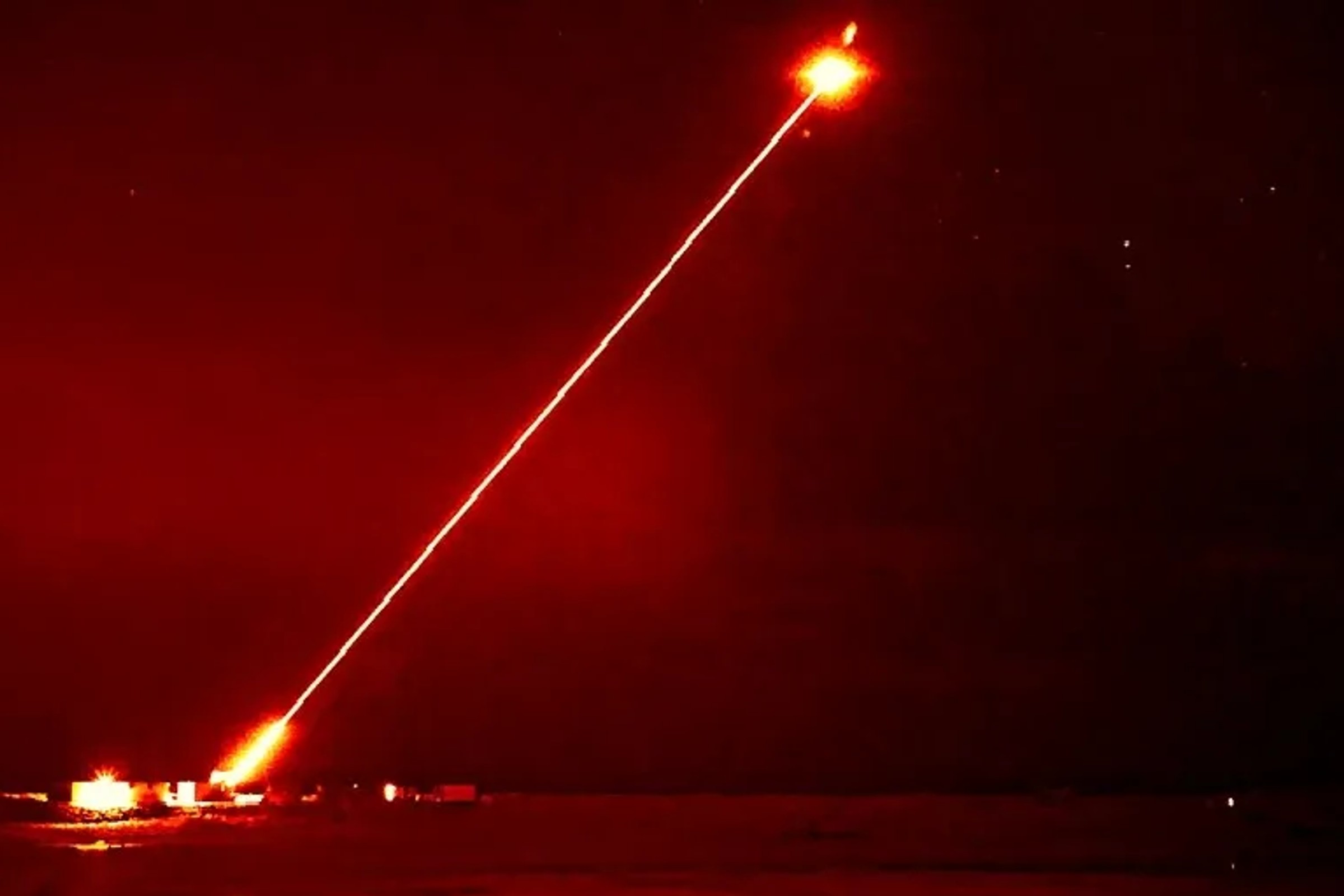
Dragonfire is a direct response to this adaptation. A defender who once had to fire a missile worth hundreds of thousands of dollars to stop a drone worth a fraction of that amount can now accomplish the task with a laser that costs only a few dollars per shot. This changes the air defense calculation. It makes attacks more difficult, makes drone swarms much less profitable, and most importantly, restores the initiative to the defender.
This reversal marks the arrival of what could be described as hypermodern warfare. Modern warfare was characterized by the use of precision munitions, drones, networked forces and rapid maneuvers.
Hypermodern warfare, however, is characterized by directed energy weapons [wykorzystującą m.in. laser lub mikrofale]autonomous platforms, near-instantaneous combat cycles, and a mix of digital and physical battlefields. The essence of this new era is speed – speed of detection, speed of decision and speed of action.
British directed energy weapons are ideally suited to this environment; it eliminates the delay between making a decision and its consequences because it reaches the goal in less time than the blink of an eye, literally.
At the tactical level, the laser system is groundbreaking because the beam has no recoil, leaves no visible traces and requires no ammunition. Most importantly, it does not warn the target. It simply burns through the sensors and control surfaces until the drone crashes. Provides continuous fire as long as the system has power.
For the commander, this means constant protection that cannot be depleted like ammunition supplies. It gives it to ships [po udanych testach w warunkach polowych z udziałem dronów Smoczy Ogień trafi na wyposażenie brytyjskiej marynarki wojennej] a reliable and durable way to defend against fast and cheap drones.
The strategic significance of this solution is deeper. The UK has been criticized for not taking defense seriously enough, with senior military leaders raising concerns about underfunding and overburden. Recent reports describe tense meetings in which generals warned that the armed forces were expected to pursue “ambitious goals” without adequate support. This frustration reflects broader concerns across NATO. The hard truth is that a dangerous world requires credible capabilities and credible investments.
In this case, a modern defense system becomes more than a weapon; becomes an argument. While hurdles remain – such as ensuring the technology is fully effective in all weather conditions and meeting the enormous energy requirements – the successful Dragon Fire trial shows what the UK can achieve when it commits its resources with clarity and focus. It shows that sovereign technology is still within reach and that the UK can develop systems that will shape future conflicts, not just react to them.
The will was there, the funding was there, and the industry delivered the results. This achievement is proof of that.
Placing the system on ships Royal Navy this is a good start, and the stated goal is to equip them with this system by 2027. However, the real transformation will only come when laser weapons are mounted on land vehicles.
A mobile platform equipped with a stable power source and a reliable laser would again change the balance of power. Armored units could defend against drones without revealing their position. Infantry units could disrupt reconnaissance drones, and logistics convoys could neutralize threats without having to rely on missile-based air defenses. Once the technology matures to the point where it is durable, reliable and weatherproof, its impact on land warfare will be truly significant.
New defense calculation
This development reflects an inalienable truth: war never stops evolving. Cheap drones have disrupted modern militaries, and now directional weapons are disrupting drone operations. Hypermodern warfare is no longer a theoretical future – it is a reality, and Britain is helping to bring it about.
The British Dragon Fire is more than just a weapon. It is the beginning of a new era, confirming Britain's position at the forefront of hyper-modern warfare and requiring a decisive new commitment to national defense.
**
Casey Christie, managing director of Christie and Associates in London and originally from South Africa, is a prominent figure in the field of international security. His expertise, featured in renowned publications such as the London Times and the South African Sunday Times, reflects his deep commitment and understanding of global security challenges.
I’m Ashley Davis as an editor, I’m committed to upholding the highest standards of integrity and accuracy in every piece we publish. My work is driven by curiosity, a passion for truth, and a belief that journalism plays a crucial role in shaping public discourse. I strive to tell stories that not only inform but also inspire action and conversation.