The surprising field in the Republic of Moldova where salaries can exceed 10,000 euros per month – Interview with the “head of IT” from the Republic of Moldova


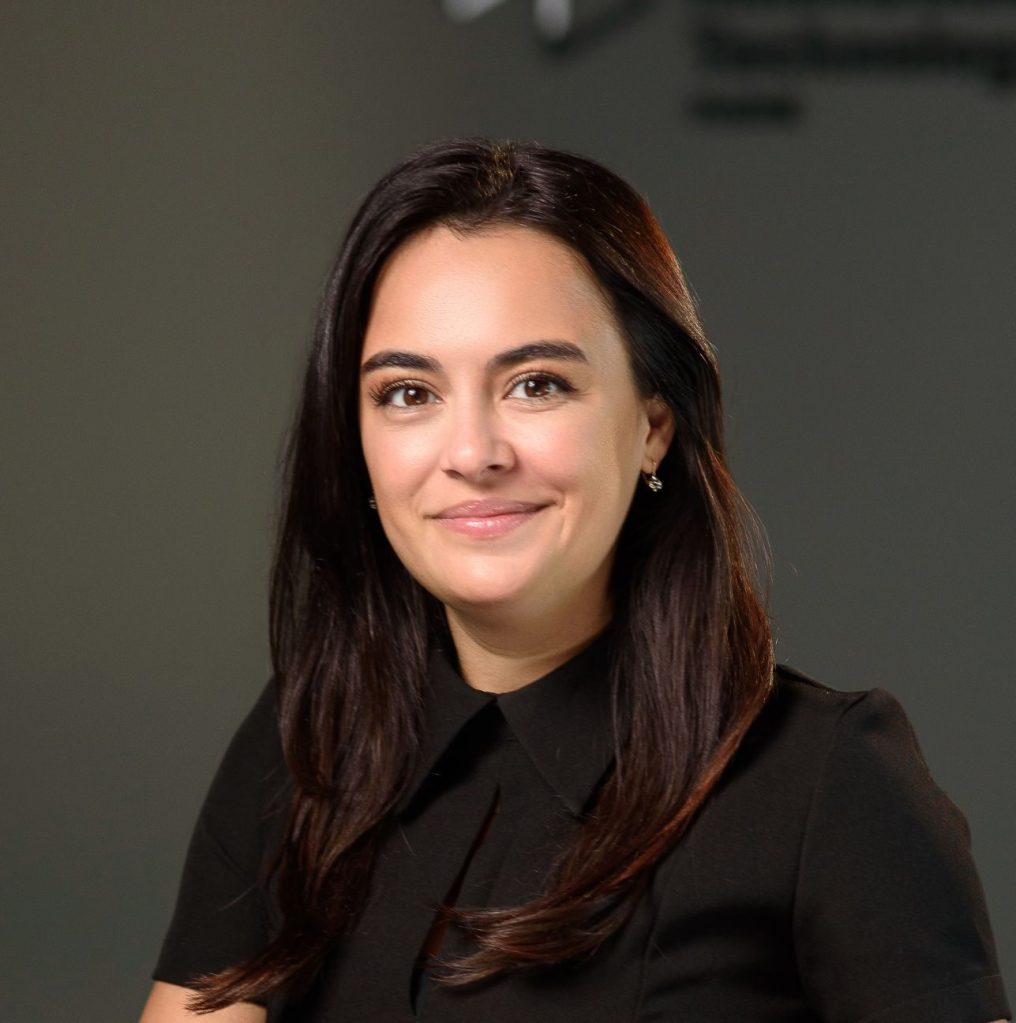
“We are very good at wines, but we are even better at tech, only the world still does not know this enough”, says Marina Bzovîi, the administrator of “Moldova IT Park”, in an interview given to Oxana Bodnar, HotNews correspondent in the Republic of Moldova. Quite little known, including in Romania, the IT industry in the Republic of Moldova generates 5.7% of the GDP of this country and has 25,000 employees and 2,600 registered companies.
- “The taxes paid by our industry cover the cost of higher education in the country.”
- To find out more about this little-known field outside the country, HotNews spoke with Marina Bzovîi, the administrator of “Moldova IT Park”, which brings together technology companies from the Republic of Moldova.
- “If you drive German cars, probably some of the software is made in Moldova,” says Marina Bzovîi in the interview for HotNews.
– First of all, what is “Moldova IT Park”? How was this project conceived and how does it work, created in 2018?
– Marina Bzovîi: It is about a virtual park that offers a tax facility: a single tax of 7%, which unites seven other types of taxes. One of the basic ideas was to facilitate the relationship between the state and the business environment with less bureaucracy, because when you report only one tax, there is less chance of error and, respectively, less risk of penalties or additional bureaucratic procedures. In addition, companies can carry out 70% IT activities and 30% non-IT activities, the single tax covering salaries, social and medical insurance, local contributions, road tax and real estate tax.
All these taxes are included in this 7% of the company's turnover, but no less than 30% of the average salary in the economy (approximately 854 euros – no), multiplied by the number of employees.
This minimum amount was designed for all employees to have health and social insurance, and for this minimum social protection to exist, a minimum contribution per employee, paid by companies, was needed. The regime has proven over time that it is much more attractive than was anticipated when the draft law was approved: if the initial studies estimated several hundred companies in 10 years, we are only in the 8th year and we already have 2600 registered companies.
– How many people are employed in Moldova IT Park in total? And how many women are in this field?
– In total, there are around 25,000 employees in companies within the Moldova IT Park. The number of women is constantly increasing. We exceeded 30% women in tech industries, a very good rate, even compared to European countries. At the level of new generations, the proportion is almost 50/50. There are many programs dedicated to women in the wider ecosystem, even if not all of them are organized by us. Their number will continue to grow.
– About the role of the IT Park administrator: many imagine a physical territory with buildings and an administrator. What does the IT Park administration actually do?
– We have a very small team: 12 people. Half deal with administration – applications for membership, legal support, reporting, everything related to the tax regime. The other half organizes community events, co-organizes the “Moldova Digital Summit”, runs the MITP Awards project, promotes Moldova as a tech destination, helps companies export and participate internationally. We organize technical, legal, fiscal, management workshops and promote companies and their products as much as possible.
Most companies are from Romania
– To which countries do companies from Moldova IT Park export their services?
– First of all, 89% of the services of companies in the park go to export. The main markets are the European Union and the USA. But we have companies that also work with countries in Asia, Africa, Latin America, in total with about 34 countries on all continents. Number 1 in the chapter of foreign companies registered in the Park is Romania, a status obtained this year. In terms of investment capital, UK and US companies are at the top.
– What is the average salary and how much can a maximum salary reach?
– Maxim is hard to say. Very high salaries, depending on experience and projects. There are certainly salaries of 10,000, 15,000, 20,000 or even 30,000 euros (no – gross salaries), depending on the professional level. They are not typical wages for the entire industry, but they exist. The average gross salary in the park is approximately 2,500 euros.
This was the average rate set last year. We have yet to see the rate for the current year, but the growth has been continuous since the park was created. We also have a salary study that estimates entry rates and caps. Higher average salaries are around 6-7,000 euros, but there are also people who earn more.
– We also have a figure regarding the volume of taxes paid annually or throughout the park's existence. How much did the state earn?
– The volume of accumulated taxes increased exponentially. The contribution of this industry covers approximately the total state expenses for higher education in the Republic of Moldova. This is a very large number, considering that the industry only employs about 25,000 people. We also see this in the sector's contribution to GDP: it is now 5.7%. It is a very high rate compared to the number of employees, i.e. about 4% of the working population. In this regard, we are very well positioned even at the European level.
– Can we talk about the fact that this profession is becoming more and more popular? Or is there stagnation, considering that its popularity has been maintained for years?
– I wouldn't say it's diminishing the appeal of the profession. Rather, it is a decrease in companies' interest in temporarily hiring people with no experience. Globally, the Tech industry is going through a period of reconfiguration due to artificial intelligence. It's a waiting period, companies are trying to understand how the market will stabilize. There will still be a need for engineers and specialists, including software architects. Even if AI can write code, it needs humans to understand the architectural ensemble and guide the AI. The second challenge is security: how do you ensure secure products in an environment where many AI tools do not work in closed systems, and data leakage risks can affect customers.
“If you drive German cars, probably some of the software is made in Moldova”
– Can you give us examples of important IT projects that have been done in Moldova? What products have been created in our country by companies operating in this field?
– There are many products and more and more appear every year. Several companies with their own products participated in Web Summit Lisbon. We have a FinTech company with its own product, a mobile phone safety solution, created entirely in Moldova, which sends private security in 3-5 minutes.
We have a crowdfunding startup, Fagura, also present on the Romanian market. There is a product in the nutrition segment, Eating AI. A company is developing a medical product that allows surgeons to practice brain surgery with 3D models. Another example is a Health Tech startup with great potential.
There are FinTech solutions, developed in the Republic of Moldova and used throughout the European Union and the USA. A Moldovan company has products included in the Guinness Book, equipment for professional divers.
We have gaming companies with top games on the App Store, developed entirely in Moldova by small teams. We have companies that work on automotive: if you drive German cars, probably some of the software is made in Moldova.
We have companies that work for banking, healthcare in the US, Europe, Gulf, as well as studios that do special effects and sound for Hollywood. We're very good at wine, but we're even better at Tech, it's just that the world doesn't know enough about it yet.
– Are certain new regulations required by the companies in the field also needed?
– The business environment usually says, “Give us time to work.” Too many regulations can be confusing. However, there is an ongoing dialogue with the authorities.
Most of the requests concern the complete digitization of public services. Moldova already has over 70% of its business services digitized, but there are still 30% that need to be fully integrated.
Business wants as little direct interaction with the state as possible. In the process of European integration, there are many directives that need to be transposed, and we want this to be done for the specific benefit of Moldova. Many European directives are in the process of revision (eg: GDPR, cookies), so it would be good to transpose the updated versions, not the ones that are already outdated.
– Under these conditions, I want to ask you if there are companies that operate in Moldova or export, but are not IT Park members?
– About 90% of the industry is in the park. Not all companies are “pure IT”; some are banks or large companies that have their own IT departments but cannot become residents because they do not have 70% IT activity. Some small businesses prefer other tax regimes available to micro-enterprises. There are also firms that have created spin-offs specifically to become residents. So yes, there are entities that are not in the IT Park, but they are few.